識
See also: 识
| ||||||||
Translingual
Han character
識 (radical 149, 言+12, 19 strokes, cangjie input 卜口卜戈日 (YRYIA), four-corner 03650, composition ⿰言戠)
Derived characters
- 𧄹
Related characters
References
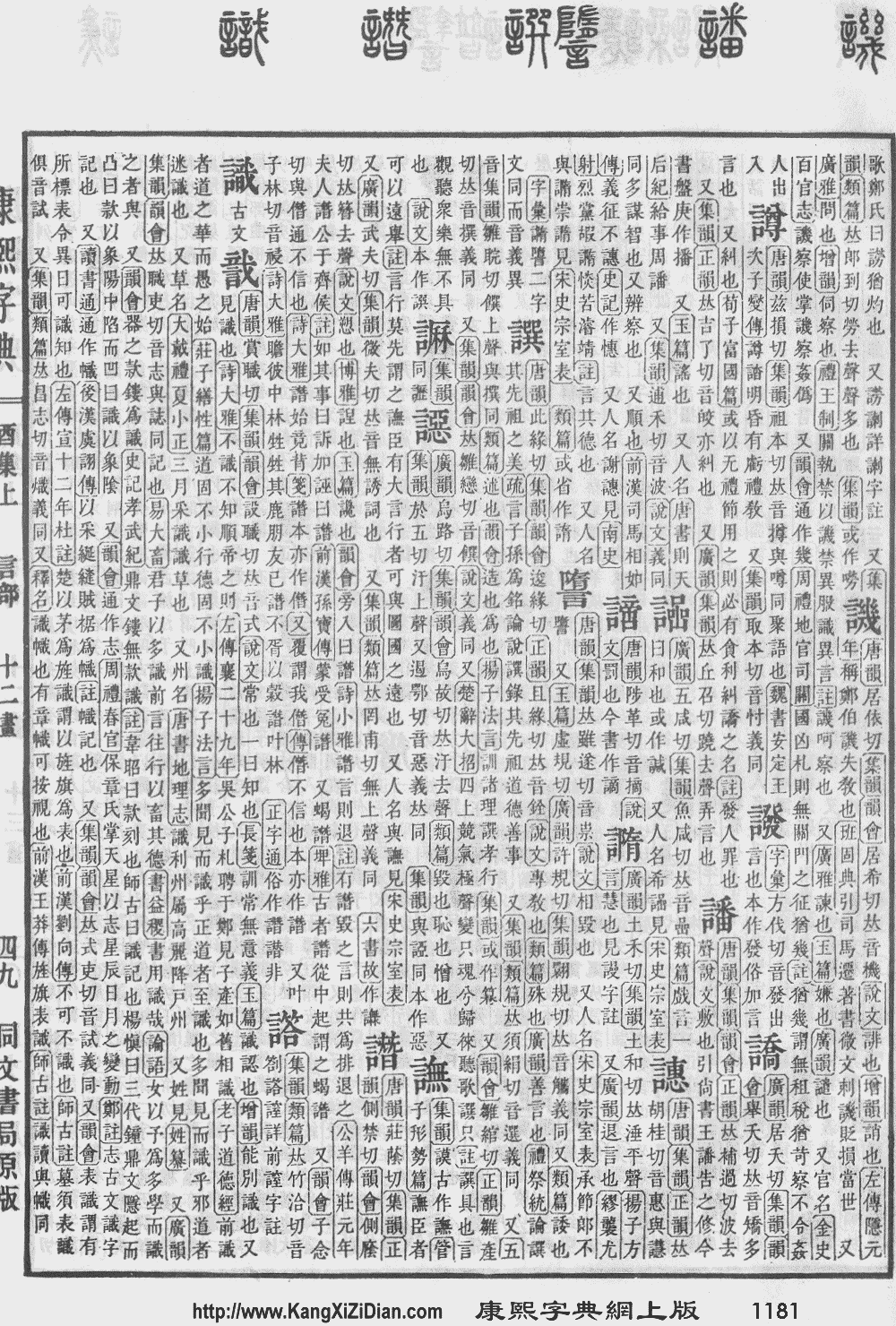
- KangXi: page 1181, character 17
- Dai Kanwa Jiten: character 35974
- Dae Jaweon: page 1644, character 28
- Hanyu Da Zidian: volume 6, page 4019, character 16
- Unihan data for U+8B58
Chinese
| trad. | 識 | |
|---|---|---|
| simp. | 识* | |
Glyph origin
| Historical forms of the character 識 | ||
|---|---|---|
| Western Zhou | Shuowen Jiezi (compiled in Han) | Liushutong (compiled in Ming) |
| Bronze inscriptions | Small seal script | Transcribed ancient scripts |
 |
 |
 |
| Characters in the same phonetic series (戠) (Zhengzhang, 2003) | |
|---|---|
| Old Chinese | |
| 識 | *tjɯɡs, *hljɯɡ |
| 幟 | *tjɯɡs, *tʰjɯɡs, *hljɯɡs |
| 織 | *tjɯɡs, *tjɯɡ |
| 熾 | *tʰjɯɡs |
| 樴 | *dɯːɡ, *tjɯɡ |
| 職 | *tjɯɡ |
| 軄 | *tjɯɡ |
| 戠 | *tjɯɡ |
| 膱 | *tjɯɡ |
| 蟙 | *tjɯɡ |
Phono-semantic compound (形聲, OC *tjɯɡs, *hljɯɡ) : semantic 言 (“say”) + phonetic 戠 (OC *tjɯɡ).
Pronunciation 1
Definitions
識
- to know; to realise; to be aware
- (Cantonese, Hakka, dialectal Wu) to recognise; to be familiar with; to know (especially someone)
- to appreciate; to recognise the worth of
- to distinguish; to discriminate
- knowledge; experience
- (Buddhism) sense
- † bosom friend; acquaintance
- † thought; awareness
- † Alternative form of 適/适 (shì, “just now”).
Synonyms
| Dialectal synonyms of 認識 (“to know (somebody)”) [map] | ||
|---|---|---|
| Variety | Location | Words |
| Formal (Written Standard Chinese) | 認識 | |
| Mandarin | Beijing | 認識 |
| Taiwan | 認識 | |
| Cantonese | Guangzhou | 識得、識 |
| Hong Kong | 識得、識 | |
| Yangjiang | 識得、識 | |
| Hakka | Miaoli (N. Sixian) | 識 |
| Liudui (S. Sixian) | 識 | |
| Hsinchu (Hailu) | 識 | |
| Dongshi (Dabu) | 識 | |
| Zhuolan (Raoping) | 識 | |
| Yunlin (Zhao'an) | 識 | |
| Min Dong | Fuzhou | 捌、捌傳 |
| Min Nan | Xiamen | 捌 |
| Quanzhou | 捌 | |
| Zhangzhou | 捌 | |
| Taipei | 捌 | |
| Kaohsiung | 捌 | |
| Tainan | 捌 | |
| Taichung | 捌 | |
| Hsinchu | 捌 | |
| Lukang | 捌 | |
| Sanxia | 捌 | |
| Yilan | 捌 | |
| Kinmen | 捌 | |
| Magong | 捌 | |
| Penang | 捌 | |
| Wu | Wuxi | 認識 |
| Wenzhou | 識 | |
Compounds
Derived terms from 識
|
|
|
Pronunciation 2
Definitions
識
Compounds
Derived terms from 識
Japanese
Kanji
識
- This term needs a translation to English. Please help out and add a translation, then remove the text
{{rfdef}}.
Readings
- Goon: しき (shiki, Jōyō); し (shi)
- Kan’on: しょく (shoku); し (shi)
- Kun: しる (shiru, 識る); しるす (shirusu, 識す); しるし (shirushi)
Korean
Hanja
識 • (sik, ji) (hangeul 식, 지, revised sik, ji, McCune–Reischauer sik, chi, Yale sik, ci)
- This term needs a translation to English. Please help out and add a translation, then remove the text
{{rfdef}}.
Vietnamese
Han character
識 (thức)
- This term needs a translation to English. Please help out and add a translation, then remove the text
{{rfdef}}.
This article is issued from
Wiktionary.
The text is licensed under Creative Commons - Attribution - Sharealike.
Additional terms may apply for the media files.