曾
| ||||||||
Translingual
| 曾 | |
| 曾 | |
| 曽 | |
| 曾 |
Alternative forms
When used in Korea or as a Japanese kyūjitai character, the upper component is 八 instead of 丷, which is also the historical form found in the Kangxi dictionary.
Han character
曾 (radical 73 曰+8, 12 strokes, cangjie input 金田日 (CWA), four-corner 80606, composition ⿱丷𭥴(GHT) or ⿱八𭥴(JKV))
Derived characters
References
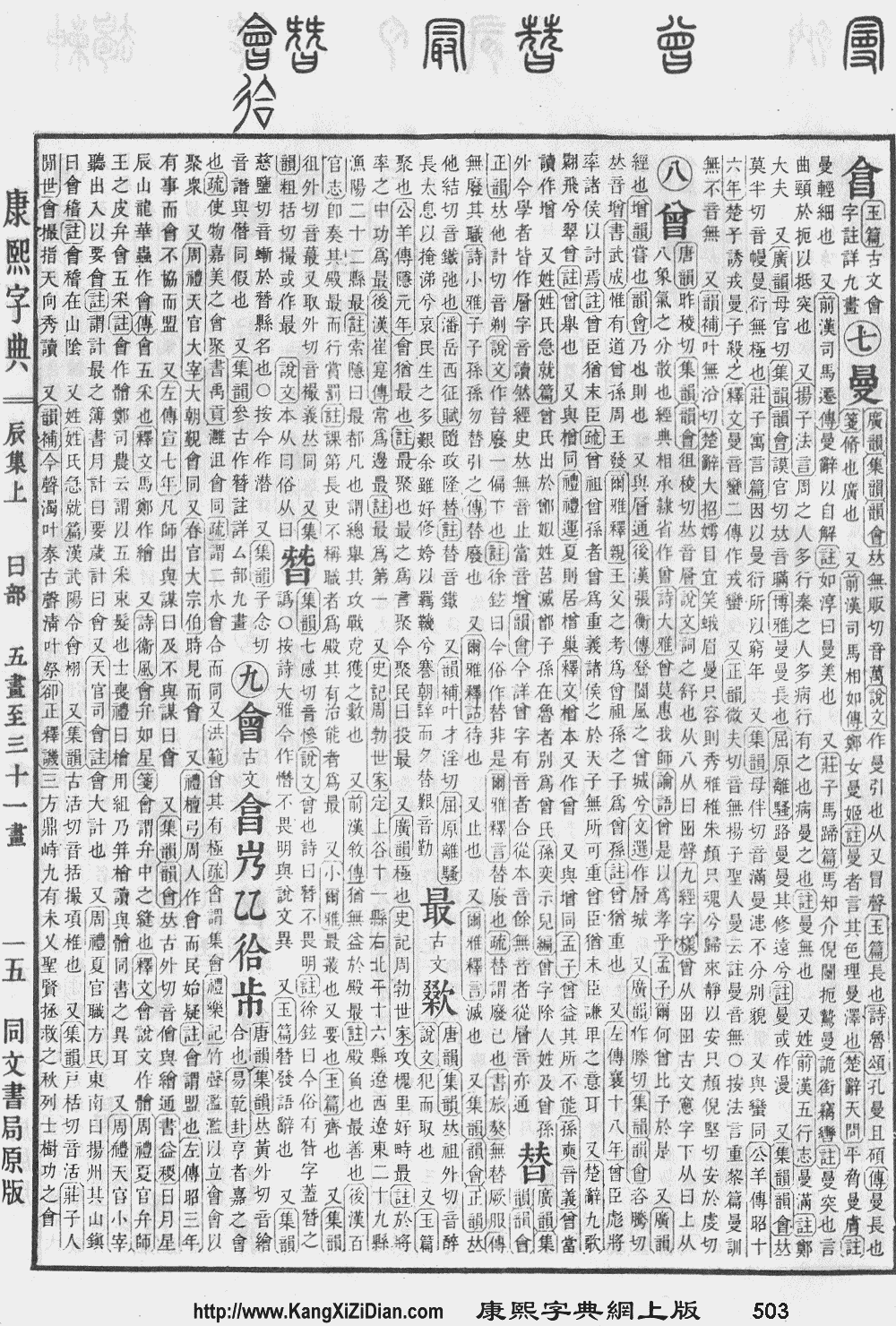
- KangXi: page 503, character 3
- Dai Kanwa Jiten: character 14299
- Dae Jaweon: page 877, character 2
- Hanyu Da Zidian: volume 2, page 1521, character 3
- Unihan data for U+66FE
Chinese
| simp. and trad. |
曾 | |
|---|---|---|
Glyph origin
| Historical forms of the character 曾 | |||
|---|---|---|---|
| Shang | Western Zhou | Shuowen Jiezi (compiled in Han) | Liushutong (compiled in Ming) |
| Oracle bone script | Bronze inscriptions | Small seal script | Transcribed ancient scripts |
 |
 |
 |
 |
| Characters in the same phonetic series (曾) (Zhengzhang, 2003) | |
|---|---|
| Old Chinese | |
| 潧 | *ʔsrɯn |
| 繒 | *ʔsɯːŋ, *zɯŋ |
| 增 | *ʔsɯːŋ, *ʔsɯːŋs |
| 憎 | *ʔsɯːŋ |
| 磳 | *ʔsɯːŋ, *zɯŋ |
| 曾 | *ʔsɯːŋ, *zɯːŋ |
| 矰 | *ʔsɯːŋ |
| 罾 | *ʔsɯːŋ |
| 熷 | *ʔsɯːŋ |
| 竲 | *ʔsɯːŋ, *zɯŋ |
| 橧 | *ʔsɯːŋ, *zɯŋ |
| 譄 | *ʔsɯːŋ |
| 蹭 | *sʰɯːŋs |
| 層 | *zɯːŋ |
| 贈 | *zɯːŋs |
| 僧 | *sɯːŋ |
| 鬙 | *sɯːŋ |
| 甑 | *ʔsɯŋs |
| 鄫 | *zɯŋ |
| 驓 | *zɯŋ |
| 嶒 | *zɯŋ |
| 噌 | *sʰɯːŋ |
| 鏳 | *zrɯːŋ |
Pictogram (象形) – a cooker for steaming food. The derivative 甑 (OC *ʔsɯŋs) refers to the original word.
Pronunciation 1
Definitions
曾
- already; ever; once (in the past); previously
Compounds
Pronunciation 2
Definitions
曾
Compounds
Derived terms from 曾
Japanese
| 曽 | |
| 曾 |
Kanji
曾
(“Jinmeiyō” kanji used for names, kyūjitai kanji, shinjitai form 曽)
- This term needs a translation to English. Please help out and add a translation, then remove the text
{{rfdef}}.
Readings
Korean
Hanja
曾 • (jeung) (hangeul 증, revised jeung, McCune–Reischauer chŭng, Yale cung)
- This term needs a translation to English. Please help out and add a translation, then remove the text
{{rfdef}}.
Vietnamese
Han character
曾 (tằng, tăng, tâng, tơn, tưng, từng)
- used as prefix to indicate a greater level (especially in 曽祖: tằng tổ : great-grandfather, other meaning now seems archaic)
- One pronunciation is từng, could be the root of từng : (have ever done <something>) (see từng)
References
This article is issued from
Wiktionary.
The text is licensed under Creative Commons - Attribution - Sharealike.
Additional terms may apply for the media files.