魂
| ||||||||
Translingual
Han character
魂 (radical 194, 鬼+4, 14 strokes, cangjie input 一戈竹戈 (MIHI), four-corner 16713, composition ⿰云鬼)
References
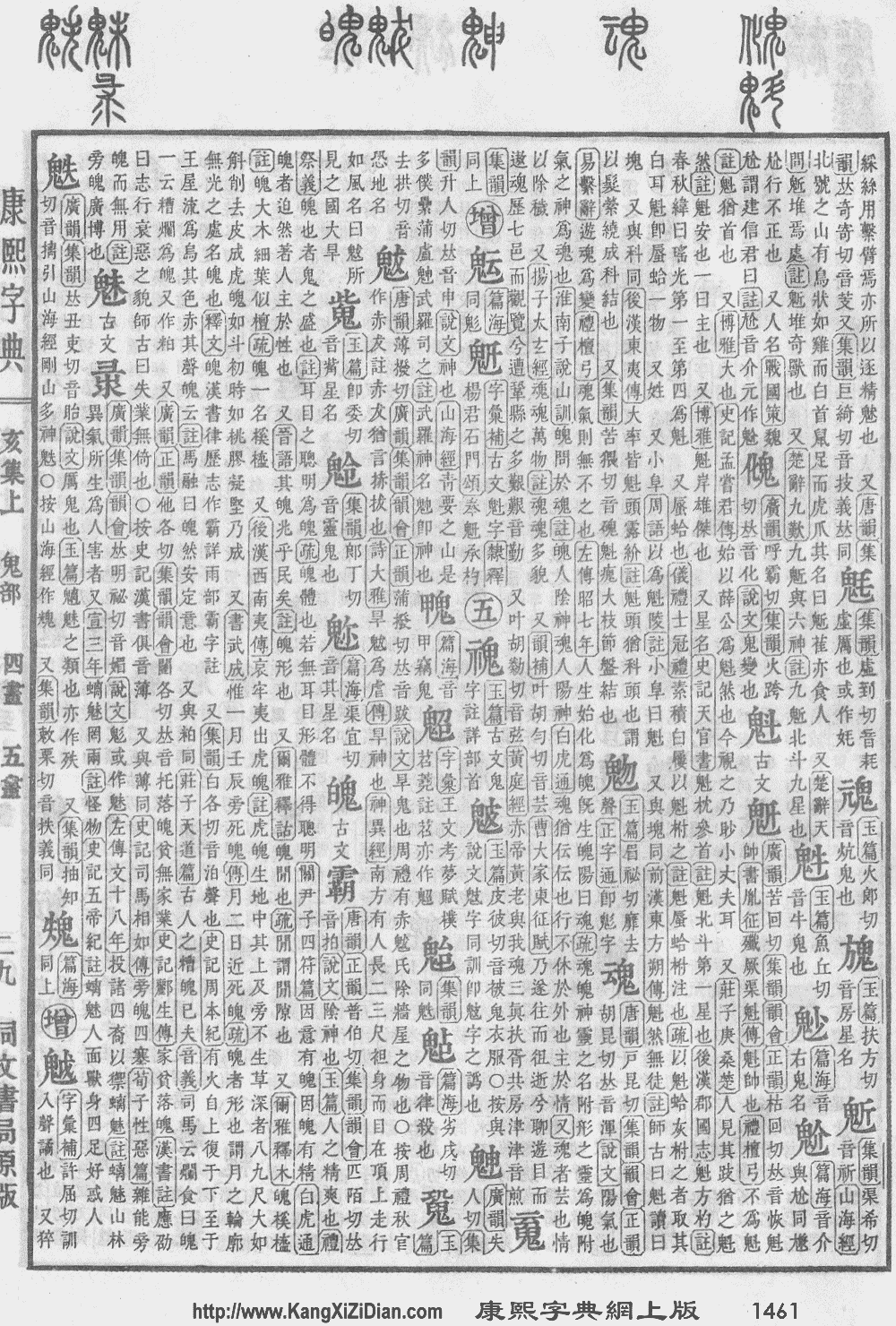
- KangXi: page 1461, character 12
- Dai Kanwa Jiten: character 45787
- Dae Jaweon: page 1994, character 20
- Hanyu Da Zidian: volume 7, page 4428, character 9
- Unihan data for U+9B42
Chinese
| simp. and trad. |
魂 | |
|---|---|---|
Glyph origin
| Historical forms of the character 魂 |
|---|
| Shuowen Jiezi (compiled in Han) |
| Small seal script |
 |
| Characters in the same phonetic series (云) (Zhengzhang, 2003) | |
|---|---|
| Old Chinese | |
| 魂 | *ɢuːn |
| 沄 | *ɢuːn, *ɢun |
| 忶 | *ɢuːn, *ɢuns |
| 囩 | *ɢun |
| 夽 | *ŋunʔ |
| 雲 | *ɢun |
| 芸 | *ɢun |
| 耘 | *ɢun |
| 妘 | *ɢun |
| 紜 | *ɢun |
| 云 | *ɢun |
| 耺 | *ɢun |
| 蕓 | *ɢun |
| 澐 | *ɢun |
| 橒 | *ɢun |
| 抎 | *ɢunʔ |
Phono-semantic compound (形聲, OC *ɢuːn) : phonetic 云 (OC *ɢun) + semantic 鬼.
Pronunciation
Definitions
魂
- (religion, folklore) the hun, the soul which goes to heaven, as opposed to the 魄 (pò), which goes down to the earth with the body at death.
- soul; spirit
- mood
- the lofty spirit of a nation or people
Synonyms
Compounds
Derived terms from 魂
|
|
|
Japanese
Kanji
魂
Readings
Etymology
| Kanji in this term |
|---|
| 魂 |
| たましい Grade: S |
| kun’yomi |
Pronunciation
Noun
魂 (hiragana たましい, rōmaji tamashī, historical hiragana たましひ)
Korean
Hanja
魂 • (hon) (hangeul 혼, revised hon, McCune–Reischauer hon, Yale hon)
Vietnamese
Han character
- This term needs a translation to English. Please help out and add a translation, then remove the text
{{rfdef}}.
This article is issued from
Wiktionary.
The text is licensed under Creative Commons - Attribution - Sharealike.
Additional terms may apply for the media files.