往
See also: 徃
| ||||||||
Translingual
Han character
往 (radical 60 彳+5, 8 strokes, cangjie input 竹人卜土 (HOYG), four-corner 20214, composition ⿰彳主)
References
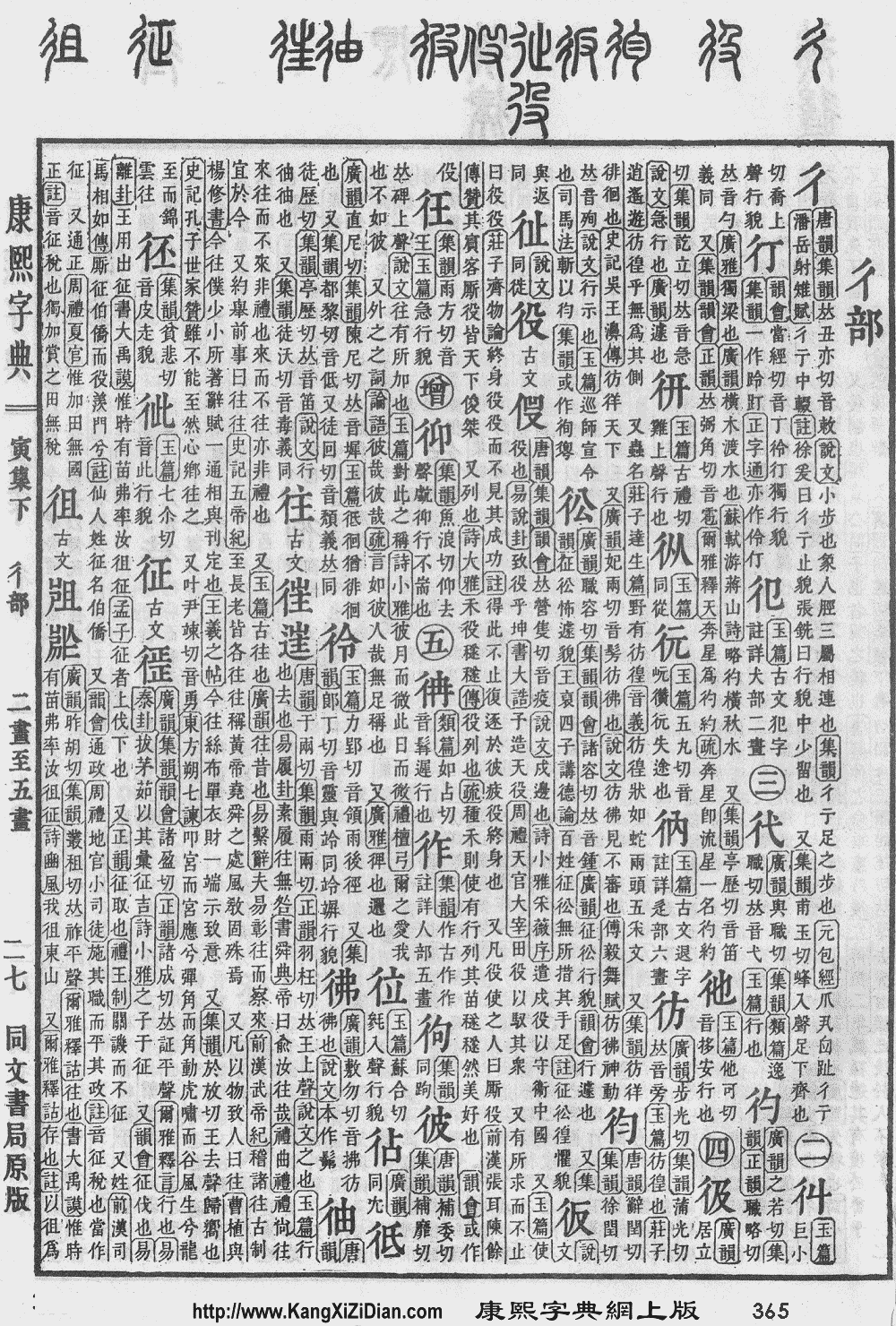
- KangXi: page 365, character 32
- Dai Kanwa Jiten: character 10073
- Dae Jaweon: page 685, character 23
- Hanyu Da Zidian: volume 2, page 817, character 6
- Unihan data for U+5F80
Chinese
| simp. and trad. |
往 | |
|---|---|---|
| alt. forms | 徃 | |
Glyph origin
| Historical forms of the character 往 | ||||||
|---|---|---|---|---|---|---|
| Shang | Western Zhou | Spring and Autumn | Warring States | Shuowen Jiezi (compiled in Han) | ||
| Oracle bone script | Bronze inscriptions | Bronze inscriptions | Chu Slip and silk script | Qin slip script | Ancient script | Small seal script |
 |
 |
 |
 |
 |
 |
 |
| Characters in the same phonetic series (往) (Zhengzhang, 2003) | |
|---|---|
| Old Chinese | |
| 暀 | *ɢʷaŋs, *ɢʷaŋʔ, *ɢʷaŋs |
| 誑 | *kʷaŋs, *ɡʷaŋ, *kʷaŋs |
| 枉 | *qʷaŋʔ |
| 往 | *ɢʷaŋ |
Phono-semantic compound (形聲, OC *ɢʷaŋ) : semantic 彳 + phonetic 𡉚.
Etymology
From Proto-Sino-Tibetan *s-wa-ŋ (“to go; to come”). Cognate with Burmese ဝင် (wang, “to come in; to enter”), Tibetan འོང ('ong, “to come”), ཡོང (yong, “to come”). Related to 于 (OC *ɢʷa, “to go”).
Pronunciation
Definitions
往
Synonyms
- 向 (xiàng)
Compounds
Derived terms from 往
|
|
|
Japanese
Kanji
往
- outward journey
Readings
Korean
Hanja
往 • (wang) (hangeul 왕, revised wang, McCune–Reischauer wang, Yale wang)
- This term needs a translation to English. Please help out and add a translation, then remove the text
{{rfdef}}.
Vietnamese
Han character
往 (vãng, vạng, vảng, vởn, váng, vãn)
- This term needs a translation to English. Please help out and add a translation, then remove the text
{{rfdef}}.
This article is issued from
Wiktionary.
The text is licensed under Creative Commons - Attribution - Sharealike.
Additional terms may apply for the media files.