凹
| ||||||||
Translingual
| Stroke order | |||
|---|---|---|---|
 | |||
| Japanese stroke order | |||
|---|---|---|---|
 | |||
Han character
凹 (radical 17 凵+3, 5 strokes, cangjie input 尸尸山 (SSU), four-corner 77770)
References
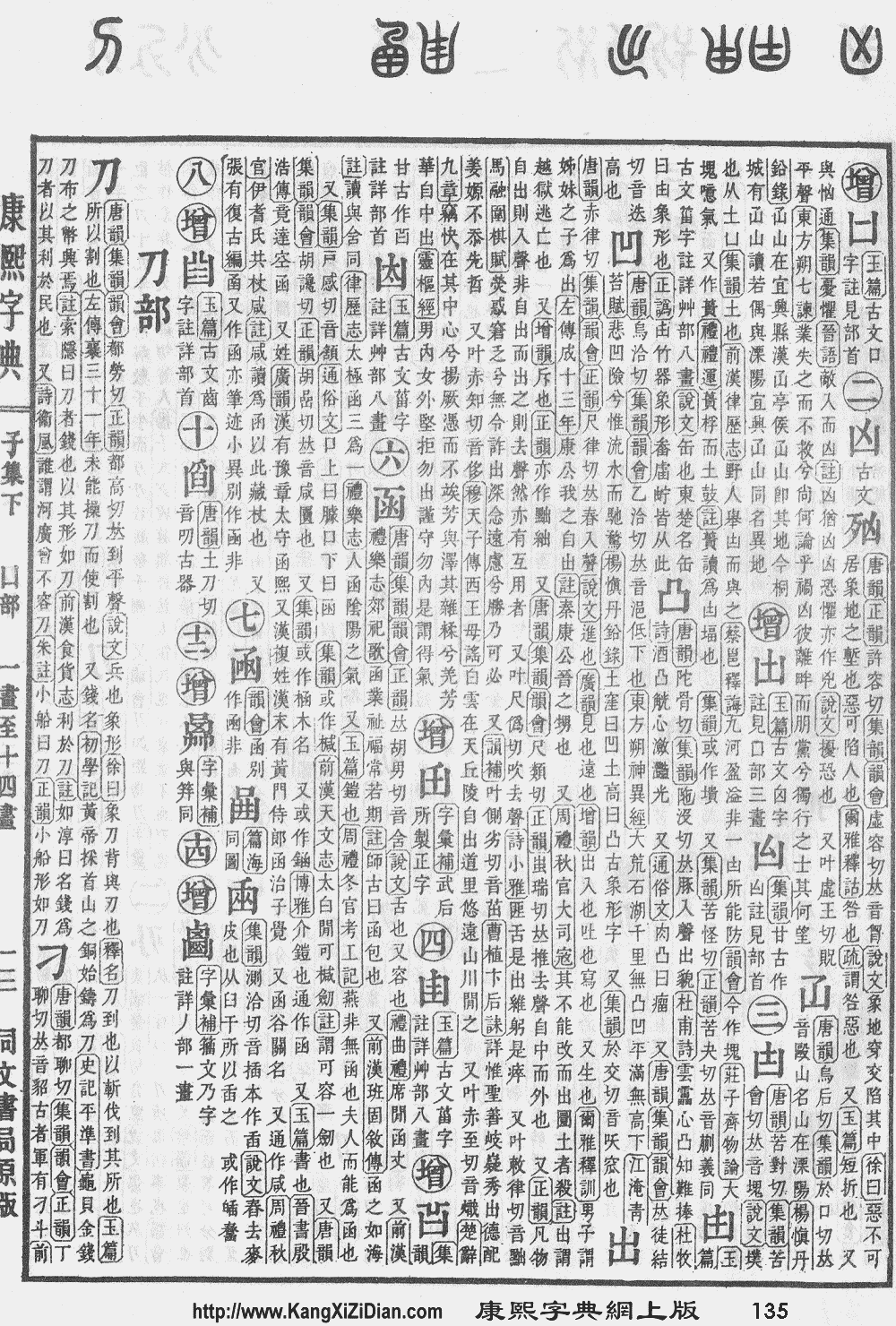
- KangXi: page 135, character 10
- Dai Kanwa Jiten: character 1810
- Dae Jaweon: page 301, character 6
- Hanyu Da Zidian: volume 1, page 308, character 3
- Unihan data for U+51F9
Chinese
| simp. and trad. |
凹 | |
|---|---|---|
Pronunciation
Definitions
凹
Antonyms
- 凸 (tū, “convex”)
Compounds
|
Japanese
Kanji
Readings
- Goon: よう (yō)←えふ (efu, historical)
- Kan’on: おう (ō, Jōyō)←あふ (afu, historical)
- Kun: くぼ (kubo, 凹); くぼい (kuboi, 凹い); くぼか (kuboka, 凹か); くぼむ (kubomu, 凹む); くぼみ (kubomi, 凹み); くぼみ (kubomi); くぼめる (kubomeru, 凹める); くぼまる (kubomaru, 凹まる); くぼます (kubomasu, 凹ます); くぼませる (kubomaseru, 凹ませる); くぼやか (kuboyaka, 凹やか); なかくぼ (nakakubo); へこむ (hekomu, 凹む); へこみ (hekomi, 凹み); へこみ (hekomi, 凹); ぼこ (boko, 凹)
Etymology 1
| Kanji in this term |
|---|
| 凹 |
| おう Grade: S |
| on’yomi |
/apu/ → /afu/ → /au/ → /ɔː/ → /oː/
From Middle Chinese 凹 (MC ʔˠɛp̚). Compare modern Mandarin reading āo, Min Nan au.
Pronunciation
Affix
凹 (hiragana おう, rōmaji ō, historical hiragana あふ)
Usage notes
The character 凹 with the reading ō is only used in compounds, and never in isolation.
Compounds
- 凹角 (おうかく, ōkaku): a reflex angle
- 凹型 (おうがた, ōgata): a die or other three-dimensional shape having a concave cross-section
- 凹形 (おうけい, ōkei): a concave shape
- 凹状 (おうじょう, ōjō): concavity
- 凹多角形 (おうたかくけい, ō takakukei): a polygon with at least one internal reflex angle
- 凹地 (おうち, ōchi): an area where the ground is noticeable lower than the surrounding area
- 凹凸 (おうとつ, ōtotsu): bumpiness, unevenness; inequality, variation, ups and downs
- 凹凸画 (おうとつが, ōtotsu ga): a style of Sui-Dynasty wall painting using trompe l'oeil techniques to look three-dimensional
- 凹凸レンズ (おうとつれんず, ōtotsu renzu): a concavo-convex lens
- 凹版 (おうはん, ōhan): an intaglio
- 凹版印刷 (おうはんいんさつ, ōhan insatsu): intaglio printing
- 凹面 (おうめん, ōmen): a concave surface
- 凹面鏡 (おうめんきょう, ōmenkyō): a concave mirror
- 準凹 (じゅんおう, jun'ō): quasiconcavity
- 凸凹 (とつおう, totsuō): bumpiness, unevenness; inequality, variation, ups and downs
- 凸凹瘢痕 (とつおうはんこん, totsuō hankon): an uneven scar
- 凸凹レンズ (とつおうれんず, totsuō renzu): a convexo-concave lens
Etymology 2
| Kanji in this term |
|---|
| 凹 |
| くぼ Grade: S |
| kun’yomi |
Unknown. Sound similarities might suggest a connection to words related to darkness or deep interior, such as 雲 (kumo, “cloud”), 蜘蛛 (kumo, “spider”), 隈 (kuma, “a recess, a deep interior corner”), 黒 (kuro, “black”), 暗 (kura, “darkness”); more at 黒. Alternately, these broad similarities might be pure coincidence.
Pronunciation
Alternative forms
Noun
- an area with sides higher than the center: an indentation, a depression, a dip, a divot, a hole
- (slang) female genitalia, the vagina
Derived terms
- 窪い, 凹い (くぼい, kuboi): hollowed out, indented; of low status, mean
- 窪か, 凹か (くぼか, kuboka): hollowed out, indented, depressed (physically), low
- 窪む, 凹む (くぼむ, kubomu): to become hollowed out or indented; to hollow out or indent something; to sink inwardly, to collapse inwardly; to fall upon hard times, to become poor
- 窪み, 窪, 凹み, 凹 (くぼみ, kubomi): see below
- 窪まる, 凹まる (くぼまる, kubomaru): to become hollowed out or indented; to squat for a while, to sink into a crouch
- 窪める, 凹める (くぼめる, kubomeru): to make something sink or collapse inwardly; to dent something; to make something into a hollowed out shape
- 窪やか, 凹やか (くぼやか, kuboyaka): hollowed out, indented, depressed (physically), low
- 窪窪, 凹凹 (くぼくぼ, kubokubo): in a hollowed out or indented way
- 窪地, 凹地 (くぼち, kubochi): a hollow, a dip, a depression or low spot in the ground
- 窪田, 凹田 (くぼた, kubota): a paddy or wet field in a low place
- 窪目, 窪眼, 凹目, 凹眼 (くぼめ, kubome): deep-set eyes, sunken eyes
- 窪溜, 凹溜 (くぼたまり, kubotamari): a low place where water tends to gather
- 笑窪, 靨 (えくぼ, ekubo): a dimple, particularly one from smiling
- 大窪, 大久保 (おおくぼ, Ōkubo): a surname
- 落窪, 落ち窪 (おちくぼ, ochikubo): a dip in the floor or ground
- 手窪, 手凹 (てくぼ, tekubo): see te no kubo just below
- 手の窪, 手の凹 (てのくぼ, te no kubo): a cupped hand; a rice ball; eating rice by hand; a one-night stand, a fling or short-term romance
- 中窪, 凹 (なかくぼ, nakakubo): see below
- 盆の窪 (ぼんのくぼ, bon no kubo): the hollow of the nape of the neck; a hairstyle for infants in the Edo period, shaving the whole head except for a small area on the nape of the neck
- 目窪, 目凹 (めくぼ, mekubo): sunken eyes; a person with sunken or deep-set eyes
Synonyms
Etymology 3
| Kanji in this term |
|---|
| 凹 |
| くぼみ Grade: S |
| kun’yomi |
Noun stem of verb 凹む (kubomu, “to become hollow, to become sunken, to become indented”), itself a compound of 凹 (kubo, “an indentation, a dip”) + む (mu, “to become like something”, auxiliary verb attaching to nouns or adjective stems, cognate with びる biru).[3]
Pronunciation
Alternative forms
- 窪み, 窪, 凹み
Noun
凹 (hiragana くぼみ, rōmaji kubomi)
- a pit, a hollow, a cavity, a depression, a dent
Derived terms
- 凹石, 窪石 (くぼみいし, kubomi ishi): an artifact from the Jōmon period, consisting of a flat stone with one to several indentations, of uncertain utility but thought to be used to help start fires
Usage notes
The 凹み or 窪み spelling with the okurigana み is more common when used as a standalone term. The spelling without the okurigana is more common in compounds.
Etymology 4
| Kanji in this term |
|---|
| 凹 |
| なかくぼ Grade: S |
| kun’yomi |
Compound of 中 (naka, “inside, inner”) + 窪 (kubo, “pit, indentation”).[3][1][4]
Pronunciation
Alternative forms
- 中窪
Noun
凹 (hiragana なかくぼ, rōmaji nakakubo)
Usage notes
The 中窪 spelling is more common.
Synonyms
- 中低 (なかびく, nakabiku)
Etymology 5
| Kanji in this term |
|---|
| 凹 |
| へこみ Grade: S |
| kun’yomi |
Noun stem of verb 凹む (hekomu, “to become hollow, to become sunken, to become indented”), itself an abbreviated compound of 減り (heri, noun stem of verb 減る heru, “to reduce, to decrease, to diminish”) + 込む (komu, “to go inwardly”).[3]
Pronunciation
Alternative forms
- 凹み
Noun
凹 (hiragana へこみ, rōmaji hekomi)
- a pit, a hollow, a cavity, a depression, a dent
- a mistake, and error
- a moment of weakness or confusion, being at a loss
Usage notes
The 凹み spelling is more common.
Synonyms
Etymology 6
| Kanji in this term |
|---|
| 凹 |
| ぼこ Grade: S |
| kun’yomi |
Uncertain. Possibly onomatopoeic from the sound of a wheel bouncing in a rut or pothole, or from the sound of something hollow when tapped. Compare adverb ぼこぼこ (bokoboko, “full of holes; hollowly”).
Alternately, may be compound of ぼ (bo, “empty?”, uncertain; possibly related to verb 掘る horu, “to dig, to dig out”) + こ (ko, “place”, suffixing element seen in other words such as そこ soko, “there” or 端っこ hashikko, “edge, end, tip”). Compare 凸 (deko, “protrusion”), likely a compound of 出 (de, “coming out”) + こ (ko, “place”, suffixing element).
Pronunciation
Noun
- an indentation, a dip or divot, a hollow, a dent in a surface
Derived terms
References
- 1 2 3 4 5 6 7 8 2006, 大辞林 (Daijirin), Third Edition (in Japanese), Tōkyō: Sanseidō, →ISBN
- 1 2 3 1998, NHK日本語発音アクセント辞典 (NHK Japanese Pronunciation Accent Dictionary) (in Japanese), Tōkyō: NHK, →ISBN
- 1 2 3 1988, 国語大辞典(新装版) (Kokugo Dai Jiten, Revised Edition) (in Japanese), Tōkyō: Shogakukan
- ↑ 1995, 大辞泉 (Daijisen) (in Japanese), Tōkyō: Shogakukan, →ISBN
Korean
Hanja
凹 • (yo)
- This term needs a translation to English. Please help out and add a translation, then remove the text
{{rfdef}}.
Vietnamese
Han character
凹 (ao)
- This term needs a translation to English. Please help out and add a translation, then remove the text
{{rfdef}}.