黎
| ||||||||
Translingual
Han character
黎 (radical 202 黍+3, 15 strokes, cangjie input 竹竹人水 (HHOE), four-corner 27132, composition ⿳𥝢𠆢氺)
References
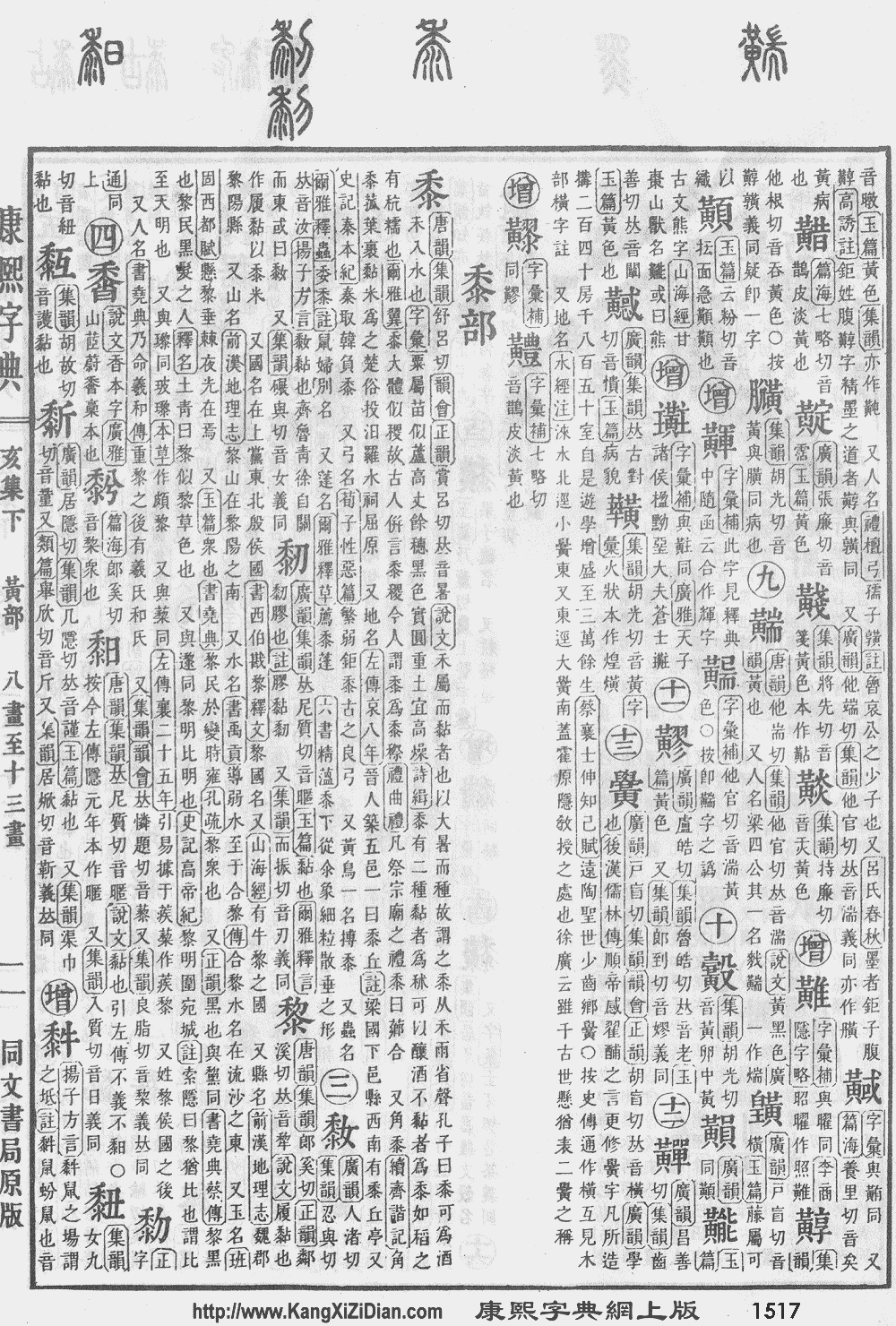
- KangXi: page 1517, character 28
- Dai Kanwa Jiten: character 47994
- Dae Jaweon: page 2049, character 36
- Hanyu Da Zidian: volume 7, page 4759, character 3
- Unihan data for U+9ECE
Chinese
| simp. and trad. |
黎 | |
|---|---|---|
Glyph origin
| Characters in the same phonetic series (利) (Zhengzhang, 2003) | |
|---|---|
| Old Chinese | |
| 犂 | |
| 黎 | *riːl |
| 莉 | *riːl, *r'il, *r'i |
| 黧 | *riːl |
| 鯬 | *riːl, *ril |
| 筣 | *riːl, *ri |
| 蔾 | *riːl, *ril |
| 藜 | *riːl |
| 邌 | *riːl |
| 瓈 | *riːl |
| 鵹 | *rel |
| 棃 | *ril |
| 梨 | *ril |
| 蟍 | *ril |
| 蜊 | *ril |
| 鑗 | *ril |
| 利 | *rids |
| 痢 | *rids |
| 浰 | *riːns |
Phono-semantic compound (形聲, OC *riːl) : semantic 黍 (“millet”) + phonetic 利 (OC *rids).
Etymology
Cognate with 黧 (“black”) (Wang, 1982).
This etymology is incomplete. You can help Wiktionary by elaborating on the origins of this term.
Pronunciation
Definitions
黎
- † black
- † numerous; crowded
- † almost
- (~國) (historical) state of Li (a state in modern-day Shanxi, China, during the Shang dynasty)
- (~族) Li people (the largest ethnic minority in Hainan, China)
- Short for 黎巴嫩 (Líbānèn, “Lebanon”).
-
- 年逾八旬的卡薩與中國淵源頗深,自上世紀50年代以來,他已訪問中國50餘次,是中黎乃至中阿關係發展的見證者。 [MSC, trad.]
- From: 2017 April 7, 李良勇, 黎巴嫩友好人士任丝绸之路国际总商会荣誉主席
- Nián yú bā xún de kǎsà yǔ zhōngguó yuānyuán pō shēn, zì shàng shìjì 50 niándài yǐlái, tā yǐ fǎngwèn zhōngguó 50 yú cì, shì Zhōng Lí nǎizhì Zhōng Ā guānxì fāzhǎn de jiànzhèngzhě. [Pinyin]
- Kassar, who is over 80 years old, has a deep relationship with China; since the 1950s, he has visited China over 50 times, witnessing the development of Sino–Lebanese, and even Sino–Arab, relations.
年逾八旬的卡萨与中国渊源颇深,自上世纪50年代以来,他已访问中国50余次,是中黎乃至中阿关系发展的见证者。 [MSC, simp.]
-
- A surname.
Compounds
Japanese
Kanji
黎
(“Jinmeiyō” kanji used for names)
Readings
Compounds
Compounds
- 群黎 (gunrei)
- 黔黎 (kenrei)
- 生黎 (seirei)
- 重黎 (chōrei)
- 泥黎 (nairi)
- 百黎 (hyakurei)
- 黎族 (rīzoku)
- 黎桓 (reikan)
- 黎貴惇 (reikijun)
- 黎軒 (reiken)
- 黎元 (reigen)
- 黎元洪 (reigenkō)
- 黎首 (reishu)
- 黎庶 (reisho)
- 黎庶昌 (reishoshō)
- 黎聖宗 (reiseisō)
- 黎旦 (reitan)
- 黎朝 (reichō); or 黎朝 (rechō)
- 黎朝刑律 (reichōkeiritsu)
- 黎文悦 (reibun'etsu)
- 黎民 (reimin)
- 黎明 (reimei, “dawn”)
- 黎明会 (reimeikai)
- 黎明期 (reimeiki)
- 黎利 (reiri)
Korean
Hanja
黎 • (ryeo>yeo) (hangeul 려>여, revised ryeo>yeo, McCune–Reischauer ryŏ>yŏ, Yale lye>ye)
- This term needs a translation to English. Please help out and add a translation, then remove the text
{{rfdef}}.
Vietnamese
Han character
- spelt as Lê, the fourth most common surname among ethnic Vietnamese.
This article is issued from
Wiktionary.
The text is licensed under Creative Commons - Attribution - Sharealike.
Additional terms may apply for the media files.