次
| ||||||||
Translingual
Han character
次 (radical 76 欠+2, 6 strokes, cangjie input 戈一弓人 (IMNO) or 一一弓人 (MMNO), four-corner 17182 or 37182, composition ⿰冫欠 or ⿰二欠)
Derived characters
References
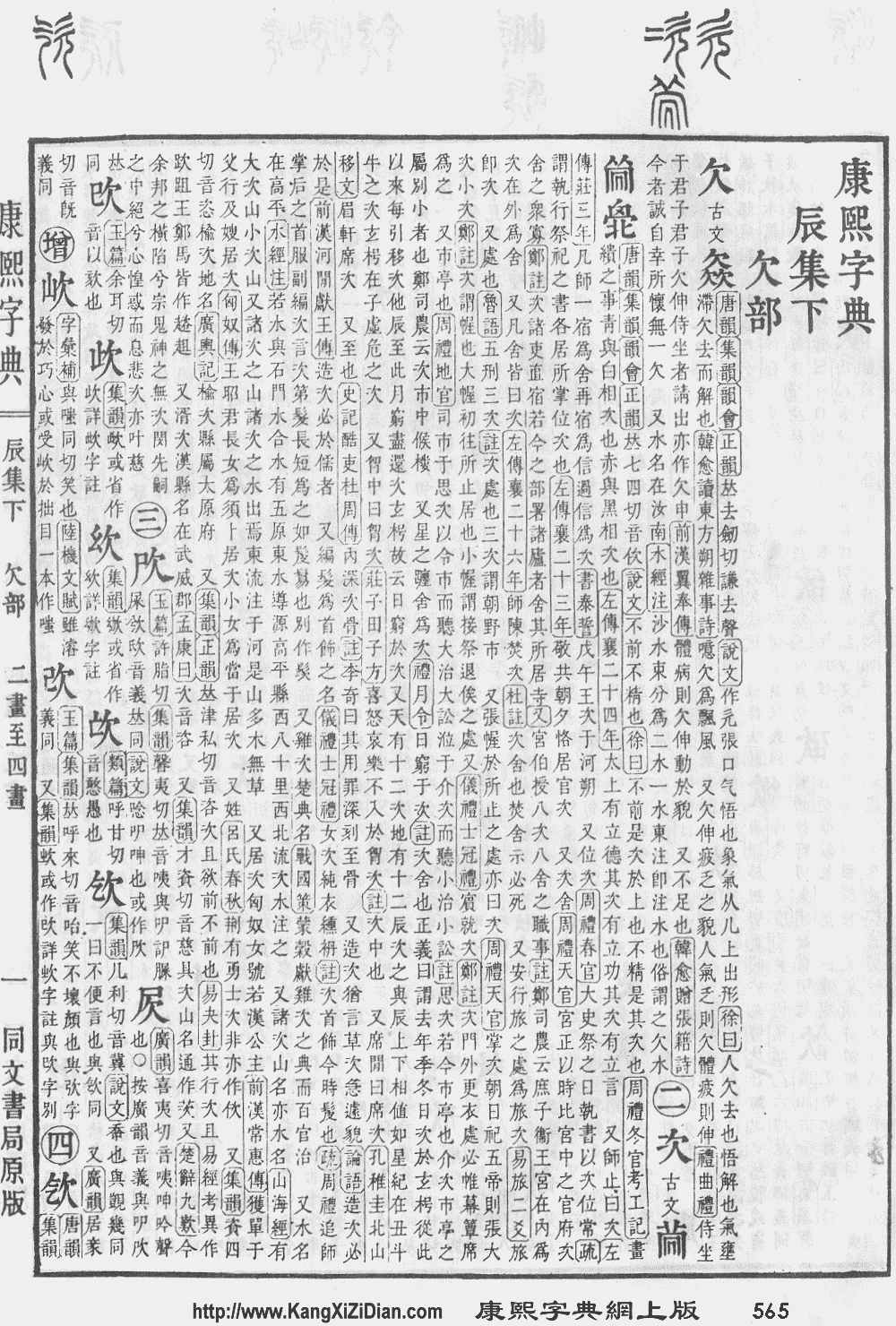
- KangXi: page 565, character 3
- Dai Kanwa Jiten: character 15992
- Dae Jaweon: page 954, character 1
- Hanyu Da Zidian: volume 3, page 2133, character 2
- Unihan data for U+6B21
Chinese
| simp. and trad. |
次 | |
|---|---|---|
Glyph origin
| Historical forms of the character 次 | |||
|---|---|---|---|
| Shang | Western Zhou | Shuowen Jiezi (compiled in Han) | Liushutong (compiled in Ming) |
| Oracle bone script | Bronze inscriptions | Small seal script | Transcribed ancient scripts |
 |
 |
 |
 |
| Characters in the same phonetic series (次) (Zhengzhang, 2003) | |
|---|---|
| Old Chinese | |
| 咨 | *ʔsli |
| 資 | *ʔsli |
| 姿 | *ʔsli |
| 粢 | *ʔsli |
| 諮 | *ʔsli |
| 恣 | *ʔslis |
| 澬 | *ʔsli, *zli |
| 趑 | *sʰli |
| 蠀 | *sʰli |
| 次 | *sn̥ʰis |
| 佽 | *sl̥ʰis |
| 絘 | *sl̥ʰis |
| 薋 | *zli |
| 瓷 | *zli |
| 茨 | *zli |
| 餈 | *zli |
| 垐 | *zli, *zlɯɡ |
| 楶 | *ʔsliːɡ |
Pronunciation 1
Definitions
次
Pronunciation 2
Definitions
次
- Only used in 榆次.
Pronunciation 3
Definitions
次
- Only used in 次且.
Pronunciation 4
Definitions
次
- Only used in 具次.
Compounds
|
|
|
Japanese
Kanji
Readings
Compounds
- 目次 (mokuji)
Etymology 1
| Kanji in this term |
|---|
| 次 |
| し Grade: 3 |
| on’yomi |
From Middle Chinese 次 (tshijH, “in order; second”).
Less common reading in modern Japanese. Superseded in most cases by ji; see below.
Pronunciation
Affix
Usage notes
Only found in compounds.
Derived terms
Etymology 2
| Kanji in this term |
|---|
| 次 |
| じ Grade: 3 |
| on’yomi |
/si/ → /ʑi/ → /d͡ʑi/
Sound shift from shi above.[1]
Pronunciation
- Kan’yōyomi
- IPA(key): [d͡ʑi]
Counter
- number of times: an ordinal marker
- 第四次計画
- daiyonji keikaku
- the fourth plan
- 第四次計画
- number in a sequence, number of aspects or dimensions
- 二次方程式、三次式
- niji hōteishiki, sanji shiki
- a quadratic equation, a third order expression
- 二次方程式、三次式
Noun
Usage notes
Seldom found in isolation.
Prefix
- (attached to nouns) the next, secondary, vice-
- 次位、次長
- jii, jichō
- second rank, vice-director
- 次位、次長
- (chemistry) hypo- (used to distinguish the oxidation levels of various acids)
- 亜塩素酸、次亜塩素酸、亜臭素酸、次亜臭素酸
- aenso san, jiaenso san, ashūso san, jiashūso san
- chlorous acid, hypochlorous acid, bromous acid, hypobromous acid
- 亜塩素酸、次亜塩素酸、亜臭素酸、次亜臭素酸
Etymology 3
| Kanji in this term |
|---|
| 次 |
| つぎ Grade: 3 |
| kun’yomi |
Nominalization of the 連用形 (ren'yōkei, “continuative or stem form”) of Old Japanese-derived verb 次ぐ (tsugu, “to be in a sequence; to follow, to continue from something, to be next; to connect, to join”).[1]
Pronunciation
Noun
- next, order, sequence, below
- 子供たちは次のように述べています。
- Kodomotachi wa tsugi no yō ni nobeteimasu.
- The children said as follows.
- From the Emacs tutorial (English)
- では C-v (次の画面を見る)をタイプして次の画面に進んで下さい。(さあ、やってみましょう。コントロールキーを押しながら v です)
- De wa C-v (tsugi no gamen o miru) o taipu shite tsugi no gamen ni susunde kudasai. (Sā, yattemimashō. Kontorōrukī o oshinagara v desu)
- Now type C-v (View next screen) to move to the next screen. (go ahead, do it by depressing the control key and v together)
- では C-v (次の画面を見る)をタイプして次の画面に進んで下さい。(さあ、やってみましょう。コントロールキーを押しながら v です)
- 子供たちは次のように述べています。
Etymology 4
| Kanji in this term |
|---|
| 次 |
| すき Grade: 3 |
| kun’yomi |
Nominalization of the 連用形 (ren'yōkei, “continuative or stem form”) of Old Japanese-derived verb 次く (suku, “to follow, to continue from something, to be next;”).[1]
The verb form was obsolete even in olden times. Existence of the verb, possibly related to tsugu mentioned above, is inferred from placenames found in the Man'yōshū and other ancient poetry.[1]
Pronunciation
Alternative forms
- 主基
Noun
Etymology 5
| Kanji in this term |
|---|
| 次 |
| ついで Grade: 3 |
| kun’yomi |
/tuɡite/ → /tuide/
Sound shift from 次第 (tsugite, “order, sequence”), itself originally the 連用形 (ren'yōkei, “continuative or stem form”) of now-obsolete Old Japanese-derived verb 継ぎつ (tsugitsu, “to do things in sequence, to establish an order”).[1]
Pronunciation
Alternative forms
Noun
次 (hiragana ついで, rōmaji tsuide)
- order, sequence
- follower, successor; the next thing in a sequence
- a good opportunity to do something; doing something incidental to something else
Usage notes
The good opportunity sense is more often encountered as 序でに (tsuide ni).
References
Korean
Hanja
次 • (cha) (hangeul 차, McCune–Reischauer ch'a, Yale cha)
- This term needs a translation to English. Please help out and add a translation, then remove the text
{{rfdef}}.
Vietnamese
Particle
- This term needs a translation to English. Please help out and add a translation, then remove the text
{{rfdef}}.