已
| ||||||||
Translingual
| Stroke order | |||
|---|---|---|---|
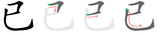 | |||
| Stroke order | |||
|---|---|---|---|
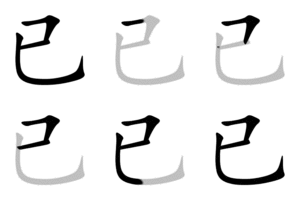 | |||
Han character
已 (radical 49 己+0, 3 strokes, cangjie input 尸山 (SU) or X尸山 (XSU), four-corner 17717)
Derived characters
- 𠖰, 𡉏, 𡴾, 𢩽, 𨑓, 𤣱, 𥝗, 𫧟, 𬜒, 𧿆, 𩨕, 𩝮, 𬀺, 𥮄
- 𤏁 (Exception: Only for Taiwan character form as Hong Kong character contains 己 instead)
References
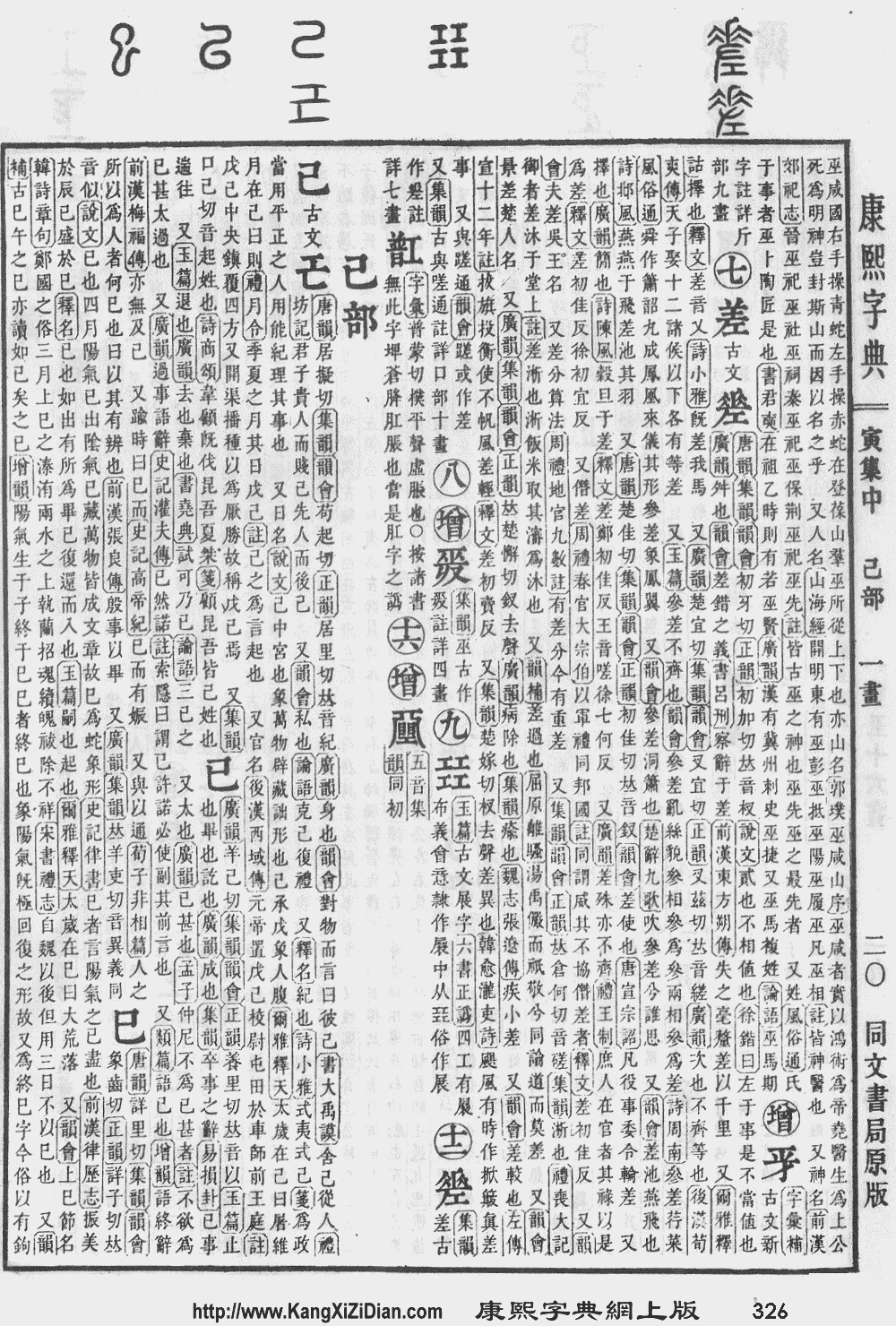
- KangXi: page 326, character 11
- Dai Kanwa Jiten: character 8743
- Dae Jaweon: page 630, character 11
- Hanyu Da Zidian: volume 2, page 984, character 1
- Unihan data for U+5DF2
Usage notes
This character is not to be confused with visually similar but unrelated 己 or 巳.
Chinese
| simp. and trad. |
已 | |
|---|---|---|
Pronunciation
Definitions
已
Synonyms
| Dialectal synonyms of 已經 (“already”) [map] | ||
|---|---|---|
| Variety | Location | Words |
| Classical Chinese | 已、業已 | |
| Formal (Written Standard Chinese) | 已經、已、業經、業已 | |
| Mandarin | Beijing | 已經 |
| Taiwan | 已經 | |
| Jinan | 已經 | |
| Xi'an | 已經 | |
| Wuhan | 已經 | |
| Chengdu | 已經 | |
| Yangzhou | 已經 | |
| Hefei | 已經 | |
| Cantonese | Guangzhou | 已經、經已 |
| Hong Kong | 已經、經已 | |
| Taishan | 經已 | |
| Yangjiang | 應 | |
| Gan | Nanchang | 已經 |
| Hakka | Meixian | 既經 |
| Miaoli (N. Sixian) | 既經 | |
| Liudui (S. Sixian) | 既經、已經 | |
| Hsinchu (Hailu) | 既經 | |
| Dongshi (Dabu) | 既經 | |
| Zhuolan (Raoping) | 既經 | |
| Yunlin (Zhao'an) | 已經 | |
| Jin | Taiyuan | 已經 |
| Min Bei | Jian'ou | 已經 |
| Min Dong | Fuzhou | 已經 |
| Matsu | 已經 | |
| Min Nan | Xiamen | 已經 |
| Quanzhou | 已經 | |
| Zhangzhou | 已經 | |
| Taipei | 已經 | |
| Kaohsiung | 已經 | |
| Philippines (Manila) | 已經 | |
| Chaozhou | 已經 | |
| Wu | Suzhou | 已經 |
| Wenzhou | 已經 | |
| Xiang | Changsha | 已經 |
| Shuangfeng | 已經、既已經 | |
Compounds
Japanese
Kanji
已
(“Jinmeiyō” kanji used for names)
- This term needs a translation to English. Please help out and add a translation, then remove the text
{{rfdef}}.
Readings
Compounds
May be replaced with 以 in some compounds, eg. 已降→以降.
Compounds
- 已然 (izen)
- 已然形 (izenkei)
- 已上 (ijō)
- 已下 (ika)
- 已前 (izen)
- 已降 (ikō)
- 已後 (igo)
- 已来 (irai)
- 生滅滅已 (shōmetsumetsui)
Korean
Hanja
已 • (i) (hangeul 이, revised i, McCune–Reischauer i)
- This term needs a translation to English. Please help out and add a translation, then remove the text
{{rfdef}}.
Vietnamese
Han character
- This term needs a translation to English. Please help out and add a translation, then remove the text
{{rfdef}}.
This article is issued from
Wiktionary.
The text is licensed under Creative Commons - Attribution - Sharealike.
Additional terms may apply for the media files.