關
| ||||||||
Translingual
| Traditional | 關 |
|---|---|
| Shinjitai | 関 |
| Simplified | 关 |
Han character
關 (radical 169, 門+11, 19 strokes, cangjie input 日弓女戈廿 (ANVIT), four-corner 77772, composition ⿵門𢇇)
Derived characters
- 𡅭, 𡤡, 𢺄, 𣠸
References
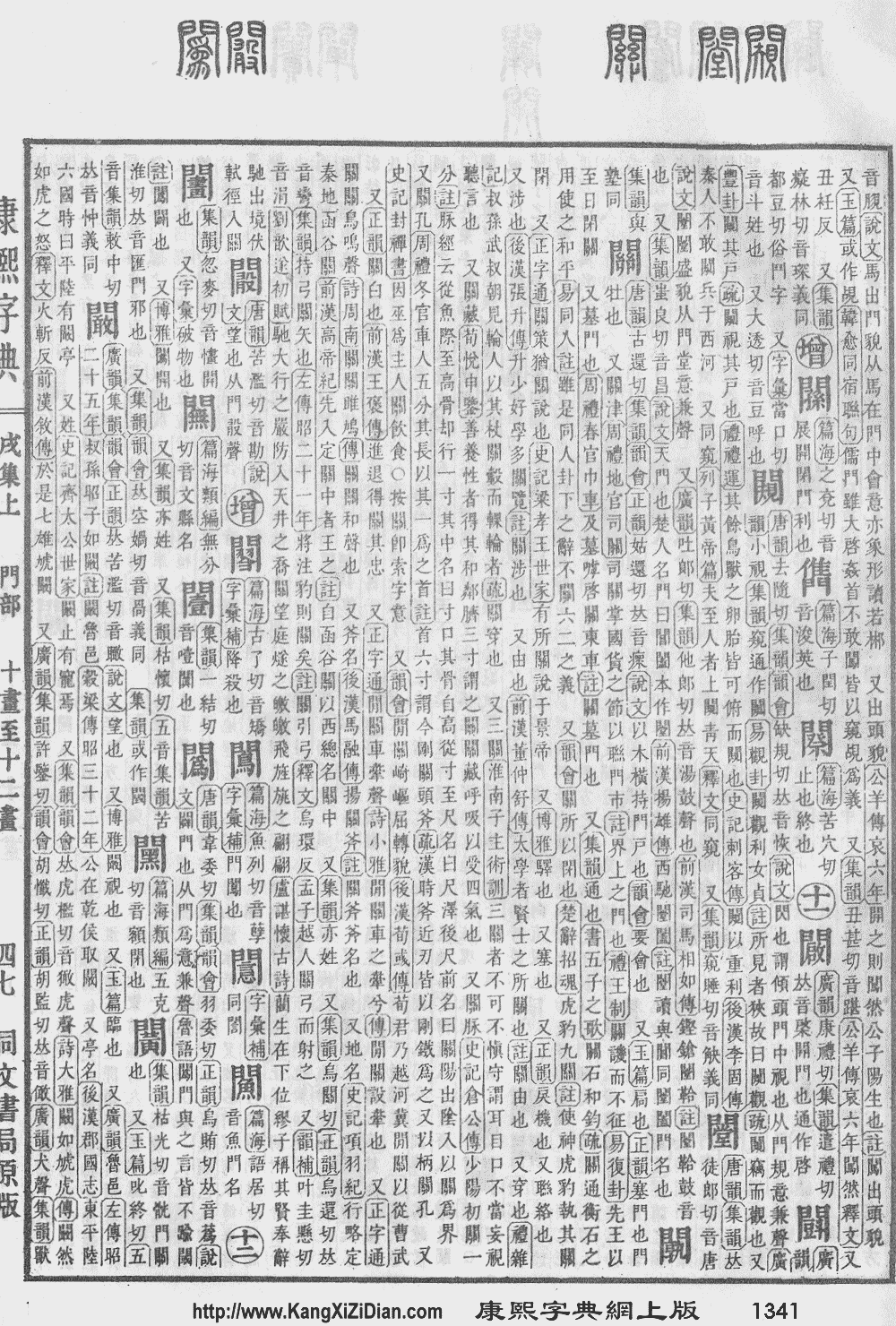
- KangXi: page 1341, character 9
- Dai Kanwa Jiten: character 41470
- Dae Jaweon: page 1845, character 13
- Hanyu Da Zidian: volume 7, page 4316, character 10
- Unihan data for U+95DC
Chinese
| trad. | 關 | |
|---|---|---|
| simp. | 关* | |
| alt. forms | 関 𨶚 𢇅 𬮦 | |
Glyph origin
| Characters in the same phonetic series (卵) (Zhengzhang, 2003) | |
|---|---|
| Old Chinese | |
| 卵 | *ɡ·roːlʔ, *ɡ·roːnʔ |
| 關 | *kroːn |
| 関 | *kroːn |
| 聯 | *ɡ·ron |
Phono-semantic compound (形聲, OC *kroːn) : semantic 門 (“door”) + phonetic 𢇅 – to stop the door from opening with a wooden stick.
Pronunciation
Definitions
關
Compounds
Derived terms from 關
|
|
|
Japanese
| 関 | |
| 關 |
Kanji
關
(uncommon “Hyōgai” kanji, kyūjitai kanji, shinjitai form 関)
- a pass, such as in a mountain range
- relation, relationship
Readings
Usage notes
Not used in modern Japanese. Superseded by the shinjitai character 関.
Korean
Hanja
關 • (gwan, wan) (hangeul 관, 완, revised gwan, wan, McCune–Reischauer kwan, wan, Yale kwan, wan)
- This term needs a translation to English. Please help out and add a translation, then remove the text
{{rfdef}}.
Vietnamese
Han character
- This term needs a translation to English. Please help out and add a translation, then remove the text
{{rfdef}}.
This article is issued from
Wiktionary.
The text is licensed under Creative Commons - Attribution - Sharealike.
Additional terms may apply for the media files.