袖
See also: 褎
| ||||||||
Translingual
Han character
袖 (radical 145, 衣+5, 10 strokes, cangjie input 中中田 (LLW), four-corner 35260, composition ⿰衤由)
References
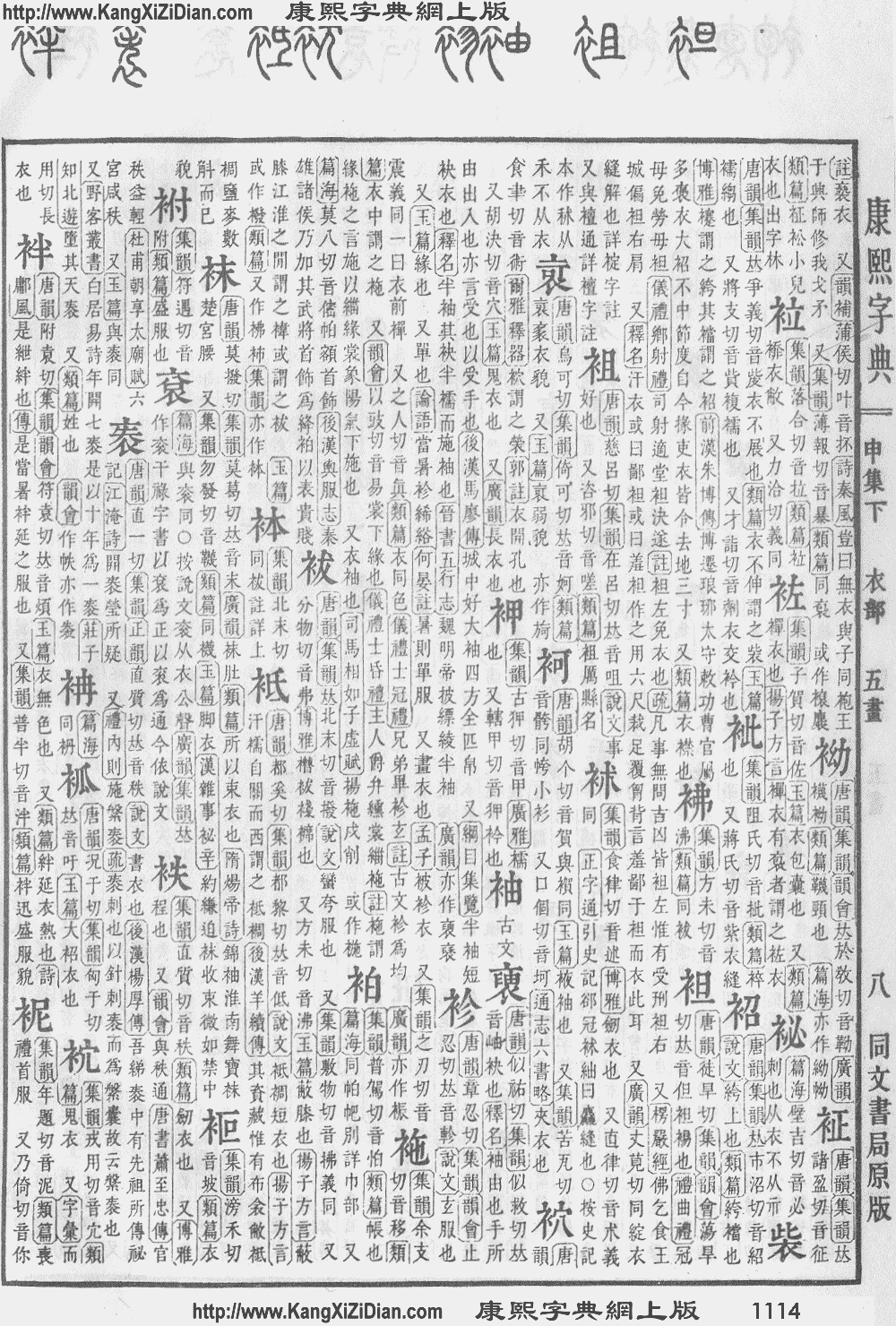
- KangXi: page 1114, character 17
- Dai Kanwa Jiten: character 34192
- Dae Jaweon: page 1580, character 5
- Hanyu Da Zidian: volume 5, page 3083, character 3
- Unihan data for U+8896
Chinese
| simp. and trad. |
袖 | |
|---|---|---|
| alt. forms | 褎 褏 𧙏 ‡ 𠍡 | |
Glyph origin
| Characters in the same phonetic series (由) (Zhengzhang, 2003) | |
|---|---|
| Old Chinese | |
| 袖 | *ljɯwɢs |
| 岫 | *ljɯwɢs |
| 牰 | *ljɯwɢs, *lɯwɢs |
| 抽 | *l̥ʰɯw |
| 妯 | *l̥ʰɯw, *l'ɯwɢ |
| 紬 | *l'ɯw |
| 怞 | *l'ɯw |
| 鮋 | *l'ɯw, *ɦljɯw, *lɯw |
| 菗 | *rlɯw |
| 宙 | *l'ɯwɢs |
| 胄 | *l'ɯwɢs |
| 冑 | *l'ɯwɢs |
| 伷 | *l'ɯwɢs |
| 駎 | *l'ɯwɢs |
| 油 | *lɯw, *lɯwɢs |
| 由 | *lɯw |
| 蚰 | *lɯw |
| 秞 | *lɯw |
| 邮 | *lɯw |
| 釉 | *lɯwɢs |
| 柚 | *lɯwɢs, *l'ɯwɢ |
| 鼬 | *lɯwɢs |
| 苖 | *l'ɯːwɢ, *l̥ʰɯwɢ |
| 笛 | *l'ɯːwɢ |
| 迪 | *l'ɯːwɢ |
| 頔 | *l'ɯːwɢ |
| 軸 | *l'ɯwɢ |
| 舳 | *l'ɯwɢ |
Phono-semantic compound (形聲, OC *ljɯwɢs) : semantic 衣 (“clothing”) + phonetic 由 (OC *lɯw).
Etymology
Part of a word family referring to any cover that one slips over something; cognate with 冑 (OC *l'ɯwɢs, “helmet”) (Schuessler, 2007). Schuessler (2007) reconstructs the word with a *s- suffix, which could play an iterative role, as sleeves come in pairs.
Pronunciation
Definitions
袖
Compounds
Derived terms from 袖
|
|
Japanese
Kanji
袖
Readings
Compounds
Compounds
- 羅袖 (rashū): lightweight-fabric sleeve
Etymology
| Kanji in this term |
|---|
| 袖 |
| そで Grade: S |
| kun’yomi |
⟨so2 te⟩ → /sode/
From Old Japanese.
Originally a compound of 衣 (so, “robe; clothing”) + 手 (te, “hand; arm”).[1][2] The te changes to de as an instance of rendaku (連濁).
Pronunciation
Noun
- a sleeve, an arm (of an article of clothing)
- c. 1226, Kin'yō Wakashū (book 8, poem 469; also Hyakunin Isshu, poem 72)
- a wing of a building
- (theater) a wing of a stage
- the portion of a desk that extends to either side of one's lap, and that usually contains drawers or shelves
Derived terms
Proper noun
袖 (hiragana そで, rōmaji Sode)
- a female given name.
- a surname.
References
- ↑ 1988, 国語大辞典(新装版) (Kokugo Dai Jiten, Revised Edition) (in Japanese), Tōkyō: Shogakukan
- 1 2 2006, 大辞林 (Daijirin), Third Edition (in Japanese), Tōkyō: Sanseidō, →ISBN
- ↑ 1998, NHK日本語発音アクセント辞典 (NHK Japanese Pronunciation Accent Dictionary) (in Japanese), Tōkyō: NHK, →ISBN
- ↑ Joshua S. Mostow (1996) Pictures of the Heart: The Hyakunin Isshu in Word and Image, illustrated edition, University of Hawaii Press, →ISBN, page 354
Korean
Hanja
袖 • (su) (hangeul 수, revised su, McCune–Reischauer su, Yale swu)
- This term needs a translation to English. Please help out and add a translation, then remove the text
{{rfdef}}.
Vietnamese
Han character
袖 (tụ)
- This term needs a translation to English. Please help out and add a translation, then remove the text
{{rfdef}}.
This article is issued from
Wiktionary.
The text is licensed under Creative Commons - Attribution - Sharealike.
Additional terms may apply for the media files.