robe
English
Etymology
From Middle English robe, roobe, from Old French robe, robbe, reube (“booty, spoils of war, robe, garment”), from Frankish *rouba, *rauba (“booty, spoils, stolen clothes”, literally “things taken”), from Proto-Germanic *raubō, *raubaz, *raubą (“booty, that which is stripped or carried away”), from Proto-Indo-European *rewp- (“to tear, peel”). Akin to Old High German roup ("booty"; Modern German Raub (“robbery, spoils”)), Old High German roubōn ("to rob, steal"; Modern German rauben (“to rob”)), Old English rēaf (“spoils, booty, dress, armour, robe, garment”), Old English rēafian (“to steal, deprive”). More at rob, reaf, reave.
Pronunciation
- (Received Pronunciation) IPA(key): /ɹəʊb/
- (General American) IPA(key): /ɹoʊb/
Audio (US) (file) - Rhymes: -əʊb
Noun
robe (plural robes)
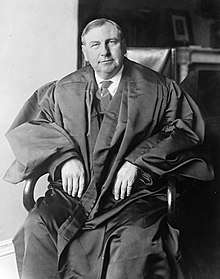
- A long loose outer garment, often signifying honorary stature.
- Shakespeare
- Through tattered clothes small vices do appear; / Robes and furred gowns hide all.
- Shakespeare
- (US) The skin of an animal, especially the bison, dressed with the fur on, and used as a wrap.
- A wardrobe, especially one built-in to a bedroom.
Derived terms
Translations
|
|
Verb
robe (third-person singular simple present robes, present participle robing, simple past and past participle robed)
- To clothe someone in a robe.
Derived terms
Anagrams
Asturian
Verb
robe
- first-person singular present subjunctive of robar
- third-person singular present subjunctive of robar
Czech
Pronunciation
- IPA(key): /ˈrobɛ/
- Rhymes: -obɛ
- Hyphenation: ro‧be
Noun
robe m
- vocative singular of rob
Anagrams
Dutch
Etymology
Pronunciation
Audio (file)
Noun
robe f (plural roben or robes, diminutive robetje n)
French
Etymology
Old French, from Proto-Germanic *raubō (“booty”), later "stolen clothing".
Pronunciation
- IPA(key): /ʁɔb/
audio (file)
Noun
robe f (plural robes)
Hypernyms
See also
Further reading
- “robe” in le Trésor de la langue française informatisé (The Digitized Treasury of the French Language).
Anagrams
Italian
Noun
robe f
- plural of roba
Anagrams
Middle English
Alternative forms
Etymology
From Old French robe, from Frankish *rouba, *rauba, from Proto-Germanic *raubō, *raubaz, *raubą. Doublet of reif.
Pronunciation
- IPA(key): /ˈrɔːb(ə)/, /ˈrɔb(ə)/
Noun
robe (plural robes)
- robe (long loose garment):
- A robe as a symbol of rank or office.
- A robe as a spoil or booty of war; a robe given as a gift.
- (as a plural) The garments an individual is wearing.
Derived terms
Descendants
References
- “rō̆be (n.)” in MED Online, Ann Arbor, Mich.: University of Michigan, 2007, retrieved 2018-06-16.
Norman
Etymology
From Old French robe, robbe, reube (“booty, spoils of war; robe, garment”), from Frankish *rouba, *rauba (“booty, spoils, stolen clothes”, literally “things taken”), from Proto-Germanic *raubō, *raubaz, *raubą (“booty, that which is stripped or carried away”), from Proto-Indo-European *reup- (“to tear, peel”).
Noun
robe f (plural robes)
Synonyms
- (dress): fro
Old French
Etymology
From Frankish *rouba, *rauba (“booty, spoils, stolen clothes”, literally “things taken”), from Proto-Germanic *raubō, *raubaz, *raubą (“booty, that which is stripped or carried away”).
Noun
robe f (oblique plural robes, nominative singular robe, nominative plural robes)
- booty; spoils (chiefly of war)
- piece of clothing
- circa 1170, Chrétien de Troyes, Érec et Énide:
- [D]onez li [d]e voz robes que vos avez
La mellor que vos i savez.- Give her the clothes that you have
- The best that you know of.
- [D]onez li [d]e voz robes que vos avez
- circa 1170, Chrétien de Troyes, Érec et Énide:
Related terms
References
- Godefroy, Frédéric, Dictionnaire de l'ancienne langue française et de tous ses dialectes du IXe au XVe siècle (1881) (robe)
Spanish
Verb
robe