乑
| ||||||||
Translingual
Han character
乑 (radical 4, 丿+5, 6 strokes, cangjie input 人竹竹人 (OHHO))
Derived characters
See also
References
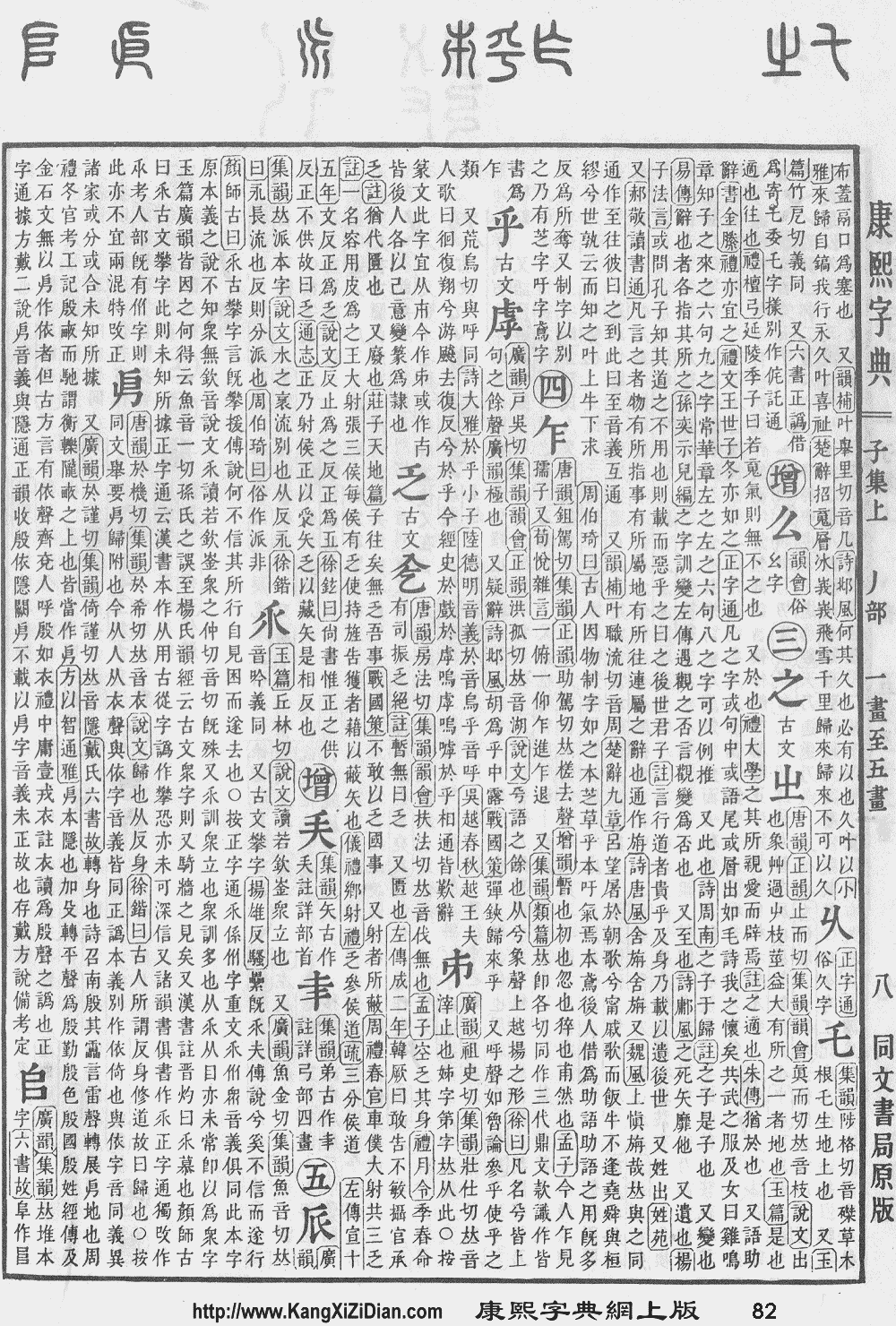
- KangXi: page 82, character 15
- Dai Kanwa Jiten: character 139
- Dae Jaweon: page 166, character 10
- Hanyu Da Zidian: volume 1, page 38, character 5
- Unihan data for U+4E51
Chinese
Etymology 1
| simp. and trad. |
乑 | |
|---|---|---|
| alt. forms | 㐺 众 | |
Glyph origin
Pictogram (象形) : 人 (“human”) + 人 + 人 – many humans are standing.
Pronunciation
Definitions
乑
Etymology 2
| For pronunciation and definitions of 乑 – see 攀 (“to climb; to pull; etc.”). (This character, 乑, is a variant form of 攀.) |
Etymology 3
| For pronunciation and definitions of 乑 – see 眾 (“masses; people; multitude; crowd; everyone; everything; all matters; etc.”). (This character, 乑, is a variant form of 眾.) |
Japanese
Kanji
乑
- This term needs a translation to English. Please help out and add a translation, then remove the text
{{rfdef}}.
Readings
As a variant of 攀:
- Goon: しゅ (shu)←しゆ (syu, historical)
- Kan’on: しゅう (shū)←しゆう (syū, historical)
References
- 諸橋轍次 (Morohashi Tetsuji), chief ed. 大漢和辞典 (Dai Kan-Wa Jiten, “Comprehensive Chinese–Japanese Dictionary”). 13 vols. 1955–1960. Revised and enlarged ed. 1984–1986. Tokyo: Taishukan.
Korean
Hanja
乑 • (im) (hangeul 임, revised im, McCune–Reischauer im)
- This term needs a translation to English. Please help out and add a translation, then remove the text
{{rfdef}}.
This article is issued from
Wiktionary.
The text is licensed under Creative Commons - Attribution - Sharealike.
Additional terms may apply for the media files.