栲
| ||||||||
Translingual
Han character
栲 (radical 75 木+6, 10 strokes, cangjie input 木十大尸 (DJKS), four-corner 44927, composition ⿰木考)
References
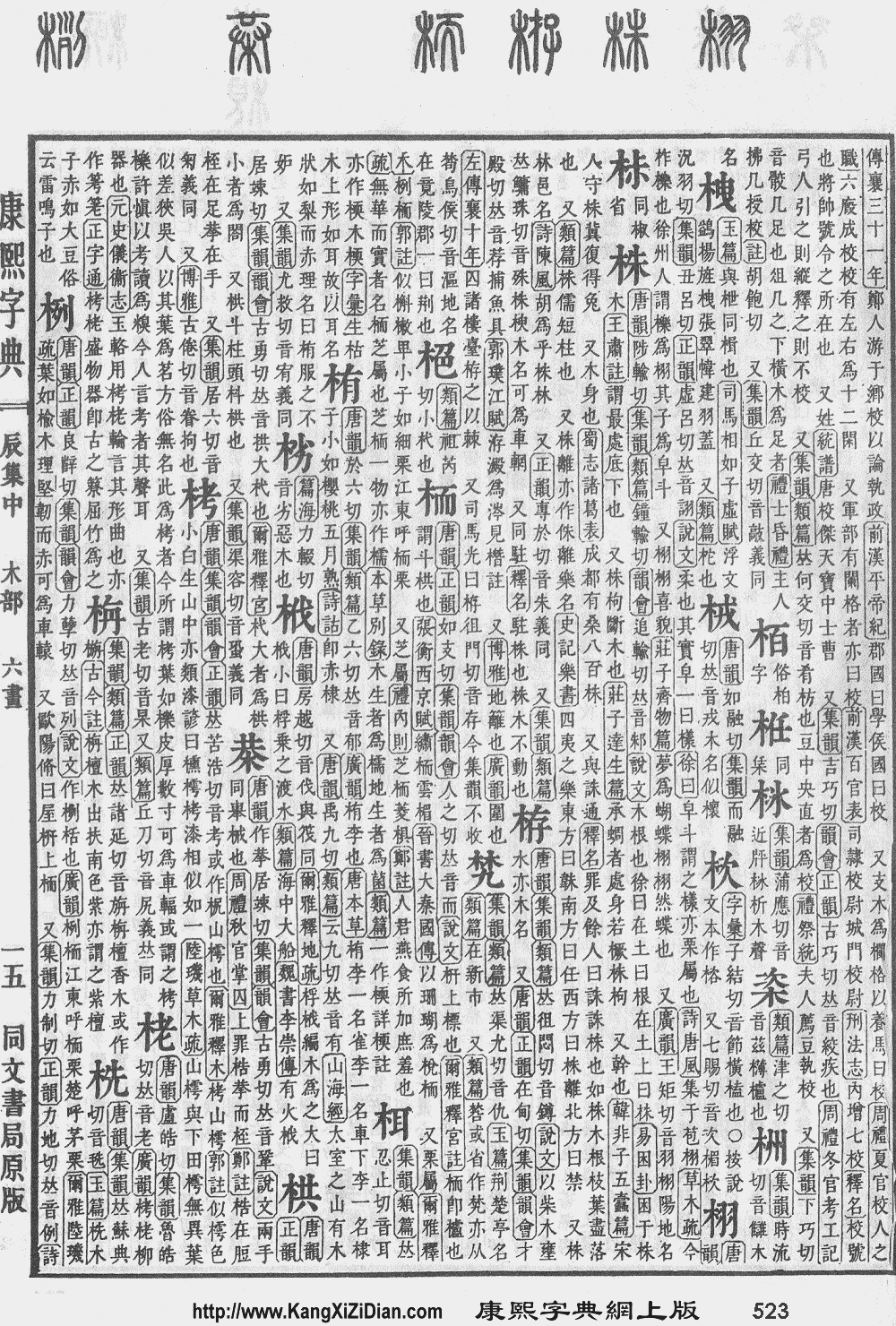
- KangXi: page 523, character 22
- Dai Kanwa Jiten: character 14734
- Dae Jaweon: page 911, character 19
- Hanyu Da Zidian: volume 2, page 1194, character 6
- Unihan data for U+6832
Chinese
| simp. and trad. |
栲 | |
|---|---|---|
Glyph origin
| Characters in the same phonetic series (丂) (Zhengzhang, 2003) | |
|---|---|
| Old Chinese | |
| 丂 | *kʰluːʔ |
| 攷 | *kʰluːʔ |
| 考 | *kʰluːʔ |
| 烤 | *kʰluːʔ |
| 拷 | *kʰluːʔ |
| 栲 | *kʰluːʔ |
| 洘 | *kʰluːʔ |
| 銬 | *kʰluːs |
| 巧 | *kʰruːʔ, *kʰruːs |
| 朽 | *qʰluʔ |
Pronunciation
Definitions
栲
Japanese
Kanji
栲
Readings
(Can we verify(+) this pronunciation?)
- Goon: こう (kō)←かう (kau, historical)
- Kan’on: こう (kō)←かう (kau, historical)
- Kun: たえ (tae, 栲)←たへ (tafe, historical); たく (taku, 栲)
Etymology 1
| Kanji in this term |
|---|
| 栲 |
| たえ Hyōgaiji |
| kun’yomi |
/tape2/ invalid IPA characters (2) → /tape/ → /tafe/ → /tawe/ → /tae/
From Old Japanese.
Pronunciation
Noun
栲 (hiragana たえ, rōmaji tae, historical hiragana たへ)
- (archaic) cloth, especially, from the fibers of the 梶の木 (kajinoki, “paper mulberry”) tree
- (by extension) generic name for "cloth"
Compounds
Etymology 2
| Kanji in this term |
|---|
| 栲 |
| たく Hyōgaiji |
| kun’yomi |
Pronunciation
Noun
- (archaic, possibly obsolete) old name for 楮 (kōzo, “hybrid mulberry”, used to make Japanese paper)
- (archaic, possibly obsolete) old name for 梶の木 (kajinoki, “paper mulberry”)
Compounds
References
Korean
Hanja
栲 • (go) (hangeul 고, revised go, McCune–Reischauer ko, Yale ko)
- This term needs a translation to English. Please help out and add a translation, then remove the text
{{rfdef}}.
Vietnamese
Han character
- This term needs a translation to English. Please help out and add a translation, then remove the text
{{rfdef}}.
This article is issued from
Wiktionary.
The text is licensed under Creative Commons - Attribution - Sharealike.
Additional terms may apply for the media files.