港
| ||||||||
| ||||||||
Translingual
| Japanese | 港 |
|---|---|
| Simplified | 港 |
| Traditional | 港 |
Alternative forms
Note that, as in 巷, in Chinese, the bottom is 巳, while in Japanese, the bottom is 己.
Han character
港 (radical 85, 水+9, 12 strokes, cangjie input 水廿金山 (ETCU), four-corner 34117, composition ⿰氵巷)
References
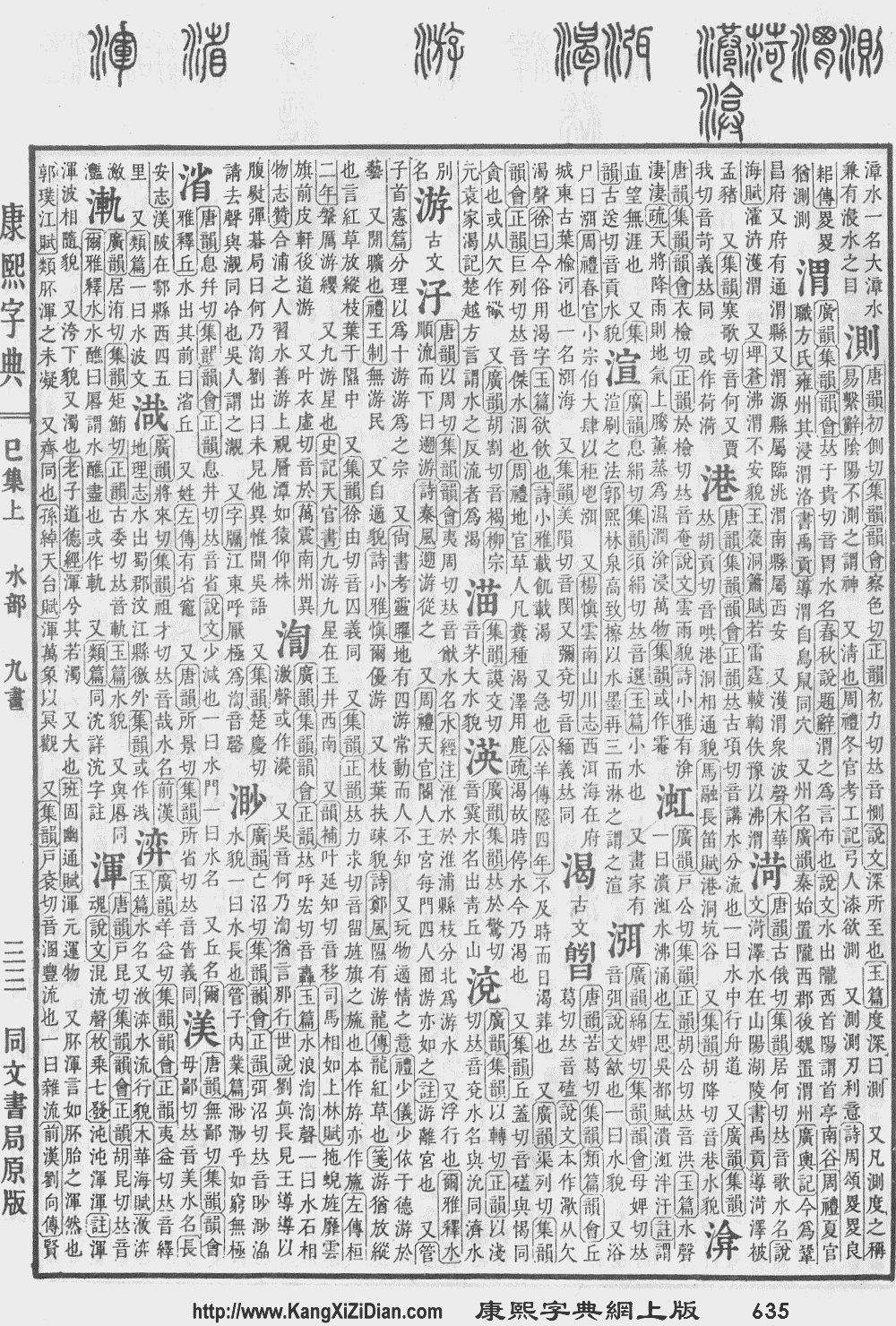
- KangXi: page 635, character 4
- Dai Kanwa Jiten: character 17783
- Dae Jaweon: page 1042, character 2
- Hanyu Da Zidian: volume 3, page 1668, character 7
- Unihan data for U+6E2F
Chinese
| simp. and trad. |
港 | |
|---|---|---|
Glyph origin
| Characters in the same phonetic series (共) (Zhengzhang, 2003) | |
|---|---|
| Old Chinese | |
| 港 | *kroːŋʔ, *ɡloːŋs |
| 巷 | *ɡroːŋs |
| 衖 | *ɡroːŋs |
| 鬨 | *ɡroːŋs, *ɡloːŋs |
| 烘 | *qʰloːŋ, *qʰloːŋs, *ɡoːŋ, *ɡloːŋs |
| 洪 | *ɡloːŋ |
| 鉷 | *ɡloːŋ |
| 谼 | *ɡloːŋ |
| 葓 | *ɡoːŋ |
| 哄 | *ɡloːŋs |
| 蕻 | *ɡloːŋs |
| 恭 | *kloŋ |
| 供 | *kloŋ, *kloŋs |
| 龔 | *kloŋ |
| 珙 | *kloŋ, *kloŋʔ |
| 共 | *kloŋ, *ɡloŋs |
| 髸 | *kloŋ |
| 拱 | *kloŋʔ |
| 拲 | *kloŋʔ, *kloɡ |
| 蛬 | *kloŋʔ, *ɡloŋ |
| 栱 | *kloŋʔ |
| 輁 | *kloŋʔ, *ɡloŋ |
| 舼 | *ɡloŋ |
| 輂 | *kloɡ |
Phono-semantic compound (形聲, OC *kroːŋʔ, *ɡloːŋs) : semantic 氵 + phonetic 巷 (OC *ɡroːŋs).
Ideogrammic compound (會意) proposed as alternative: a harbor is a road by the water.
Etymology
Cognate with 江 (OC *kroːŋ, “river”). The southern dialectal word originally meant "small river/stream", which is still preserved in some Min languages. The irregular pronunciation in Mandarin (expected Mandarin reflex is *jiǎng) originated from southern dialects where velars have not palatalized.
Pronunciation 1
Definitions
港
Compounds
Pronunciation 2
Definitions
港
- Only used in 港洞.
Japanese
Kanji
Readings
Compounds
Etymology
| Kanji in this term |
|---|
| 港 |
| みなと Grade: 3 |
| kun’yomi |
From Old Japanese: 水 (mi, “water”) + な (na, possessive particle) + 門 (to, “gate”). Attested in the Kojiki and Nihon Shoki as 水門.
Alternate forms
Pronunciation
Noun
References
Korean
Hanja
港 • (hang) (hangeul 항, McCune–Reischauer hang, Yale hang)
- This term needs a translation to English. Please help out and add a translation, then remove the text
{{rfdef}}.
Vietnamese
Han character
港 (cảng)
- This term needs a translation to English. Please help out and add a translation, then remove the text
{{rfdef}}.