果
See also: 杲
| ||||||||
Translingual
| Stroke order | |||
|---|---|---|---|
 | |||
Han character
果 (radical 75, 木+4, 8 strokes, cangjie input 田木 (WD), four-corner 60904)
Derived characters
References
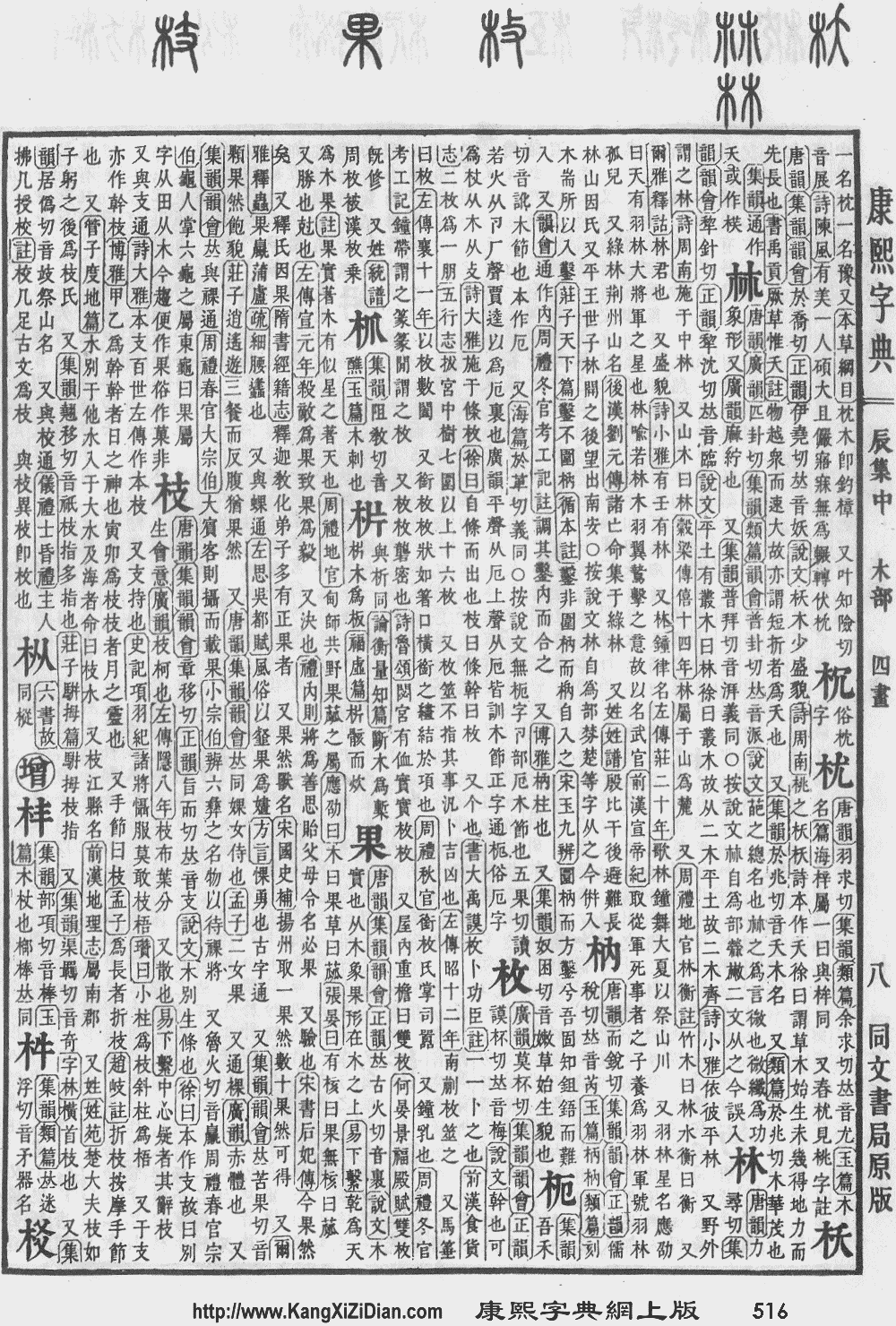
- KangXi: page 516, character 11
- Dai Kanwa Jiten: character 14556
- Dae Jaweon: page 904, character 5
- Hanyu Da Zidian: volume 2, page 1168, character 11
- Unihan data for U+679C
Chinese
Etymology 1
| simp. and trad. |
果 | |
|---|---|---|
Glyph origin
| Characters in the same phonetic series (果) (Zhengzhang, 2003) | |
|---|---|
| Old Chinese | |
| 裸 | *ɡ·roːlʔ |
| 躶 | *ɡ·roːlʔ |
| 果 | *kloːlʔ |
| 菓 | *kloːlʔ |
| 猓 | *kloːlʔ |
| 輠 | *kloːlʔ, *ɡloːlʔ, *ɡroːlʔ, *kʰluːls |
| 裹 | *kloːlʔ, *kloːls |
| 蜾 | *kloːlʔ |
| 惈 | *kloːlʔ |
| 粿 | *kloːlʔ |
| 窠 | *kʰloːl |
| 稞 | *kʰloːl, *ɡroːlʔ |
| 課 | *kʰloːl, *kʰloːls |
| 髁 | *kʰloːl, *kʰloːls, *kʰroːlʔ |
| 棵 | *kʰloːl, *kʰloːnʔ, *ɡloːnʔ |
| 顆 | *kʰloːlʔ |
| 堁 | *kʰloːlʔ, *kʰloːls, *kloːns |
| 敤 | *kʰloːlʔ, *kʰloːls |
| 夥 | *qʰloːlʔ, *ɡloːlʔ, *ɡroːlʔ |
| 婐 | *qloːlʔ, *kroːl |
| 踝 | *ɡroːlʔ |
| 祼 | *ɡluːlʔ |
Pictogram (象形) – fruit on a tree.
Pronunciation
Definitions
果
Compounds
Derived terms from 果
|
|
|
Etymology 2
| For pronunciation and definitions of 果 – see 裹 (“to wrap; to bind; to encircle; confine”). (This character, 果, is the second-round simplified form of 裹.) |
Notes:
|
Japanese
Kanji
果
Readings
Compounds
Compounds
- 映日果 (ichijiku), 映日果 (eijitsuka): fig
- 無花果 (ichijiku), 無花果 (mukaka): fig
- 無花果果 (ichijikuka): syconium
- 果敢 (kakan): resolute, determined
- 果実 (kajitsu): fruit, berry
- 果樹 (kaju): fruit tree
- 果汁 (kajū): fruit juice
- 果糖 (katō): fruit sugar
- 果肉 (kaniku): flesh of fruit
- 果報 (kahō): good fortune
- 果物 (kudamono): fruit
- 青果 (seika): vegetables and fruits
- 摘果 (tekika): thinning out superfluous fruit
- 結果 (kekka): result, outcome
- 成果 (seika): result, fruit
- 効果 (kōka): effect, result
- 因果 (inga): karma
- 戦果 (senka): fruit of battle
- 果たす (hatasu): effect, realize
- 使命を果たす (shimei o hatasu): carry out one's mission
- 果たして (hatashite): as was expected
- 使い果たす (tsukaihatasu): use up, squander
- 果てる (hateru): end, be finished
- 朽ち果てる (kuchihateru): decay completely
- 絶え果てる (taehateru): be extinguished
- 果て (hate): end, extremity
- 果てしない (hateshinai): endless, boundless
- 苹果 (heika), 苹果 (hyōka): apple (fruit)
| Kanji in this term |
|---|
| 果 |
| か Grade: 4 |
| on’yomi |
Etymology
From Middle Chinese 果 (kuɑX).
Pronunciation
Counter
果 (hiragana か, rōmaji -ka, historical hiragana くわ)
- pieces of fruit
Noun
果 (hiragana か, rōmaji ka, historical hiragana くわ)
- fruit
- (Buddhism) phala, attained state, result
- (Buddhism) enlightenment (as the fruits of one's Buddhist practice)
See also
References
Korean
Hanja
果 • (gwa) (hangeul 과, revised gwa, McCune–Reischauer kwa, Yale kwa)
Vietnamese
Han character
- This term needs a translation to English. Please help out and add a translation, then remove the text
{{rfdef}}.
This article is issued from
Wiktionary.
The text is licensed under Creative Commons - Attribution - Sharealike.
Additional terms may apply for the media files.