井
| ||||||||
Translingual
Han character
井 (radical 7, 二+2, 4 strokes, cangjie input 廿廿 (TT), four-corner 55000, composition ⿻一廾)
Derived characters
Descendants
- ヰ (Katakana character derived from Man'yōgana)
References
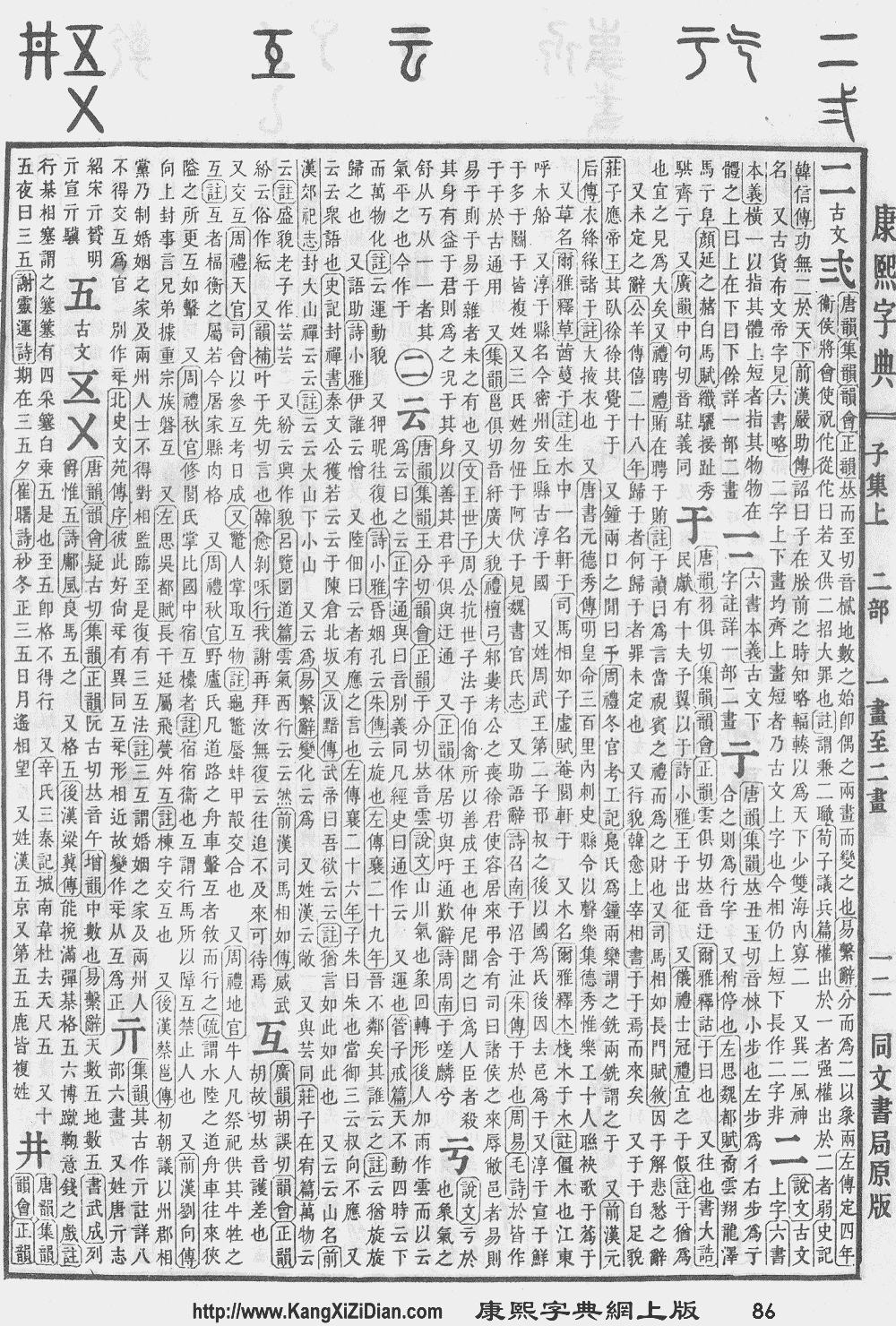
- KangXi: page 86, character 14
- Dai Kanwa Jiten: character 258
- Dae Jaweon: page 183, character 1
- Hanyu Da Zidian: volume 1, page 10, character 4
- Unihan data for U+4E95
Chinese
| simp. and trad. |
井 | |
|---|---|---|
| alt. forms | 丼 | |
Glyph origin
| Historical forms of the character 井 | ||||||||||||||||||||||||||||||||||||||||||||||||||||||||||||||||||||
|---|---|---|---|---|---|---|---|---|---|---|---|---|---|---|---|---|---|---|---|---|---|---|---|---|---|---|---|---|---|---|---|---|---|---|---|---|---|---|---|---|---|---|---|---|---|---|---|---|---|---|---|---|---|---|---|---|---|---|---|---|---|---|---|---|---|---|---|---|
| Shang | Western Zhou | Warring States | Shuowen Jiezi (compiled in Han) | Liushutong (compiled in Ming) | ||||||||||||||||||||||||||||||||||||||||||||||||||||||||||||||||
| Oracle bone script | Bronze inscriptions | Chu Slip and silk script | Small seal script | Transcribed ancient scripts | ||||||||||||||||||||||||||||||||||||||||||||||||||||||||||||||||
 |
 |
 |
 |
 | ||||||||||||||||||||||||||||||||||||||||||||||||||||||||||||||||
||||
|
References: Mostly from Richard Sears' Chinese Etymology site (authorisation),
| ||||||||||||||||||||||||||||||||||||||||||||||||||||||||||||||||||||


| Characters in the same phonetic series (井) (Zhengzhang, 2003) | |
|---|---|
| Old Chinese | |
| 硎 | *kʰreːŋ, *ɡeːŋ |
| 耕 | *kreːŋ |
| 荊 | *keŋ |
| 井 | *skeŋʔ |
| 丼 | *kloːmʔ, *skeŋʔ |
| 妌 | *sɡeŋʔ |
| 穽 | *sɡeŋʔ, *sɡeŋs |
| 阱 | *sɡeŋʔ, *sɡeŋs |
| 汫 | *sɡeːŋʔ |
| 刑 | *ɡeːŋ |
| 形 | *ɡeːŋ |
| 邢 | *ɡeːŋ |
| 鉶 | *ɡeːŋ |
| 型 | *ɡeːŋ |
| 侀 | *ɡeːŋ |
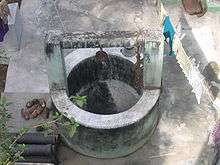
Pictogram (象形) – a square well, with supports on four sides.
Etymology 1
Pronunciation
Definitions
井
Compounds
|
|
|
Etymology 2
| For pronunciation and definitions of 井 – see 阱 (“pitfall, trap”). (This character, 井, is the second-round simplified form of 阱.) |
Notes:
|
Japanese
Kanji
Readings
- Goon: しょう (shō, Jōyō, uncommon)←しやう (syau, historical)
- Kan’on: せい (sei, Jōyō)
- Kun: い (i, 井, Jōyō)←ゐ (wi, historical); いど (ido, 井)←ゐど (wido, historical)
Compounds
Etymology 1
| Kanji in this term |
|---|
| 井 |
| い Grade: S |
| kun’yomi |
wi > i.
Pronunciation
Noun
井 (hiragana い, rōmaji i, historical hiragana ゐ)
Derived terms
- 井の中の蛙大海を知らず (i no naka no kawazu taikai o shirazu): metaphor of a narrow world view based on limited experience (literally, "a frog in a well does not know the great ocean")
Etymology 2
| Kanji in this term |
|---|
| 井 |
| せい Grade: S |
| on’yomi |
From Middle Chinese 井 (tsjengX).
Pronunciation
Noun
References
Korean
Hanja
井 • (jeong) (hangeul 정, revised jeong, McCune–Reischauer chŏng, Yale ceng)
Vietnamese
Han character
井 (tỉnh)
- This term needs a translation to English. Please help out and add a translation, then remove the text
{{rfdef}}.