體
| ||||||||
Translingual
| Japanese | 体 |
|---|---|
| Simplified | 体 |
| Traditional | 體/体 |
Han character
體 (radical 188, 骨+13, 23 strokes, cangjie input 月月廿田廿 (BBTWT), four-corner 75218, composition ⿰骨豊)
Derived characters
- 𭍑, 𥸠
Related characters
- 体 (Japanese shinjitai and simplified Chinese)
References
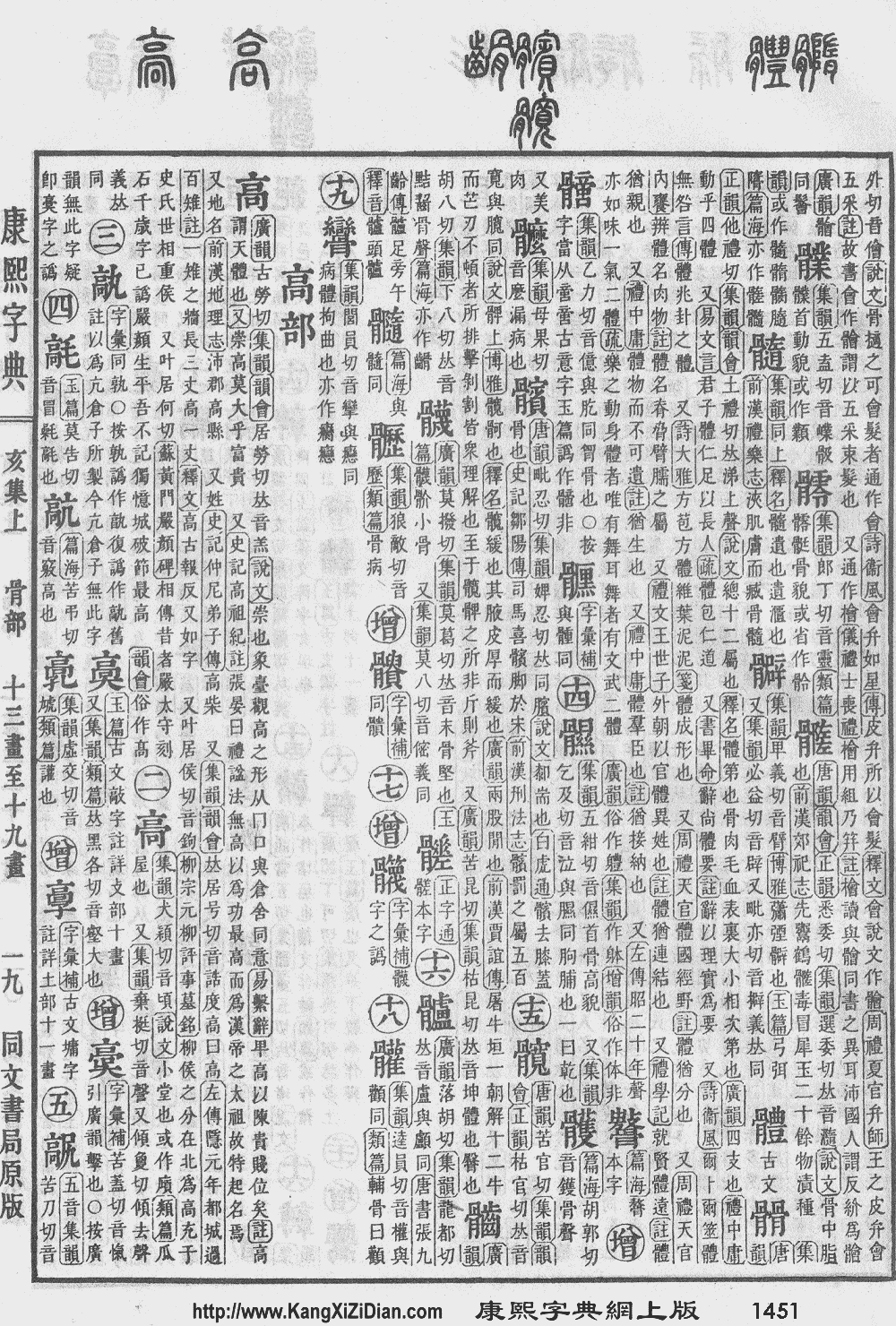
- KangXi: page 1451, character 6
- Dai Kanwa Jiten: character 45291
- Dae Jaweon: page 1978, character 2
- Hanyu Da Zidian: volume 7, page 4419, character 3
- Unihan data for U+9AD4
Chinese
| trad. | 體 | |
|---|---|---|
| simp. | 体* | |
Glyph origin
| Characters in the same phonetic series (豊) (Zhengzhang, 2003) | |
|---|---|
| Old Chinese | |
| 體 | *r̥ʰiːʔ |
| 軆 | *r̥ʰiːʔ |
| 禮 | *riːʔ |
| 澧 | *riːʔ |
| 醴 | *riːʔ |
| 豊 | *riːʔ |
| 鱧 | *riːʔ |
Phono-semantic compound (形聲, OC *r̥ʰiːʔ) : semantic 骨 (“bone”) + phonetic 豊 (OC *riːʔ).
Pronunciation
Definitions
體
- body
- part of the body
- state of a substance
- whole entity
- form; structure
- (literature) style; form; genre; structure
- style of calligraphy
- 隸體 / 隶体 ― lìtǐ ― clerical script
- typeface
- three-dimensional object
- principle
- (Mainland China, grammar) aspect of a verb
- 進行體 / 进行体 ― jìnxíngtǐ ― progressive aspect
- to do or experience personally
- to put oneself in someone else's position
- A surname.
Compounds
Derived terms from 體
|
|
|
Japanese
| 体 | |
| 體 |
Kanji
體
(uncommon “Hyōgai” kanji, kyūjitai kanji, shinjitai form 体)
Readings
Korean
Hanja
體 • (che) (hangeul 체, McCune–Reischauer ch'e, Yale chey)
Vietnamese
Han character
體 (thể)
- This term needs a translation to English. Please help out and add a translation, then remove the text
{{rfdef}}.
This article is issued from
Wiktionary.
The text is licensed under Creative Commons - Attribution - Sharealike.
Additional terms may apply for the media files.