mano
English
Etymology
Pronunciation
- Rhymes: -ɑːnəʊ
Noun
mano (plural manos)
- A rolling pin-like stone, used to grind maize or other grain on a metate.
Translations
|
Anagrams
Asturian
Etymology
From Latin manus, from Proto-Italic *manus, from Proto-Indo-European *man- (“hand”).
Pronunciation
- IPA(key): [ˈma.no]
Noun
mano f (plural manes)
Catalan
Verb
mano
- first-person singular present indicative form of manar
Cebuano
Etymology 1
From Spanish mano, from Old Spanish mano, from Latin manus, from Proto-Italic *manus, from Proto-Indo-European *man- (“hand”).
Noun
mano
- a schoolyard pick
- (dated) the hand
Verb
mano
Etymology 2
Noun
mano
- an elder
- a term of address for an old man
Etymology 3
Unknown.
Noun
mano
- a bundle of tobacco leaves
Etymology 4
Unknown.
Verb
mano
- to lag
Chavacano
Etymology
Noun
mano
Chichewa
Noun
manó class 6
- plural of dzino
Chuukese
Verb
mano
- to die
Esperanto
Etymology
From Spanish mano, Italian mano, Portuguese mão, French main, from Latin manus.
Pronunciation
- IPA(key): /ˈmano/
- Hyphenation: ma‧no
- Rhymes: -ano
Audio (file)
Noun
mano (accusative singular manon, plural manoj, accusative plural manojn)
Derived terms
- almanigi (“to put one’s hand on; to hand to someone”)
- ĉirkaŭmano (“bracelet”)
- mane (“by hand”)
- plenmano (“handful”)
Ido
Etymology
Borrowed from English manes, French mânes, German Manen, Spanish manes, all ultimately from Latin manes.
Noun
mano (plural mani)
- (a single) manes, ancestral spirit
Derived terms
- mani (“manes, ancestral spirits”)
Interlingua
Pronunciation
- IPA(key): /ˈma.no/
Noun
mano (plural manos)
Italian
Etymology
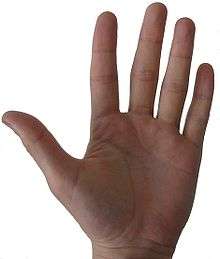
From Latin manus (whence also English manual, etc.), from Proto-Italic *manus, from Proto-Indo-European *man- (“hand”).
Pronunciation
- IPA(key): [ˈmaːno]
Audio (file)
Noun
mano f (plural mani) diminutive: manina
Related terms
Anagrams
Jamamadí
Noun
mano m
References
- 2007. The UCLA Phonetics Lab Archive. Los Angeles, CA: UCLA Department of Linguistics.
Latin
Etymology
From Proto-Indo-European root *meh₂- (“wet, damp”).
Pronunciation
- (Classical) IPA(key): /ˈmaː.noː/
Verb
mānō (present infinitive mānāre, perfect active mānāvī, supine mānātum); first conjugation
- (transitive) I give out, shed, pour forth.
- (intransitive) I flow, run, trickle, drop, distil, run; leak.
- (intransitive) I flow, diffuse or extend myself, spread.
- (intransitive, figuratively, of secrets) I spread, leak out, become known.
- (intransitive, figuratively) I flow, spring, arise, proceed, emanate, originate.
Conjugation
Derived terms
Descendants
References
- mano in Charlton T. Lewis and Charles Short (1879) A Latin Dictionary, Oxford: Clarendon Press
- mano in Charlton T. Lewis (1891) An Elementary Latin Dictionary, New York: Harper & Brothers
- mano in Gaffiot, Félix (1934) Dictionnaire Illustré Latin-Français, Hachette
- Carl Meissner; Henry William Auden (1894) Latin Phrase-Book, London: Macmillan and Co.
- to drip blood; to be deluged with blood: sanguine manare, redundare
- to originate in, arise from: ex aliqua re nasci, manare
- these things have the same origin: haec ex eodem fonte fluunt, manant
- report says; people say: rumor, fama, sermo est or manat
- (ambiguous) to abide by, persist in one's opinion: in sententia manere, permanere, perseverare, perstare
- (ambiguous) to remain loyal: in fide manere (B. G. 7. 4. 5)
- (ambiguous) to remain faithful to one's duty: in officio manere (Att. 1. 3)
- (ambiguous) to remain in subjection: in officio manere, permanere
- to drip blood; to be deluged with blood: sanguine manare, redundare
Lithuanian
Etymology
Appears to be a new formation built from mãn-, the oblique stem of àš + the masculine genitive ending -õ; compare jõ (“his”), tàvo (“your”), sàvo (“one's own”). Dialectal mãnas (“my”) matches Latvian mans (“my”), while Old Prussian mais (“my”) is an independent formation. Compare however Sudovian mano (“my”), which suggests the formation may be old.
Pronunciation
IPA(key): /ˈmɐ.nɔ/
Pronoun
màno (indeclinable)
- (possessive) my, mine
- by me (used to indicate a first person singular agent in passive constructions)
Related terms
- manas
- maniškas
- manasis m, manoji f
- maniškis m, maniškis f
- manaip
See also
| singular (vienaskaita) | dual (dviskaita) | plural (daugiskaita) | reflexive (sangrąžiniai) | ||||||||||||||||
|---|---|---|---|---|---|---|---|---|---|---|---|---|---|---|---|---|---|---|---|
| 1st person (pirmasis asmuo) |
2nd person (antrasis asmuo) |
3rd person (trečiasis asmuo) |
1st person | 2nd person | 3rd person | 1st person | 2nd person | 3rd person | |||||||||||
| m | f | m | f | m | f | m | f | m | f | ||||||||||
| nominative (vardininkas) |
àš | tù | jìs, jisaĩ |
jì, jinaĩ |
mùdu | mùdvi | jùdu | jùdvi | juõdu, jiẽdu |
jiẽdvi | mẽs | jū̃s | jiẽ | jõs | - | ||||
| genitive (kilmininkas) |
manę̃s | tavę̃s | jõ | jõs | mùdviejų | jùdviejų | jų̃dviejų | mū́sų | jū́sų | jų̃ | savę̃s | ||||||||
| dative (naudininkas) |
mán | táu | jám | jái | mùdviem | jùdviem | jõdviem | mùms | jùms | jíems | jóms | sáu | |||||||
| accusative (galininkas) |
manè | tavè | jį̃ | ją̃ | mùdu | mùdvi | jùdu | jùdvi | juõdu | jiẽdvi | mùs | jùs | juõs | jàs | savè | ||||
| instrumental (įnagininkas) |
manimì, manim̃ | tavimì, tavim̃ | juõ | jà | mùdviem | jùdviem | jõdviem | mumìs | jumìs | jaĩs | jomìs | savimì, savim̃ | |||||||
| locative (vietininkas) |
manyjè, manỹ | tavyjè, tavỹ | jamè | jojè | mùdviese | jùdviese | jiẽdviese | mumysè | jumysè | juosè | josè | savyjè, savỹ | |||||||
| possessive (savybiniai) |
màno | tàvo | jõ | jõs | mùdviejų | jùdviejų | jų̃dviejų | mū́sų | jū́sų | jų̃ | sàvo | ||||||||
Maori
Noun
mano
Numeral
mano
Mirandese
Etymology
From Latin manus, from Proto-Indo-European *man- (“hand”).
Noun
mano f (plural manos)
Neapolitan
Etymology
Noun
mano f (plural mmane)
Old High German
Etymology
From Proto-Germanic *mēnô, whence also Old English mōna, Old Norse máni
Noun
māno m
Descendants
Old Saxon
Etymology
From Proto-Germanic *mēnô, whence also Old English mōna, Old Norse máni
Noun
māno m
Declension
Descendants
- Middle Low German: māne
Portuguese
Etymology
Borrowed from Spanish mano, apheresis of hermano (“brother, sibling”).
Pronunciation
Noun
mano m (plural manos, feminine mana, feminine plural manas)
Usage notes
- Do not confuse with mão (“hand”).
Spanish
Pronunciation
- IPA(key): [mãno̞]
Etymology 1
From Old Spanish mano, from Latin manus, from Proto-Italic *manus, from Proto-Indo-European *man- (“hand”).
Noun
mano f (plural manos)
- (anatomy, of a person) hand
- (of an animal) front foot
- (in a game) round; hand
- (of paint) coat
- (of a clock) hand
- skill, talent
Usage notes
As with other nouns denoting body parts, the definite article la (“the”) is used to express one’s own hand where English would use a possessive determiner (e.g. my, your, his, or her). Example: "Lávate las manos, por favor."
Derived terms
Related terms
Etymology 2
Noun
Etymology 3
Verb
mano