mão
See also: Appendix:Variations of "mao"
Old Portuguese
Alternative forms
- maão
Etymology
From Latin manus (“hand”), from Proto-Italic *manus, from Proto-Indo-European *meh₂-.
Pronunciation
- IPA(key): /ˈmã.o/
Noun
mão f
- hand
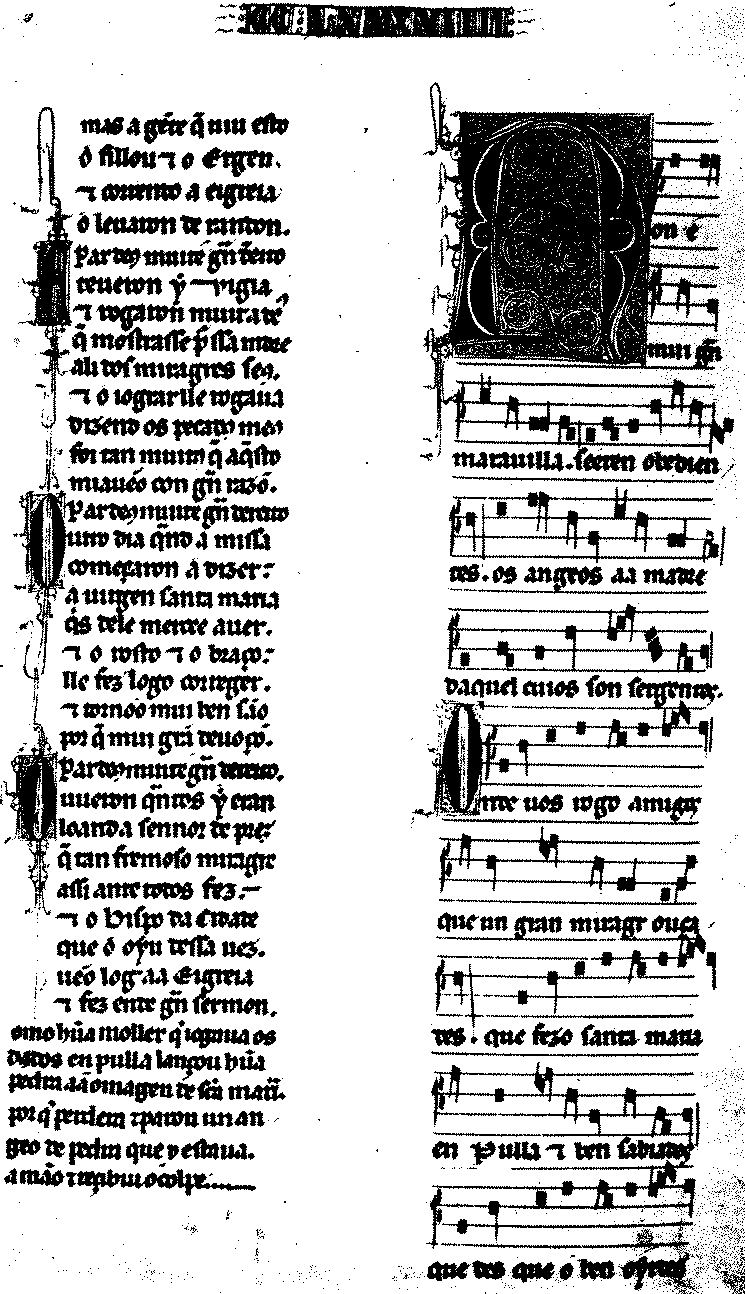
- 13th century, attributed to Alfonso X of Castile, Cantigas de Santa Maria, E codex, cantiga 294 (facsimile):
- Como hũa moller q̇ iogaua os dados en pulla lançou hũa pedra aa omagen de ſ[ant]a mari[a] por q̇ perdera ⁊ parou un angeo de pedra que y eſtava a mão ⁊ reçibiu o colpe.
- How a woman who was playing dice in Apulia threw a stone at the statue of Holy Mary because she had lost, and an angel of stone which was there reached out its hand and received the blow.
- Como hũa moller q̇ iogaua os dados en pulla lançou hũa pedra aa omagen de ſ[ant]a mari[a] por q̇ perdera ⁊ parou un angeo de pedra que y eſtava a mão ⁊ reçibiu o colpe.
- 13th century, attributed to Alfonso X of Castile, Cantigas de Santa Maria, E codex, cantiga 294 (facsimile):
Descendants
Portuguese
mão
Alternative forms
- maõ (obsolete)
Etymology
From Old Portuguese mão (“hand”), from Latin manus (“hand”), from Proto-Italic *manus, from Proto-Indo-European *meh₂-. Cognate with Galician man, Spanish mano, Catalan mà, Occitan man, French main, Italian mano and Romanian mână.
Pronunciation
Noun
mão f (plural mãos)
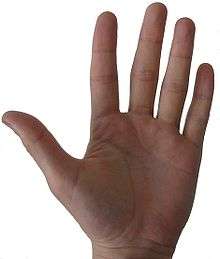
- hand
- 2005, Lya Wyler (translator), J. K. Rowling (English author), Harry Potter e o Enigma do Príncipe (Harry Potter and the Half-Blood Prince), Rocco, page 52:
- Apontara com a mão machucada.
- He had pointed it using his wounded hand.
- Apontara com a mão machucada.
- 2005, Lya Wyler (translator), J. K. Rowling (English author), Harry Potter e o Enigma do Príncipe (Harry Potter and the Half-Blood Prince), Rocco, page 52:
Quotations
For quotations of use of this term, see Citations:mão.
Derived terms
- à mão de semear
- mão-de-obra
- mão-posta
Related terms
- manufactura
- manuscrito
- manusear
- manuseio
- mãozinha
- mãozudo
Descendants
- Kabuverdianu: mo
This article is issued from
Wiktionary.
The text is licensed under Creative Commons - Attribution - Sharealike.
Additional terms may apply for the media files.