ovo
Esperanto
Etymology
From Latin ōvum (“egg”), from Proto-Indo-European *h₂ōwyóm (“egg”).
Noun
ovo (accusative singular ovon, plural ovoj, accusative plural ovojn)
Derived terms
Galician
Etymology
From Old Portuguese ovo (“egg”), from Latin ōvum (“egg”).
Pronunciation
- IPA(key): /ˈɔ.βʊ/
Noun
ovo m (plural ovos)
Ido
Etymology
From Esperanto ovo, from Latin ōvum (“egg”), from Proto-Indo-European *h₂ōwyóm (“egg”).
Pronunciation
Noun
ovo (plural ovi)
Italian
Noun
ovo m (plural ova f)
- (dialectal) Alternative form of uovo
Latin
Etymology 1
Onomatopoeic; compare Ancient Greek εὐάζω (euázō).
Pronunciation
- (Classical) IPA(key): /ˈo.woː/, [ˈɔ.woː]
Verb
ovō (present infinitive ovāre, perfect active ovāvī, supine ovātum); first conjugation
Inflection
Derived terms
Etymology 2
From ōvum (“egg”).
Pronunciation
- (Classical) IPA(key): /ˈoː.woː/
Noun
ōvō
References
- ovo in Charlton T. Lewis and Charles Short (1879) A Latin Dictionary, Oxford: Clarendon Press
- ovo in Charlton T. Lewis (1891) An Elementary Latin Dictionary, New York: Harper & Brothers
- ovo in Gaffiot, Félix (1934) Dictionnaire Illustré Latin-Français, Hachette
- Carl Meissner; Henry William Auden (1894) Latin Phrase-Book, London: Macmillan and Co.
- (ambiguous) from beginning to end: ab ovo usque ad mala (proverb.)
- (ambiguous) from beginning to end: ab ovo usque ad mala (proverb.)
Portuguese
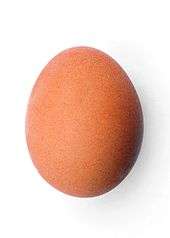
ovo
Etymology
From Old Portuguese ovo (“egg”), from Latin ōvum (“egg”), from Proto-Italic *ōwom, from Proto-Indo-European *h₂ōwyóm (“egg”), likely a derivative of *h₂éwis (“bird”).
Pronunciation
- (Portugal) IPA(key): /ˈo.vu/
- Hyphenation: o‧vo
Noun
ovo m (plural ovos)
Related terms
Spanish
Noun
ovo m (plural ovos)
- egg-shaped decoration
Umbundu
Pronoun
ovo
- they (third-person plural pronoun)
See also
Umbundu personal pronouns
Venetian
Alternative forms
Etymology
Noun
This article is issued from
Wiktionary.
The text is licensed under Creative Commons - Attribution - Sharealike.
Additional terms may apply for the media files.