pall
English
Pronunciation
Etymology 1
From Old English pæll, from Latin pallium (“cloak, covering”).
Noun
pall (plural palls)
- (archaic) Fine cloth, especially purple cloth used for robes.
- (Christianity) A cloth used for various purposes on the altar in a church.
- (Christianity) A piece of cardboard, covered with linen and embroidered on one side, used to cover the chalice.
- (Christianity) A pallium (woollen vestment in Roman Catholicism).
- Fuller
- About this time Pope Gregory sent two archbishop's palls into England, — the one for London, the other for York.
- Fuller
- (heraldry) A figure resembling the Roman Catholic pallium, or pall, and having the form of the letter Y.
- A heavy canvas, especially one laid over a coffin or tomb.
- 1942, Rebecca West, Black Lamb and Grey Falcon, Canongate (2006), page 150:
- Thirty years or so later, a woman was put to death for stealing the purple pall from his sarcophagus, a strange, crazy crime, […]
- 1942, Rebecca West, Black Lamb and Grey Falcon, Canongate (2006), page 150:
- An outer garment; a cloak or mantle.
- 1590, Edmund Spenser, The Faerie Qveene. Disposed into Twelue Books, Fashioning XII. Morall Vertues, London: Printed [by John Wolfe] for VVilliam Ponsonbie, OCLC 960102938, book II, canto IX, stanza 37, page 317:
- In a long purple pall, whose ſkirt with gold, / Was fretted all about, ſhe was arayd, […]
- Shakespeare
- His lion's skin changed to a pall of gold.
-
- (obsolete) nausea
- (Can we find and add a quotation of Shaftesbury to this entry?)
- A feeling of gloom.
- A pall came over the crowd when the fourth goal was scored.
- The early election results cast a pall over what was supposed to be a celebration.
Synonyms
- (heraldry): pairle
Derived terms
- cast a pall
- pallbearer
- tarpaulin
Translations
Verb
pall (third-person singular simple present palls, present participle palling, simple past and past participle palled)
- To cloak.
- Lady Macbeth: Come, thick night, And pall thee in the dunnest smoke of hell (Macbeth Act I Scene v lines 48–9).
Etymology 2
Aphetism from appall. Possibly influenced by the figurative meaning of the unrelated noun.
Verb
pall (third-person singular simple present palls, present participle palling, simple past and past participle palled)
- (transitive) To make vapid or insipid; to make lifeless or spiritless; to dull; to weaken.
- Atterbury
- Reason and reflection […] pall all his enjoyments.
- Atterbury
- (intransitive) To become vapid, tasteless, dull, or insipid; to lose strength, life, spirit, or taste.
- The liquor palls.
- Addison
- Beauty soon grows familiar to the lover, / Fades in the eye, and palls upon the sense.
- 1918, Edgar Rice Burroughs, The Land That Time Forgot Chapter VI
- We are all becoming accustomed to adventure. It is beginning to pall on us. We suffered no casualties and there was no illness.
Albanian
Etymology
From Proto-Albanian *palei-, from Proto-Indo-European *(s)pel- 'to speak with a loud voice'. Cognate to Gothic 𐍃𐍀𐌹𐌻𐌻𐍉𐌽 (spillōn, “to proclaim”)[1].
Verb
pall (first-person singular past tense palla, participle pallë/pallur)
- To cry, hee-haw.
Related terms
References
- ↑ Albanische Etymologien (Untersuchungen zum albanischen Erbwortschatz), Bardhyl Demiraj, Leiden Studies in Indo-European 7; Amsterdam - Atlanta 1997, p.365
Estonian
Etymology
From either German Ball or Middle Low German bal.
Pronunciation
- IPA(key): /pˈɑlʲː/
Noun
pall (genitive palli, partitive palli)
Declension
| singular | plural | |
|---|---|---|
| nominative | pall | pallid |
| genitive | palli | pallide |
| partitive | palli | palle / pallisid |
| illative | palli / pallisse | pallidesse |
| inessive | pallis | pallides |
| elative | pallist | pallidest |
| allative | pallile | pallidele |
| adessive | pallil | pallidel |
| ablative | pallilt | pallidelt |
| translative | palliks | pallideks |
| terminative | pallini | pallideni |
| essive | pallina | pallidena |
| abessive | pallita | pallideta |
| comitative | palliga | pallidega |
Derived terms
Livonian
Etymology 1
Akin to Estonian paluma.
Alternative forms
- (Courland) pallõ
Verb
pall
Etymology 2
From Proto-Finnic *paladak.
Alternative forms
- (Courland) pa'llõ
Verb
pall
Norwegian Bokmål
Etymology
From Old Norse pallr
Noun
pall m (definite singular pallen, indefinite plural paller, definite plural pallene)
References
- “pall” in The Bokmål Dictionary.
Norwegian Nynorsk
Etymology
From Old Norse pallr
Noun
pall m (definite singular pallen, indefinite plural pallar, definite plural pallane)
References
- “pall” in The Nynorsk Dictionary.
Swedish
Pronunciation
audio (file)
Noun
pall c
- a stool; a chair without armrests or a back
- (sports) a podium for prize ceremonies
- a pallet; a movable platform, constructed to be moved by forklifts
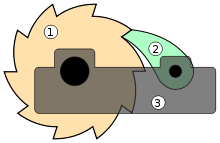
- a pawl (a pin in a ratchet gear)
- att stå pall
- to cope, to stand against pressure
- att stå pall
- (dated, slang) an apple
Declension
| Declension of pall | ||||
|---|---|---|---|---|
| Singular | Plural | |||
| Indefinite | Definite | Indefinite | Definite | |
| Nominative | pall | pallen | pallar | pallarna |
| Genitive | palls | pallens | pallars | pallarnas |
| Declension of pall | ||||
|---|---|---|---|---|
| Singular | Plural | |||
| Indefinite | Definite | Indefinite | Definite | |
| Nominative | pall | pallet | pall | pallen |
| Genitive | palls | pallets | palls | pallens |
Derived terms
References
- pall in Svenska Akademiens Ordlista över svenska språket (13th ed., online)
Welsh
Noun
pall m (plural pallon)