龍
| ||||||||
| ||||||||
Translingual
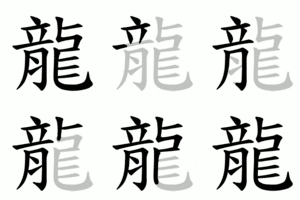
| Stroke order | |||
|---|---|---|---|
 | |||
| Traditional | 龍 |
|---|---|
| Shinjitai | 竜 |
| Simplified | 龙 |
Han character
龍 (radical 212, 龍+0, 16 strokes, cangjie input 卜月卜尸心 (YBYSP), four-corner 01211)
- Kangxi radical #212, ⿓.
Derived characters
- 瀧, 爖, 瓏, 朧, 儱, 嚨, 壠, 巄, 徿, 攏, 曨, 櫳, 矓, 礲, 蠬, 襱, 豅, 贚, 躘, 鑨, 隴, 龓, 䆍, 䌬, 䏊, 䡁, 䪊, 䮾
- 𢤱, 𤜆, 𤳽, 𦢫, 𦪽, 𧲖, 𨏠, 𨳁, 𩟭, 𪐖, 𪚒, 𪚓, 𪚖, 𪚗, 𪚘, 𪚝, 𫜱, 𫲘, 𮙇, 𣰵, 𧾪, 𩙘, 𪈗, 𪚤, 𫑰, 𫦞, 𫿤, 𪚚, 𦒮, 龖, 𪚟
- 寵, 巃, 竉, 籠, 蘢, 靇, 龕, 龗, 䶬, 𠖥, 𦌼, 𩰀, 𪔷, 𪚕, 𪚙, 𪚡, 𪚣, 𫅍, 𡃡, 𡾩, 𢤲, 𢸭, 𤮨, 𦪿, 𨇘, 𪎁, 𪚑, 𪚔, 𪚛, 𪚜, 𪚞, 𪚠, 𪚢, 𮯚
- 聾, 襲, 龔, 壟, 礱, 蠪, 讋, 驡, 鸗, 龏, 龑, 龒, 㰍, 龘, 龎, 龐, 𤼃
Related characters
- 竜 (Japanese shinjitai, also an ancient form of 龍) - See also its derived characters
- 龙 (Simplified Chinese) - See also its derived characters
References
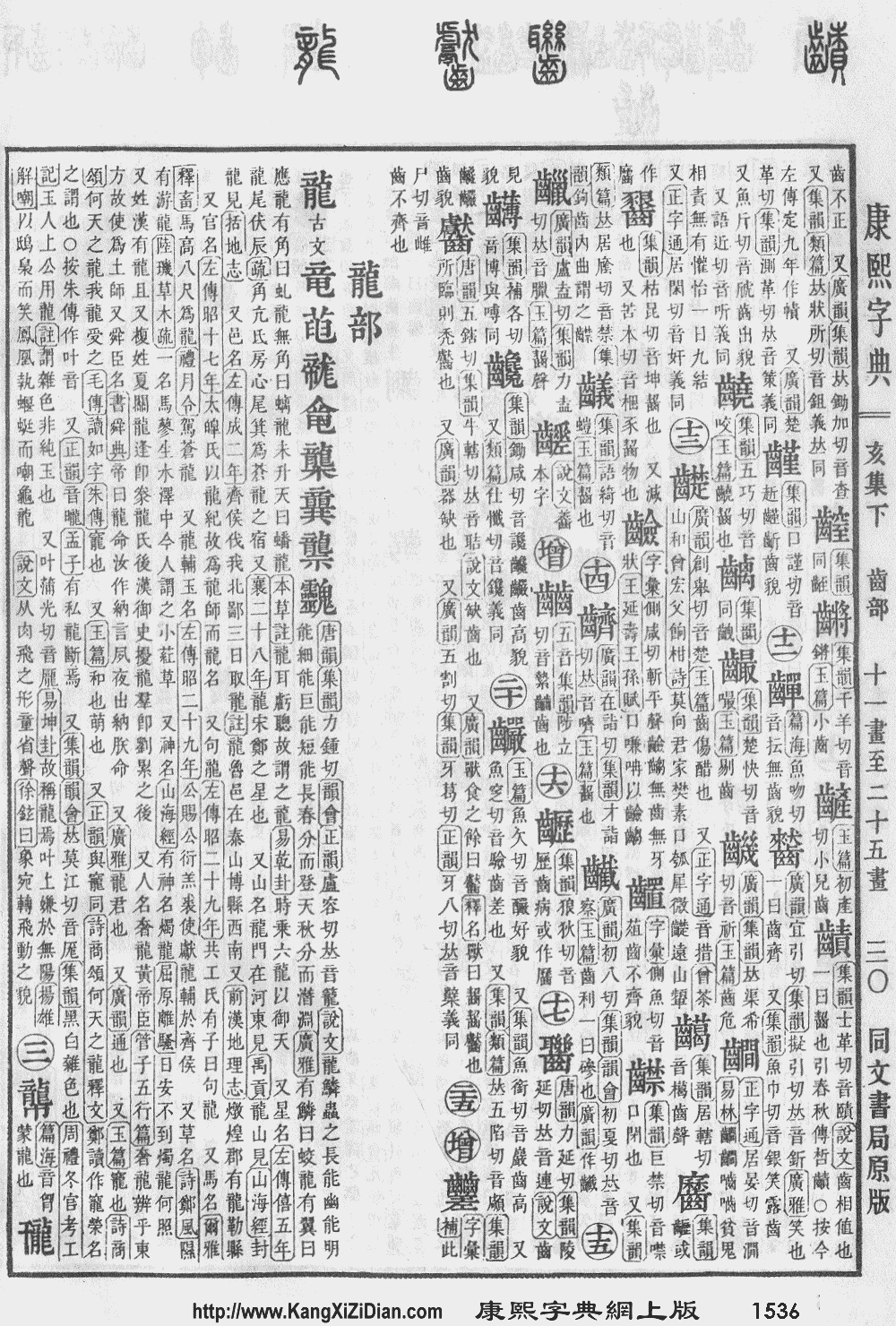
- KangXi: page 1536, character 33
- Dai Kanwa Jiten: character 48818
- Dae Jaweon: page 2076, character 1
- Hanyu Da Zidian: volume 7, page 4803, character 1
- Unihan data for U+9F8D
Chinese
| trad. | 龍 | |
|---|---|---|
| simp. | 龙 | |
| alt. forms | ||
Glyph origin
| Historical forms of the character 龍 | |||||||
|---|---|---|---|---|---|---|---|
| Shang | Western Zhou | Spring and Autumn | Warring States | Shuowen Jiezi (compiled in Han) | Liushutong (compiled in Ming) | ||
| Bronze inscriptions | Oracle bone script | Bronze inscriptions | Bronze inscriptions | Chu Slip and silk script | Qin slip script | Small seal script | Transcribed ancient scripts |
 |
 |
 |
 |
 |
 |
 |
 |
| Characters in the same phonetic series (龍) (Zhengzhang, 2003) | |
|---|---|
| Old Chinese | |
| 驡 | *ʔslaːŋʔ, *roŋ |
| 龐 | *broːŋ |
| 瀧 | *rroːŋ, *sroːŋ, *roːŋ |
| 籠 | *roːŋ, *roːŋʔ, *roŋ |
| 豅 | *roːŋ |
| 朧 | *roːŋ, *roŋs |
| 龓 | *roːŋ, *roːŋʔ |
| 聾 | *roːŋ |
| 礱 | *roːŋ, *roːŋs |
| 嚨 | *roːŋ |
| 蘢 | *roːŋ, *roŋ |
| 櫳 | *roːŋ |
| 襱 | *roːŋ, *roːŋʔ, *r'oŋʔ |
| 瓏 | *roːŋ |
| 曨 | *roːŋ, *roːŋʔ |
| 鸗 | *roːŋ, *roŋ |
| 蠪 | *roːŋ |
| 巃 | *roːŋʔ |
| 竉 | *roːŋʔ |
| 攏 | *roːŋʔ |
| 儱 | *roːŋʔ, *roŋs |
| 龍 | *b·roŋ, *mroːŋ |
| 躘 | *roŋ, *roŋs |
| 隴 | *roŋʔ |
| 壠 | *roŋʔ |
| 壟 | *roŋʔ |
| 寵 | *r̥ʰoŋʔ |
| 龏 | *kloŋ, *kloŋs, *qroːɡ |
Pictogram (象形) – originally a serpent with prominent whiskered mouth and eyes.
Current form developed in large seal script, with serpent’s body on right (tail at upper right, legs on right), whiskered/fanged mouth at lower left, and eyes/crown at upper left. Left side was subsequently simplified and abstracted, with some influence of 立 and ⺼/月. Note that 竜 existed as a traditional variant dating back to large seal script, and figures a dragon seen face-on, rather than curled around.
Etymology
From Proto-Sino-Tibetan *m-bru(ŋ/k) (“dragon; thunder”). Cognate with Tibetan འབྲུག ('brug, “dragon; thunder”). The STEDT database also lists 隆 (OC *ɡ·ruːŋ, “thunder; sound of thunder”) and 雹 (OC *bruːɡ, “hail”) as cognates. Also compare 靐 (OC *brɯŋs, “sound of thunder”) and 霹靂 (OC *pʰeːɡ reːɡ, “thunder”).
This word is found in many languages of the region. Compare Proto-Hmong-Mien *-roŋ (“dragon”) (White Hmong zaj), Proto-Vietic *-roːŋ (“dragon”) (Vietnamese rồng), Vietnamese thuồng luồng (“serpent-like monster”), Khmer រោង (roong, “year of the dragon”), Thai มะโรง (má-roong, “dragon; year of the dragon”), Lao ມະໂລງ (ma lōng, “year of the dragon”), perhaps also Old Turkic *-lan (“suffix denoting a wild, predatory animal”) (Turkish aslan (“lion”), kaplan (“tiger”), yılan (“snake”)).
Pronunciation
Definitions
龍
- (mythology) Chinese dragon
- (mythology) Western dragon
- (figuratively) emperor; sovereign; king; of the emperor
- (figuratively) chief; hero; towering figure
- (by extension) dragon-shaped object; long object
- (by extension) dragon-adorned object
- (zoology) Short for 恐龍/恐龙 (kǒnglóng, “dinosaur”).
- (Min Dong) to become clear-minded; to be revitalised
- A surname.
Compounds
|
|
|
Japanese
| 竜 | |
| 龍 |
Kanji
(“Jinmeiyō” kanji used for names, kyūjitai kanji, shinjitai form 竜)
Readings
Usage notes
- Kyūjitai; simplified into 竜 as isolated shinjitai kanji, but used in Jōyō characters 襲 and 籠 (latter Jōyō as of 2010).
- Although it is officially simplified into 竜, 龍 is often used instead for certain words for its aesthetics (such as in literary contexts or for spelling words borrowed from Chinese).
Noun
龍 (kyūjitai kanji, shinjitai kanji 竜, hiragana たつ, rōmaji tatsu)
- dragon
- 931–938, Wamyō Ruijushō, book 8, page 1:
- 龍 文字集畧云、龍、力鍾反、太都、○下總本有和名二字、神代紀齋明紀同訓、按太都 [...]
- 931–938, Wamyō Ruijushō, book 8, page 1:
龍 (kyūjitai kanji, shinjitai kanji 竜, hiragana りゅう, rōmaji ryū)
Proper noun
龍 (kyūjitai kanji, shinjitai kanji 竜, hiragana りゅう, rōmaji Ryū)
- A male given name
- A surname.
References
- Minamoto, Shitagō; Kyōto Daigaku Bungakubu Kokugogaku Kokubungaku Kenkyūshitu (931–938) Shohon Shūsei Wamyō Ruijushō: Honbunhen (in Japanese), Kyōto: Rinsen, published 1968, →ISBN.
See also
Korean
Hanja
龍 • (ryong>yong, rong>nong, mang, chong)
compounds
- 청룡 (cheongnyong)(靑龍) Green dragon
- 용문 (yongmun)(龍門) dragon gate (folk tale : If snake passes this gate, it becames a dragon)
- 용왕 (yong-wang)(龍王) the Dragon King
- 용산 (yongsan)(龍山) Yongsan city
- 용인 (yong-in)(龍仁) Yongin city
- 용수철 (yongsucheol)(龍鬚鐵) spring
- 등용문 (deung-yongmun)(登龍門) gateway
- 용두사미 (yongdusami)(龍頭蛇尾) anticlimax, dragon head and snake tail
- 공룡 (gongnyong)(恐龍) dinosaur
Pai-lang
Etymology
Coblin, reconstructing the Pai-lang pronunciation as *gljung, suggests that it derives from Proto-Sino-Tibetan *kl(j)u(ŋ/k) (“river, gorge”) and retains its consonant cluster, which was lost in Proto-Lolo-Burmese. Compare Tibetan ལྗོངས (ljongs), Chinese 谷 (OC *kloːɡ).
Noun
龍 (*gljung)
References
- W. South Coblin, "A New Study of the Pai-lang Songs" (1979), Tsing Hua Journal of Chinese Studies, 12:179–216
- Christopher I. Beckwith, "The Pai-lang songs: The earliest texts in a Tibeto-Burman language and their Late Old Chinese transcriptions" (2008), in Medieval Tibeto-Burman Languages III
Vietnamese
Han character
龍 (long, lỏng, lung, lúng, luồng)
- dragon