袂
| ||||||||
Translingual
Han character
袂 (radical 145, 衣+4, 10 strokes, cangjie input 中木大 (LDK), four-corner 35237, composition ⿰衤夬)
References
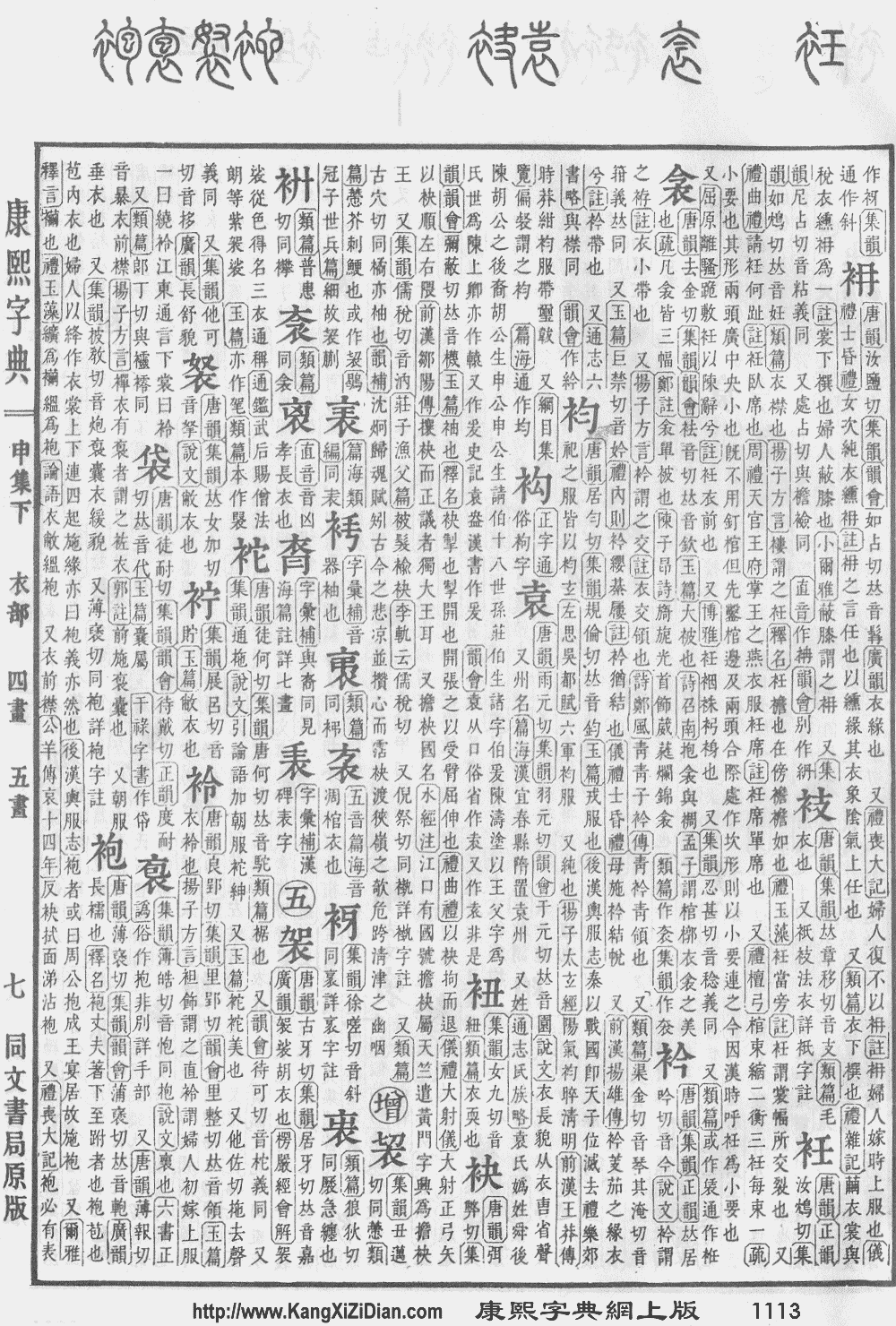
- KangXi: page 1113, character 10
- Dai Kanwa Jiten: character 34154
- Dae Jaweon: page 1579, character 5
- Hanyu Da Zidian: volume 5, page 3080, character 2
- Unihan data for U+8882
Chinese
Glyph origin
| Characters in the same phonetic series (夬) (Zhengzhang, 2003) | |
|---|---|
| Old Chinese | |
| 袂 | *mɡʷeds |
| 夬 | *kʷraːds |
| 快 | *kʰʷraːds |
| 駃 | *kʰʷraːds, *kʷeːd |
| 筷 | *kʰʷraːds |
| 炔 | *kʷeːds |
| 觖 | *kʰʷeds, *kʷeːd |
| 缺 | *kʰʷed, *kʰʷeːd |
| 蒛 | *kʰʷed |
| 吷 | *qʰʷed |
| 妜 | *qʷed, *qʷeːd |
| 決 | *kʷeːd, *qʰʷeːd |
| 訣 | *kʷeːd |
| 抉 | *kʷeːd, *qʷeːd |
| 玦 | *kʷeːd |
| 芵 | *kʷeːd |
| 赽 | *kʷeːd |
| 鴂 | *kʷeːd |
| 鈌 | *kʷeːd |
| 决 | *kʷeːd |
| 疦 | *kʷeːd, *qʰʷeːd |
| 蚗 | *kʷeːd |
| 趹 | *kʷeːd |
Etymology 1
Pronunciation
Definitions
袂
Compounds
Etymology 2
| simp. and trad. |
袂 | |
|---|---|---|
| alt. forms | 𣍐/𫧃 | |
Contraction of 無會/无会 (bô-ē).
Used as a replacement character for 𣍐/𫧃. Use of 袂 is recommended by Taiwan's Ministry of Education.
Pronunciation
Definitions
袂
(Min Nan)
- cannot; to be incapable of
- wouldn't; won't
- (Xiamen, Quanzhou, Zhangzhou) to not know; to not understand
- (Xiamen, Quanzhou, Zhangzhou) incompetent; no good
- (Taiwan) not at all (as reply to thanks)
Synonyms
Compounds
Etymology 3
| For pronunciation and definitions of 袂 – see 䘼 (“(Min Nan) sleeve”). (This character, 袂, is a variant form of 䘼.) |
Japanese
Kanji
袂
Readings
Compounds
Etymology
| Kanji in this term |
|---|
| 袂 |
| たもと Hyōgaiji |
| kun’yomi |
From Old Japanese, first attested in the Man'yōshū (c. 759 CE).
Originally a compound of 手 (ta, ancient combining form of te, "arm, hand") + 本 (moto, “origin”).[1][2]
Pronunciation
Noun
袂 (hiragana たもと, rōmaji tamoto)
- the sleeve pouch of a kimono or other Japanese clothing
- a sleeve
- Synonym: 袖 (sode)
- (archaic) the upper arm
- the side or edge of something (for example, a bridge)
- the foot or base of something (for example, a mountain)
Derived terms
Derived terms
- 袂石 (tamoto ishi)
- 袂落し, 袂落とし (tamoto-otoshi)
- 袂糞 (tamoto kuso)
- 袂時計 (tamoto-dokei)
- 袂の露 (tamoto no tsuyu)
- 苔の袂 (koke no tamoto)
- 墨の袂 (sumi no tamoto)
- 玉藻前曦袂 (Tamamo no Mae-asahi no Tamoto)
- 花の袂 (hana no tamoto)
- 藤の袂 (fuji no tamoto)
Idioms
Idioms
- 袂に縋る (tamoto ni sugaru)
- 袂を絞る (tamoto o shiboru)
- 袂を連ねる (tamoto o tsuraneru)
- 袂を分かつ (tamoto o wakatsu)
- 名残の袂 (nagori no tamoto)
References
Korean
Hanja
袂 • (mye) (hangeul 몌, revised mye, McCune–Reischauer mye, Yale myey)
- This term needs a translation to English. Please help out and add a translation, then remove the text
{{rfdef}}.
This article is issued from
Wiktionary.
The text is licensed under Creative Commons - Attribution - Sharealike.
Additional terms may apply for the media files.