際
See also: 际
| ||||||||
Translingual
Han character
際 (radical 170 阜+11, 14 strokes, cangjie input 弓中月人火 (NLBOF), four-corner 77291, composition ⿰⻖祭)
References
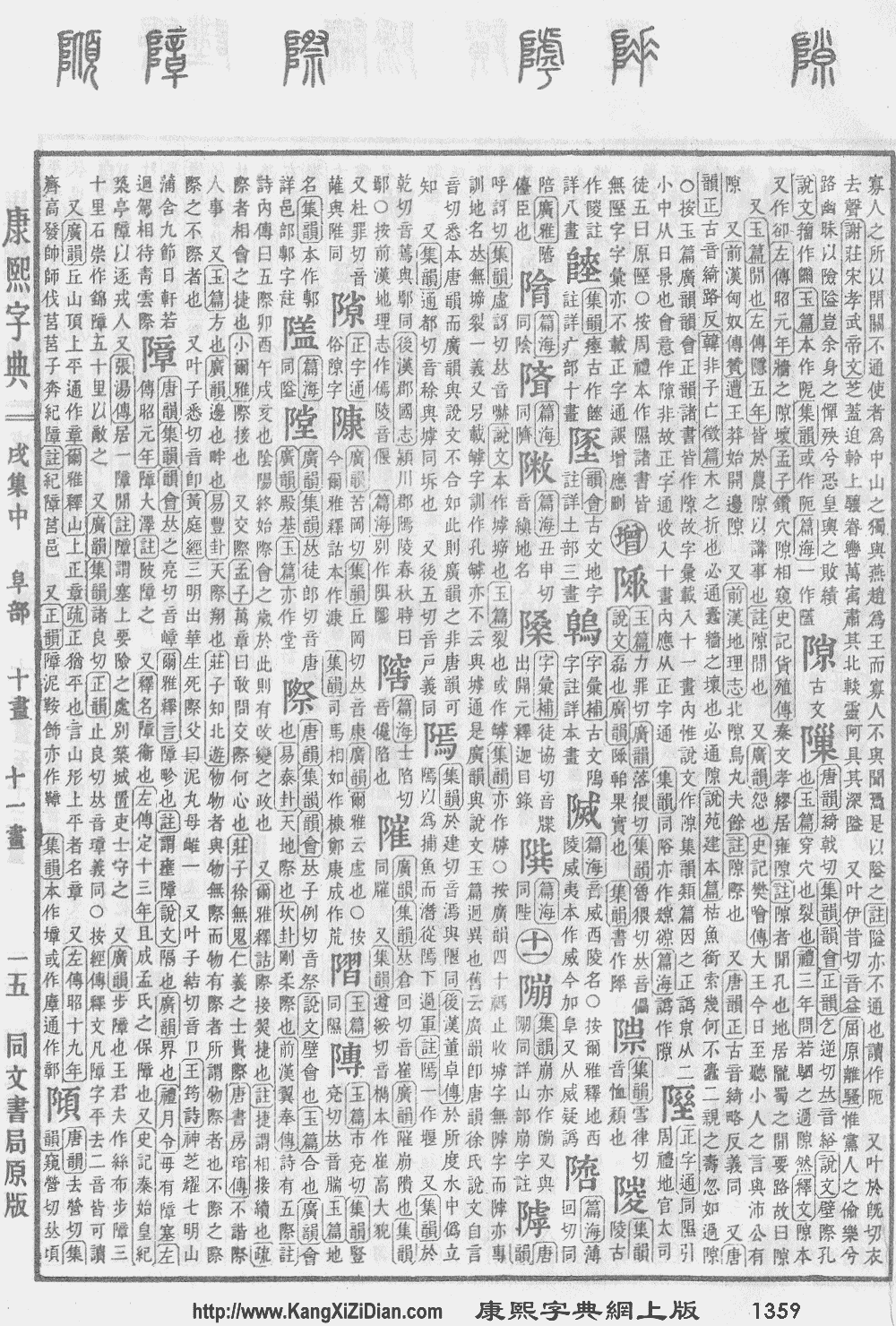
- KangXi: page 1359, character 28
- Dai Kanwa Jiten: character 41820
- Hanyu Da Zidian: volume 6, page 4154, character 15
- Unihan data for U+969B
Chinese
| trad. | 際 | |
|---|---|---|
| simp. | 际 | |
Glyph origin
| Characters in the same phonetic series (祭) (Zhengzhang, 2003) | |
|---|---|
| Old Chinese | |
| 蔡 | *sʰlaːds |
| 瘵 | *ʔsreːds |
| 祭 | *ʔsreːds, *ʔsleds |
| 際 | *ʔsleds |
| 穄 | *ʔsleds |
| 鰶 | *ʔsleds |
| 傺 | *hr'eds |
| 摖 | *sʰleːds |
| 擦 | *sʰlaːd |
| 攃 | *sʰlaːd, *saːd |
| 礤 | *sʰlaːd |
| 察 | *sʰreːd |
| 詧 | *sʰreːd, *sʰeːd |
Phono-semantic compound (形聲, OC *ʔsleds) : semantic 阝 + phonetic 祭 (OC *ʔsreːds, *ʔsleds).
Pronunciation
Definitions
際
Compounds
Derived terms from 際
|
|
|
Japanese
Kanji
際
- Occasion
- Side
- Edge
- Verge
- Dangerous
- Adventurous
- Incident
- Time
- When
Readings
Etymology 1
| Kanji in this term |
|---|
| 際 |
| さい Grade: 5 |
| on’yomi |
Noun
- time; occasion
- 列車が発車する際
- ressha ga hassha suru sai
- when a train departs
- その際に注意しなければいけない
- sono sai ni chūi shinakereba ikenai
- you must pay attention when that happens
- 列車が発車する際
See also
Etymology 2
| Kanji in this term |
|---|
| 際 |
| きわ Grade: 5 |
| kun’yomi |
Noun
際 (hiragana きわ, rōmaji kiwa, historical hiragana きは)
Korean
Hanja
際 • (je) (hangeul 제, revised je, McCune–Reischauer che, Yale cey)
- This term needs a translation to English. Please help out and add a translation, then remove the text
{{rfdef}}.
Vietnamese
Han character
際 (tế)
- This term needs a translation to English. Please help out and add a translation, then remove the text
{{rfdef}}.
This article is issued from
Wiktionary.
The text is licensed under Creative Commons - Attribution - Sharealike.
Additional terms may apply for the media files.