葉
| ||||||||
Translingual
Han character
葉 (radical 140, 艸+9, 12 strokes, cangjie input 廿心廿木 (TPTD), four-corner 44904, composition ⿱艹枼)
References
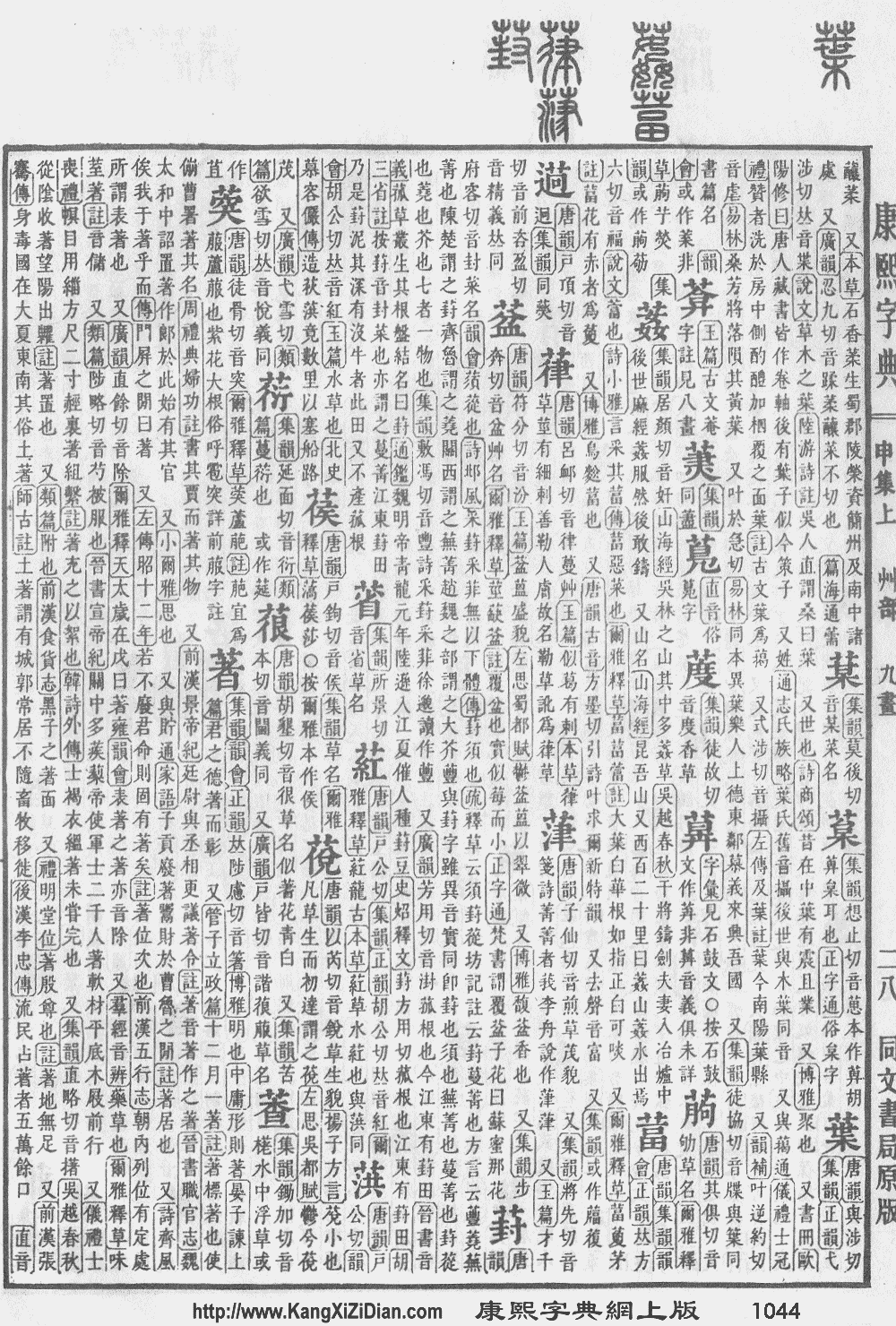
- KangXi: page 1044, character 3
- Dai Kanwa Jiten: character 31387
- Dae Jaweon: page 1504, character 18
- Hanyu Da Zidian: volume 5, page 3243, character 15
- Unihan data for U+8449
Chinese
| trad. | 葉 | |
|---|---|---|
| simp. | 叶* | |
Glyph origin
| Characters in the same phonetic series (世) (Zhengzhang, 2003) | |
|---|---|
| Old Chinese | |
| 貰 | *ɦljebs, *hljebs |
| 跇 | *l̥ʰebs, *lebs |
| 迣 | *ʔljebs |
| 世 | *hljebs |
| 泄 | *lebs, *sled |
| 枻 | *lebs |
| 詍 | *lebs |
| 靾 | *lebs |
| 袣 | *lebs |
| 抴 | *lebs, *led |
| 呭 | *lebs |
| 勩 | *lebs, *libs |
| 屜 | *l̥ʰeːbs |
| 鰈 | *l̥ʰaːb, *l'eːb |
| 渫 | *zreːb, *sled |
| 煠 | *zreːb, *l̥ʰeb, *leb |
| 喋 | *rlaːb, *ʔl'eːb, *l'eːb |
| 鞢 | *rlaːb, *sleːb |
| 殜 | *l'eb, *leb, *lab |
| 葉 | *hljeb, *leb |
| 弽 | *hljeb, *hleːb |
| 韘 | *hljeb, *sleːb |
| 枼 | *leb |
| 楪 | *leb |
| 揲 | *leb, *l'eːb, *ɦljed |
| 鍱 | *leb |
| 偞 | *leb, *hleːb |
| 蝶 | *l̥ʰeːb, *l'eːb |
| 牒 | *l'eːb |
| 蹀 | *l'eːb |
| 諜 | *l'eːb |
| 堞 | *l'eːb |
| 牃 | *l'eːb |
| 褋 | *l'eːb |
| 惵 | *l'eːb |
| 碟 | *l'eːb |
| 屧 | *sleːb |
| 屟 | *sleːb |
| 紲 | *sled |
| 齛 | *sled |
| 疶 | *sled |
| 緤 | *sled |
| 媟 | *sled |
Phono-semantic compound (形聲, OC *hljeb, *leb) : semantic 艸 (“grass”) + phonetic 枼 (OC *leb, “flat”).
Etymology
From Proto-Sino-Tibetan *s-lap (“leaf”). Cognate with Tibetan ལོ་མ (lo ma, “leaf”), Western Tibetan ལོབ་མ (lob ma, “leaf”). Related to 世 (OC *hljebs, “world”).
This is part of the word family *lVp meaning “flat”, represented by the phonetic component 枼 (OC *leb). Compare also 茶 (OC *rlaː, “tea < *leaf”).
Pronunciation 1
Definitions
葉
Synonyms
- (leaf): (Min) 箬
Pronunciation 2
Definitions
葉
Compounds
|
|
|
Japanese
Kanji
Readings
- Goon: しょう (shō)←せふ (sefu, historical); よう (yō, Jōyō)←えふ (efu, historical)
- Kan’on: しょう (shō)←せふ (sefu, historical); よう (yō, Jōyō)←えふ (efu, historical)
- Kun: は (ha, 葉, Jōyō)
- Nanori: よ (yo); わ (wa)
Compounds
Etymology 1
| Kanji in this term |
|---|
| 葉 |
| は Grade: 3 |
| kun’yomi |
/pa/ → /fa/ → /ha/
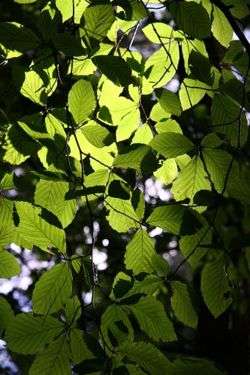
From Old Japanese.[1] Probably cognate with Old Japanese verb 生ゆ (hayu, “to sprout, to grow”) → modern 生える (haeru), and with 羽 (ha, “feather; wing”). Probably also cognate with 歯 (ha, “tooth”) from the way that both sprout and then later fall, and with 刃 (ha, “blade”) from similarities in shape. Compare English blade.
Pronunciation
Noun
葉 (counter 枚, hiragana は, rōmaji ha)
Synonyms
- 葉っぱ (happa)
Etymology 2
| Kanji in this term |
|---|
| 葉 |
| よう Grade: 3 |
| on’yomi |
/epu/ → /efu/ → /eu/ → /yoː/
From Middle Chinese 葉 (yep, “leaf”).
Pronunciation
Noun
Counter
葉 (hiragana よう, rōmaji -yō, historical hiragana えふ)
References
Korean
Hanja
葉 • (yeop, seop) (hangeul 엽, 섭, McCune–Reischauer yŏp, sŏp, Yale yep, sep)
- This term needs a translation to English. Please help out and add a translation, then remove the text
{{rfdef}}.
Okinawan
Kanji
葉
Etymology
Derived from Proto-Japonic pa. Cognate with Kunigami phaá, Middle Japanese ɸa, and modern Japanese ha.
Noun
Compounds
Vietnamese
Han character
葉 (diệp, diếp, dợp, dớp, đẹp, giấp, giẹp, nhịp, riếp, dào)
- This term needs a translation to English. Please help out and add a translation, then remove the text
{{rfdef}}.