艸
| ||||||||
Translingual
| Stroke order | |||
|---|---|---|---|
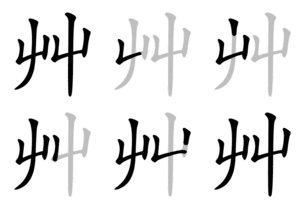 | |||
Alternative forms
Han character
艸 (radical 140, 艸+0, 6 strokes, cangjie input 山山 (UU) or X山山 (XUU), four-corner 22447, composition ⿰屮屮)
- Kangxi radical #140, ⾋.
- Shuōwén Jiězì radical №12
Usage notes
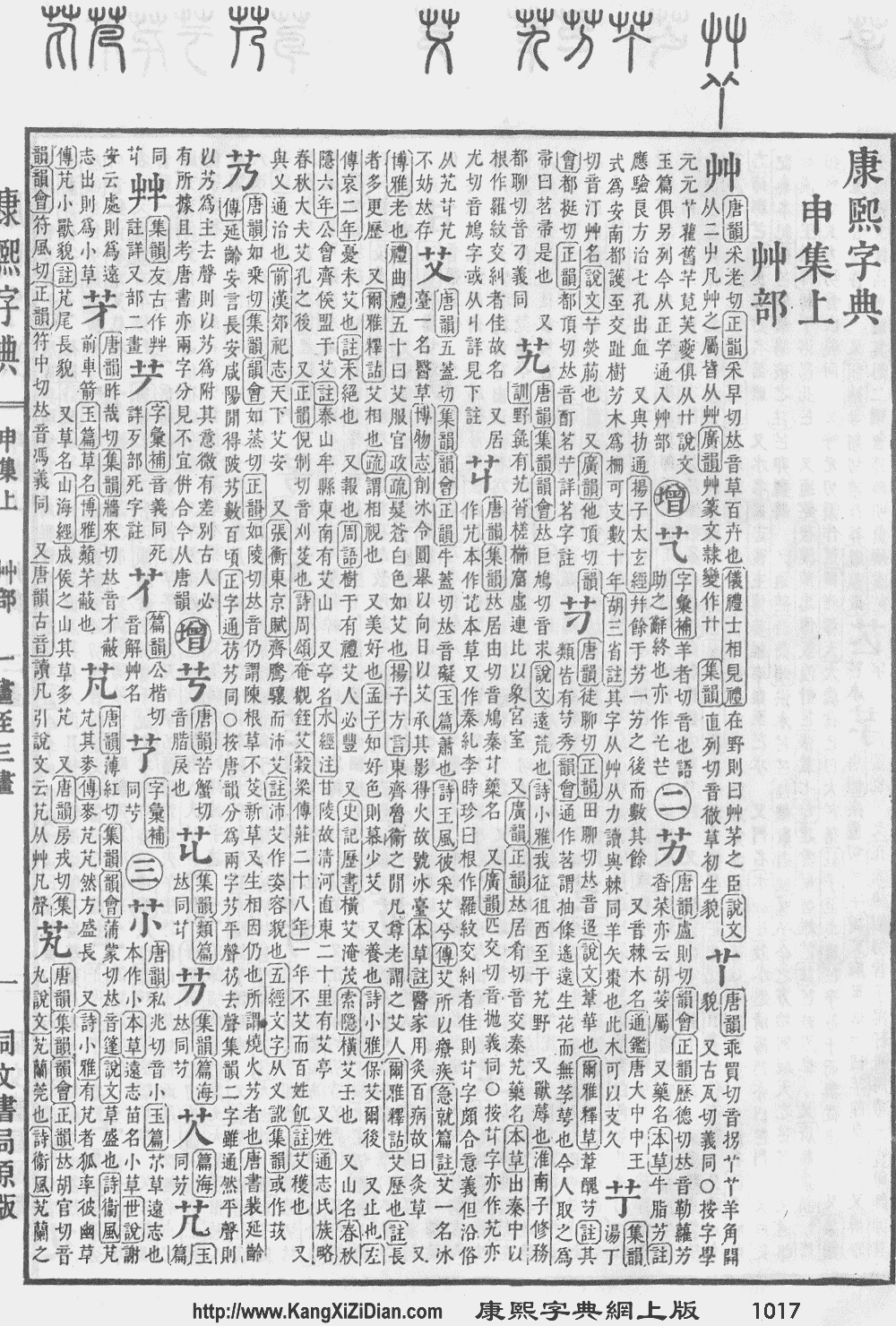
- In the Kangxi Dictionary there are 1,902 characters (out of 40,000) that use this radical, making it the most commonly used radical.
Descendants
- Index:Chinese radical/艸
References
- KangXi: page 1017, character 1
- Dai Kanwa Jiten: character 30638
- Dae Jaweon: page 1475, character 6
- Hanyu Da Zidian: volume 5, page 3172, character 1
- Unihan data for U+8278
Chinese
Glyph origin
| Historical forms of the character 艸 |
|---|
| Shuowen Jiezi (compiled in Han) |
| Small seal script |
 |
Definitions
| For pronunciation and definitions of 艸 – see 草 (“grass; straw; thatch; herbal grasses; herbs; etc.”). (This character, 艸, is an ancient form of 草.) |
Japanese
Kanji
艸
- This term needs a translation to English. Please help out and add a translation, then remove the text
{{rfdef}}.
Readings
Korean
Hanja
艸 • (cho) (hangeul 초, revised cho, McCune–Reischauer ch'o, Yale cho)
- This term needs a translation to English. Please help out and add a translation, then remove the text
{{rfdef}}.
Vietnamese
Han character
- This term needs a translation to English. Please help out and add a translation, then remove the text
{{rfdef}}.
This article is issued from
Wiktionary.
The text is licensed under Creative Commons - Attribution - Sharealike.
Additional terms may apply for the media files.