斯
| ||||||||
Translingual
Han character
斯 (radical 69, 斤+8, 12 strokes, cangjie input 廿金竹一中 (TCHML), four-corner 42821, composition ⿰其斤)
References
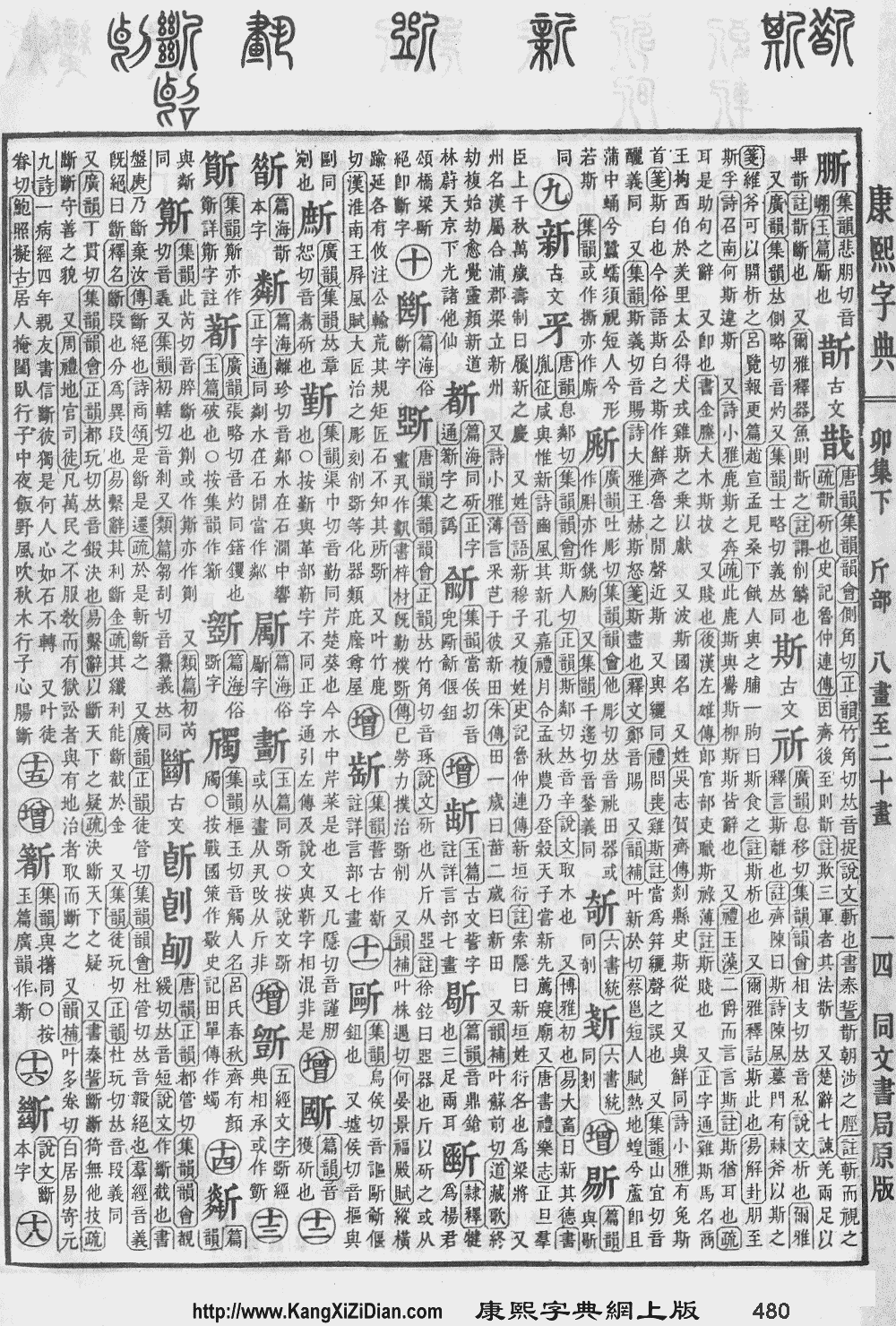
- KangXi: page 480, character 4
- Dai Kanwa Jiten: character 13563
- Dae Jaweon: page 839, character 4
- Hanyu Da Zidian: volume 3, page 2025, character 6
- Unihan data for U+65AF
Chinese
| simp. and trad. |
斯 | |
|---|---|---|
Glyph origin
| Historical forms of the character 斯 | ||
|---|---|---|
| Western Zhou | Shuowen Jiezi (compiled in Han) | Liushutong (compiled in Ming) |
| Bronze inscriptions | Small seal script | Transcribed ancient scripts |
 |
 |
 |
| Characters in the same phonetic series (斯) (Zhengzhang, 2003) | |
|---|---|
| Old Chinese | |
| 嘶 | *seː |
| 撕 | *seː, *se |
| 斯 | *se |
| 廝 | *se |
| 蟴 | *se |
| 燍 | *se |
| 鐁 | *se |
| 凘 | *se |
| 澌 | *ses |
Pronunciation
Definitions
斯
Usage notes
- In modern Chinese, this character is almost entirely used for phonetic translations. The character mainly represents the phoneme /s/ or /θ/ in word-final and preconsonantal positions.
Compounds
Derived terms from 斯
|
|
|
Japanese
Kanji
斯
(“Jinmeiyō” kanji used for names)
- This term needs a translation to English. Please help out and add a translation, then remove the text
{{rfdef}}.
Readings
- Goon: し (shi)
- Kan’on: し (shi)
- Tōon: す (su)
- Kun: か (ka); こう (kō); この (kono); これ (kore); かく (kaku, 斯く); ここに (kokoni)
Korean
Hanja
斯 • (sa) (hangeul 사, revised sa, McCune–Reischauer sa, Yale sa)
- This term needs a translation to English. Please help out and add a translation, then remove the text
{{rfdef}}.
Vietnamese
Han character
斯 (tư)
- This term needs a translation to English. Please help out and add a translation, then remove the text
{{rfdef}}.
This article is issued from
Wiktionary.
The text is licensed under Creative Commons - Attribution - Sharealike.
Additional terms may apply for the media files.