意
| ||||||||
Translingual
Han character
意 (radical 61, 心+9, 13 strokes, cangjie input 卜廿日心 (YTAP), four-corner 00336, composition ⿱音心)
Derived terms
References
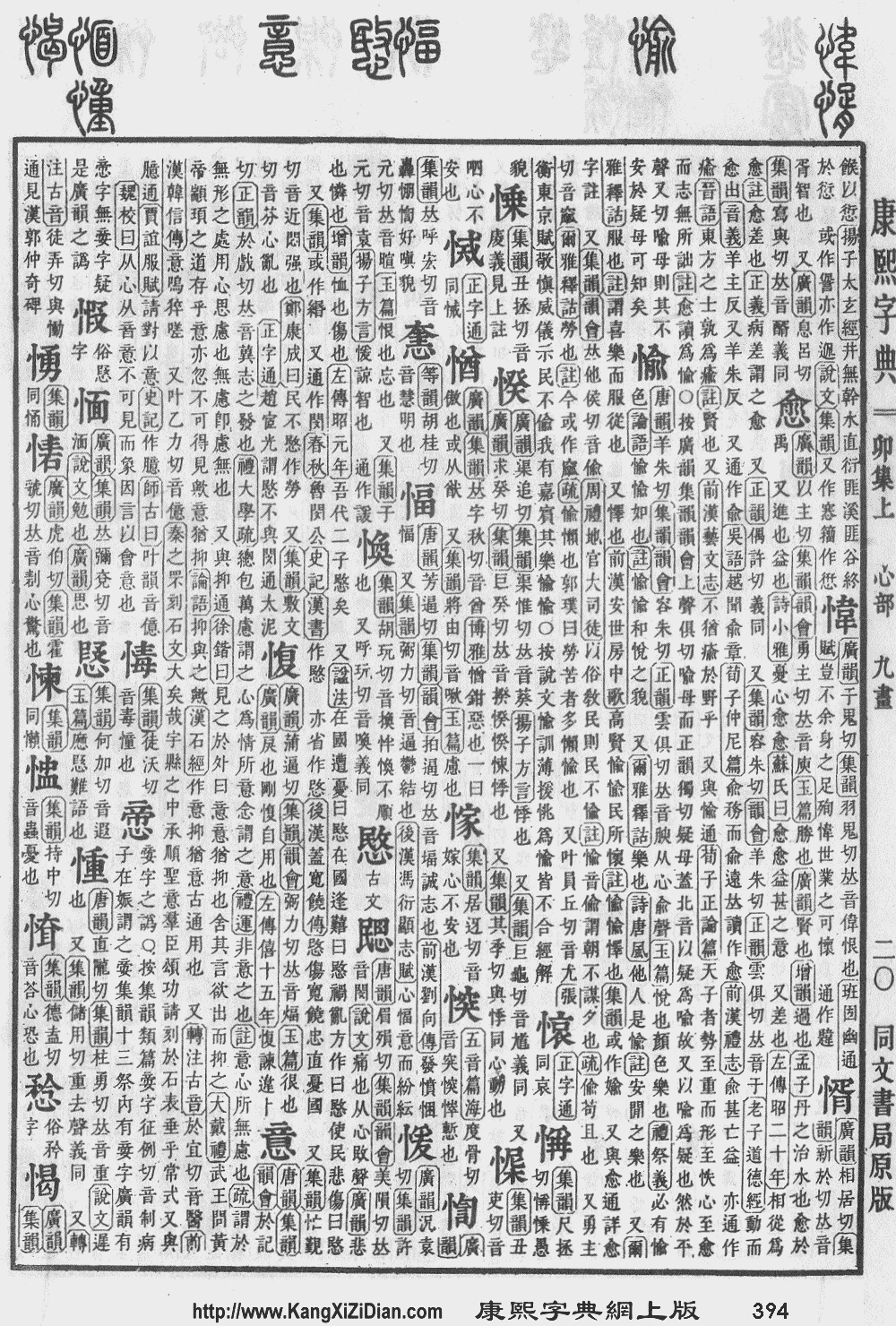
- KangXi: page 394, character 22
- Dai Kanwa Jiten: character 10921
- Dae Jaweon: page 730, character 28
- Hanyu Da Zidian: volume 4, page 2323, character 3
- Unihan data for U+610F
Chinese
| simp. and trad. |
意 | |
|---|---|---|
Glyph origin
| Historical forms of the character 意 | ||
|---|---|---|
| Western Zhou | Shuowen Jiezi (compiled in Han) | Liushutong (compiled in Ming) |
| Bronze inscriptions | Small seal script | Transcribed ancient scripts |
 |
 |
 |
| Characters in the same phonetic series (意) (Zhengzhang, 2003) | |
|---|---|
| Old Chinese | |
| 噫 | *qrɯːɡs, *qɯ |
| 譩 | *qɯ, *qɯʔ, *qɯl |
| 醷 | *qɯʔ, *qɯɡ |
| 意 | *qɯɡs |
| 鷾 | *qɯɡs |
| 憶 | *qɯɡ |
| 億 | *qɯɡ |
| 臆 | *qɯɡ |
| 繶 | *qɯɡ |
| 澺 | *qɯɡ |
| 薏 | *qɯɡ |
| 檍 | *qɯɡ |
| 癔 | *qɯɡ |
Modern form is a compound of 音 and 心 (“heart”). However, the top component is etymologically unrelated to 音.
Pronunciation
Definitions
意
Compounds
Derived terms from 意
|
|
|
Japanese
Kanji
意
Readings
Compounds
Compounds
- 悪意 (akui): evil intent, malice
- 意外 (igai):unexpected
- 意気 (iki): spirit
- 意気込み (ikigomi)
- 意気消沈 (ikishōchin)
- 意気衝天 (ikishōten)
- 意気阻喪 (ikisosō)
- 意気地 (ikuji)
- 意気投合 (ikitōgō)
- 意気揚揚 (ikiyōyō)
- 意見 (iken): opinion
- 意固地 (ikoji)
- 意向 (ikō)
- 意志 (ishi): will, intent
- 意思 (ishi)
- 意思能力 (ishinōryoku)
- 意識 (ishiki)
- 意趣 (ishu)
Noun
Korean
Hanja
意 • (ui) (hangeul 의, revised ui, McCune–Reischauer ŭi, Yale uy)
- (뜻 의, tteut-): meaning, intention, signification, significance
Compounds
- 意氣 (의기, uigi) spirit, vigor
- 意圖 (의도, uido) intention, design
- 意味 (의미, uimi) meaning, significance
- 意思 (의사, uisa) intention
- 意識 (의식, uisig, -sik) consciousness
- 意譯 (의역, uiyeog, -yeok) liberal translation
- 意外 (의외, uioe) exception
- 意慾 (의욕, uiyog, -yok) will, willingness, volition
- 意義 (의의, uiui) significance
- 意匠 (의장, uijang) design
- 意中 (의중, uijung) mind, view
- 意志 (의지, uiji) will, intention, volition
- 意表 (의표, uipyo) surprise
- 意向 (의향, uihyang) willingness, inclination, view
- 表意 (표의, pyoui) ideographic or semantic (in contrast to phonetic) representation. cf. 表音 (표음, pyoeum)
See also
Vietnamese
Han character
- This term needs a translation to English. Please help out and add a translation, then remove the text
{{rfdef}}.
This article is issued from
Wiktionary.
The text is licensed under Creative Commons - Attribution - Sharealike.
Additional terms may apply for the media files.