音
| ||||||||
Translingual
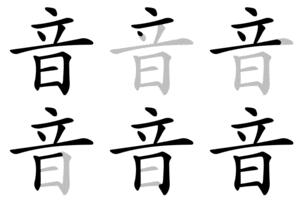
| Stroke order | |||
|---|---|---|---|
 | |||
Han character
音 (radical 180, 音+0, 9 strokes, cangjie input 卜廿日 (YTA), four-corner 00601, composition ⿱立日)
- Kangxi radical #180, ⾳.
Derived characters
References
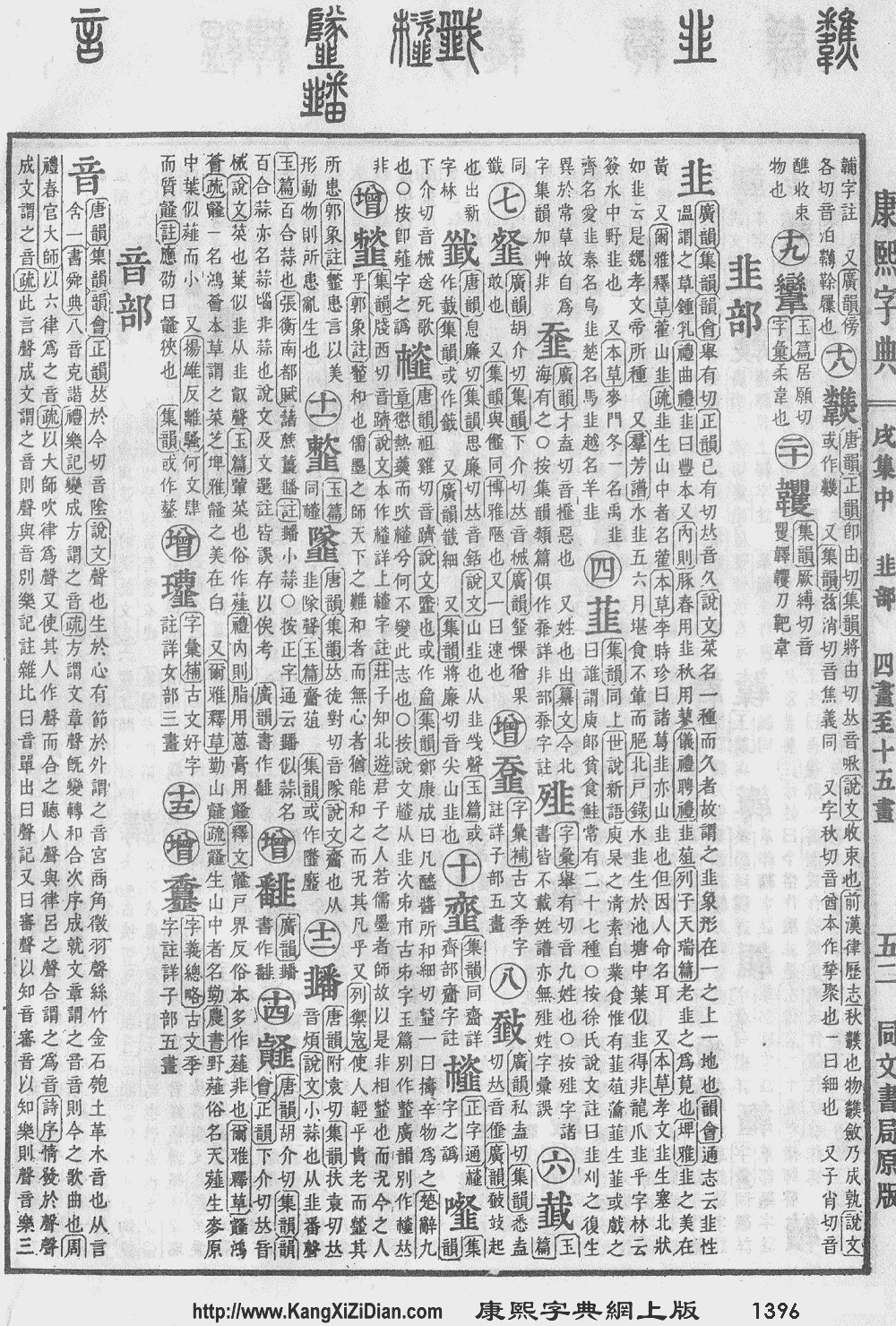
- KangXi: page 1396, character 25
- Dai Kanwa Jiten: character 43265
- Dae Jaweon: page 1912, character 16
- Hanyu Da Zidian: volume 7, page 4495, character 1
- Unihan data for U+97F3
Chinese
| simp. and trad. |
音 | |
|---|---|---|
Glyph origin
| Historical forms of the character 音 | |||
|---|---|---|---|
| Western Zhou | Warring States | Shuowen Jiezi (compiled in Han) | Liushutong (compiled in Ming) |
| Bronze inscriptions | Chu Slip and silk script | Small seal script | Transcribed ancient scripts |
 |
 |
 |
 |
| Characters in the same phonetic series (音) (Zhengzhang, 2003) | |
|---|---|
| Old Chinese | |
| 諳 | *qɯːm |
| 腤 | *qɯːm |
| 嬜 | *qɯːm, *qʰaːm, *qʰrɯm |
| 喑 | *qɯːm, *qrɯm, *qrɯms |
| 揞 | *qɯːmʔ, *qrɯːms |
| 隌 | *qɯːmʔ, *qrɯm |
| 罯 | *qɯːmʔ, *qɯːb |
| 暗 | *qɯːms |
| 闇 | *qɯːms |
| 黯 | *qrɯːm, *qrɯːmʔ |
| 歆 | *qʰrɯm |
| 愔 | *qɯm |
| 韾 | *qɯm |
| 音 | *qrɯm |
| 瘖 | *qrɯm |
| 窨 | *qrɯms |
| 湆 | *kʰrɯb |
Ideogram (指事) : 言 (“word”) with something in 口 (“mouth”) – sound comes from the mouth.
Pronunciation
Definitions
音
Compounds
Derived terms from 音
|
|
|
Japanese
Kanji
音
Readings
Compounds
Compounds
- 音韻 (on'in)
- 音価 (onka)
- 音階 (onkai)
- 音楽 (ongaku, “music”)
- 音感 (onkan)
- 音義 (ongi)
- 音響 (onkyō, “sound”)
- 音曲 (onkyoku)
- 音訓 (onkun)
- 音耗 (onmō)
- 音叉 (onsa)
- 音子 (onshi, “phonon”)
- 音字 (onji)
- 音質 (onshitsu)
- 音信 (onshin)
- 音塵 (onjin)
- 音声 (onsei)
- 音制 (onsei)
- 音節 (onsetsu)
- 音素 (onso)
- 音息 (onsoku)
- 音速 (onsoku)
- 音痴 (onchi)
- 音注 (onchū)
- 音調 (onchō)
- 音程 (ontei)
- 音通 (ontsū)
- 音読 (ondoku)
- 音波 (onpa)
- 音標文字 (onpyōmoji)
- 音便 (onbin)
- 音符 (onpu)
- 音譜 (onpu)
- 音問 (onmon)
- 音訳 (on'yaku)
- 音律 (onritsu)
- 音量 (onryō)
- 観音 (kannon)
- 子音 (shiin), 子音 (shion, “consonant”)
- 震音 (shin'on, “tremolo”)
- 音色 (neiro)
- 琵音 (bion): arpeggio
- 母音 (boin), 母音 (bōn, “vowel”)
- 漣音 (ren'on, “mordent”)
Etymology 1
| Kanji in this term |
|---|
| 音 |
| おん Grade: 1 |
| on’yomi |
From Middle Chinese 音 (MC ʔˠiɪm).
Pronunciation
Noun
- sound
- (linguistics) speech sound
- reading of a kanji
- (by extension) reading of a Chinese character outside the Japanese language; rime
- music
Derived terms
Etymology 2
| Kanji in this term |
|---|
| 音 |
| おと Grade: 1 |
| kun’yomi |
/oto2/ invalid IPA characters (2) → /oto/
From Old Japanese, from Proto-Japonic *ətə.
Pronunciation
Noun
- sound
- when used with a "hear" verb, rumor or fame (Can we verify(+) this sense?)
- news (of a visit, etc.) (Can we verify(+) this sense?)
- reply, response
Derived terms
- 足音 (ashioto)
- 音に聞く (oto ni kiku)
Etymology 3
| Kanji in this term |
|---|
| 音 |
| と Grade: 1 |
| Irregular |
/to2/ invalid IPA characters (2) → /to/
Clipping of oto above, the initial o being dropped.
Pronunciation
- (Irregular reading)
- IPA(key): [to̞]
Noun
- sound; echo; voice
- c. 759, Man'yōshū (book 14, poem 3453), text here
- 可是能等能登抱吉和伎母賀吉西斯伎奴多母登乃久太利麻欲比伎尓家利 [Man'yōgana]
- 風の音の遠き我妹が着せし衣手本のくだりまよひ来にけり [Modern spelling]
- kaze no to no tōki wagimo ga kiseshi-kinu tamoto no kudari, mayoi-ki ni keri
- My dear wife, far away (as the sound of the wind), some threads of the sleeves of the kimono you made me wear have come to be worn and chafed![4]
- c. 759, Man'yōshū (book 14, poem 3453), text here
Derived terms
- 風の音の (kaze no to no, pillow word)
Etymology 4
| Kanji in this term |
|---|
| 音 |
| ね Grade: 1 |
| kun’yomi |
From Old Japanese.
Pronunciation
Noun
References
- 1 2 3 2006, 大辞林 (Daijirin), Third Edition (in Japanese), Tōkyō: Sanseidō, →ISBN
- 1 2 3 1998, NHK日本語発音アクセント辞典 (NHK Japanese Pronunciation Accent Dictionary) (in Japanese), Tōkyō: NHK, →ISBN
- ↑ 1974, 新明解国語辞典 (Shin Meikai Kokugo Jiten), Second Edition (in Japanese), Tōkyō: Sanseidō
- ↑ Jan Lodewijk Pierson, Jr. (1964) The Makura-Kotoba of the Manyôśû, Leiden: Brill Archive, page 54
Korean
Hanja
音 • (eum) (hangeul 음)
Synonyms
Compounds
Derived terms
Vietnamese
Han character
音 (âm, ậm, ơm)
Compounds
Usage notes
- Chữ Nôm. The modern Vietnamese equivalent is âm.
References
This article is issued from
Wiktionary.
The text is licensed under Creative Commons - Attribution - Sharealike.
Additional terms may apply for the media files.