性
| ||||||||
Translingual
Han character
性 (radical 61, 心+5, 8 strokes, cangjie input 心竹手一 (PHQM), four-corner 95010, composition ⿰忄生)
References
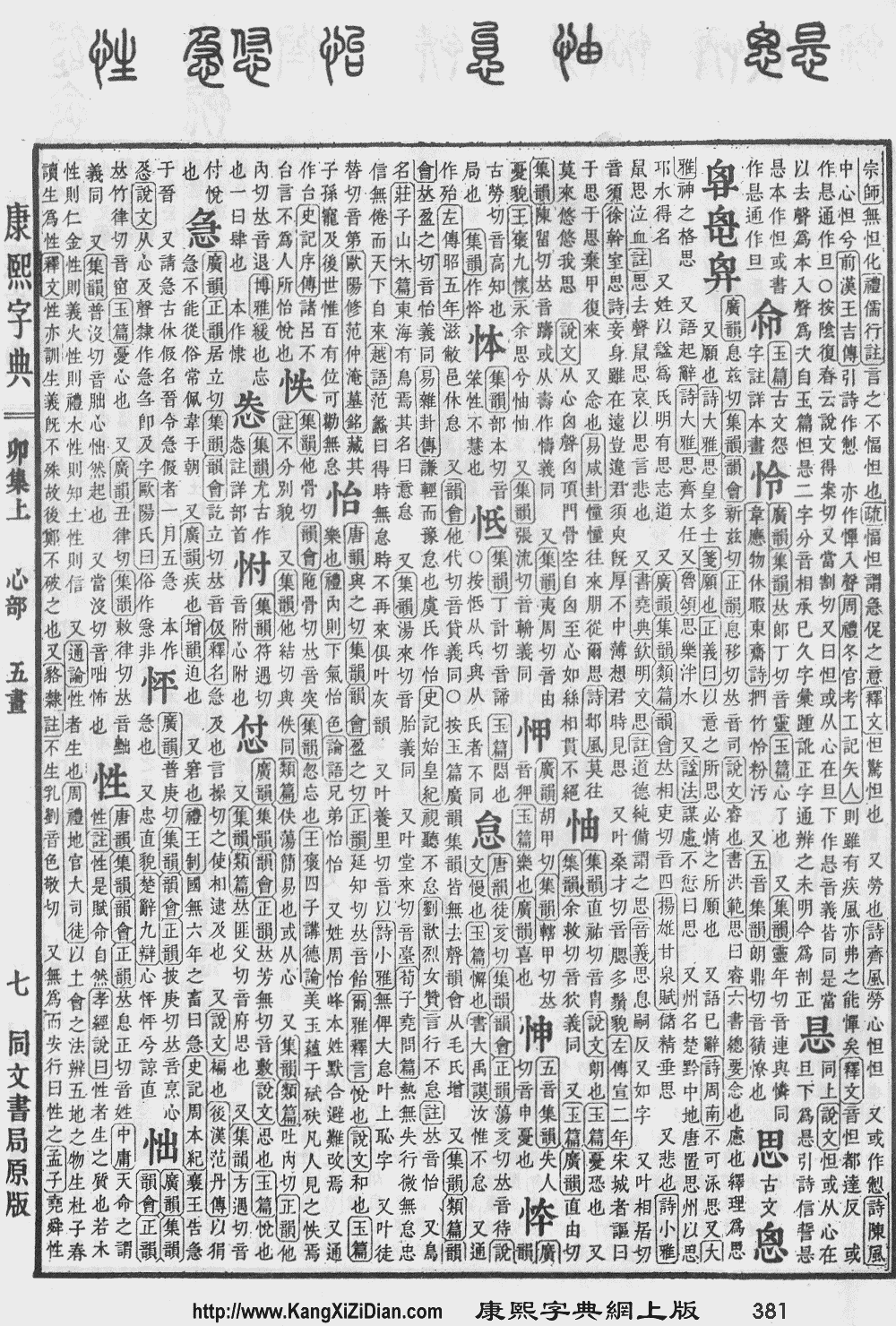
- KangXi: page 381, character 24
- Dai Kanwa Jiten: character 10478
- Dae Jaweon: page 710, character 9
- Hanyu Da Zidian: volume 4, page 2286, character 4
- Unihan data for U+6027
Chinese
| simp. and trad. |
性 | |
|---|---|---|
Glyph origin
| Characters in the same phonetic series (生) (Zhengzhang, 2003) | |
|---|---|
| Old Chinese | |
| 猜 | *sʰlɯː |
| 輤 | *sʰleːns |
| 綪 | *sʰleːns, *ʔsreːŋ |
| 倩 | *sʰleːns, *sʰleŋs |
| 棈 | *sʰleːns |
| 蒨 | *sʰeːns |
| 篟 | *sʰeːns |
| 生 | *sʰleːŋ, *sreŋs |
| 牲 | *sreŋ |
| 笙 | *sreŋ |
| 甥 | *sreŋ |
| 鉎 | *sreŋ, *sleːŋ |
| 珄 | *sreŋ |
| 鼪 | *sreŋ, *sreŋs |
| 猩 | *sreŋ, *seːŋ |
| 狌 | *sreŋ |
| 眚 | *sreŋʔ |
| 貹 | *sreŋs |
| 崝 | *zreːŋ |
| 精 | *ʔsleŋ, *ʔsleŋs |
| 菁 | *ʔsleŋ |
| 鶄 | *ʔsleŋ, *sʰleːŋ |
| 蜻 | *ʔsleŋ, *sʰleːŋ |
| 鼱 | *ʔsleŋ |
| 婧 | *ʔsleŋ, *zleŋs, *zleŋʔ |
| 睛 | *ʔsleŋ, *sʰleŋʔ |
| 箐 | *ʔsleŋ |
| 聙 | *ʔsleŋ |
| 旌 | *ʔsleŋ |
| 清 | *sʰleŋ |
| 圊 | *sʰleŋ |
| 請 | *sʰleŋʔ, *zleŋs, *zleŋ |
| 凊 | *sʰleŋs |
| 䝼 | *zleŋs, *zleŋ |
| 靚 | *zleŋs |
| 情 | *zleŋ |
| 晴 | *zleŋ |
| 夝 | *zleŋ |
| 靜 | *zleŋʔ |
| 靖 | *zleŋʔ |
| 睲 | *seŋʔ, *seːŋs |
| 惺 | *seŋʔ, *seːŋ |
| 性 | *sleŋs |
| 姓 | *sleŋs |
| 靗 | *l̥ʰeŋs |
| 鯖 | *ʔljeŋ, *sʰleːŋ |
| 青 | *sʰleːŋ |
| 靘 | *sʰleːŋ, *sʰleːŋs |
| 掅 | *sʰleːŋs |
| 胜 | *sleːŋ |
| 曐 | *sleːŋ |
| 星 | *sleːŋ |
| 鮏 | *sleːŋ |
| 腥 | *seːŋ, *seːŋs |
| 鯹 | *seːŋ |
| 醒 | *seːŋ, *seːŋʔ, *seːŋs |
| 篂 | *seːŋ |
Phono-semantic compound (形聲, OC *sleŋs) : semantic 忄 (“heart”) + phonetic 生 (OC *sʰleːŋ, *sreŋs) – nature, personal quality, hence of the heart.
Etymology
Derived from 生 (OC *sʰleːŋ, *sreŋs, “to live; to be born; innate”).
Pronunciation
Definitions
性
- nature; character; personality
- sex; gender
- (linguistics) gender
- sexual intercourse
- Suffix forming nouns and adjectives, denoting qualities.
Compounds
|
|
|
Japanese
Kanji
- one's nature
- characteristic
- sex, gender
- content
Readings
Compounds
References
Etymology 1
| Kanji in this term |
|---|
| 性 |
| しょう Grade: 5 |
| on’yomi |
From Middle Chinese 性 (sjengH, “nature of something, inherent quality”).
The goon, so the initial borrowing.
Pronunciation
Noun
性 (hiragana しょう, rōmaji shō, historical hiragana しやう)
- the nature of something
Etymology 2
| Kanji in this term |
|---|
| 性 |
| せい Grade: 5 |
| on’yomi |
From Middle Chinese 性 (sjengH, “nature of something, inherent quality”).
The kan'on, so a later borrowing.
Pronunciation
Noun
Synonyms
- 性別 (seibetsu)
Suffix
Etymology 3
| Kanji in this term |
|---|
| 性 |
| さが Grade: 5 |
| kun’yomi |
Probably from Old Japanese, although the ultimate derivation is unknown. Appears in The Tale of Genji and The Tales of Ise of the Heian period.[3]
Pronunciation
Alternative forms
Noun
- one's nature
- characteristic
Synonyms
- 本能 (honnō)
References
Korean
Hanja
性 • (seong) (hangeul 성, revised seong, McCune–Reischauer sŏng, Yale seng)
- This term needs a translation to English. Please help out and add a translation, then remove the text
{{rfdef}}.
Vietnamese
Han character
- This term needs a translation to English. Please help out and add a translation, then remove the text
{{rfdef}}.