nature
English
Alternative forms
- natuer (obsolete)
Etymology
From Middle English nature, natur, from Old French nature, from Latin nātūra (“birth, origin, natural constitution or quality”), future participle from perfect passive participle (g)natus (“born”), from deponent verb (g)nasci (“to be born, originate”) + future participle suffix -urus. Displaced native Middle English cunde, icunde (“nature, property, type, genus, character”) (from Old English ġecynd), Middle English lund (“nature, disposition”) (from Old Norse lund), Middle English burthe (“nature, birth, nation”) (from Old English ġebyrd and Old Norse *byrðr). More at kind.
Pronunciation
- (Received Pronunciation) IPA(key): /ˈneɪtʃə/
- (General American) IPA(key): /ˈneɪtʃɚ/
- (Northern England) IPA(key): /ˈnɛːtʃɐ/
Audio (US) (file) Audio (UK) (file) - Rhymes: -eɪtʃə(ɹ)
- Hyphenation: na‧ture
Noun
nature (countable and uncountable, plural natures)
- (uncountable) The natural world; that which consists of all things unaffected by or predating human technology, production, and design. E.G. the ecosystem, the natural environment, virgin ground, unmodified species, laws of nature.
- Nature never lies (i.e. tells untruths).
- Thomas Macaulay (1800-1859)
- Nature has caprices which art cannot imitate.
- 1891, Oscar Wilde, The Decay of Lying
- Nature has good intentions, of course, but, as Aristotle once said, she cannot carry them out. When I look at a landscape I cannot help seeing all its defects.
- The innate characteristics of a thing. What something will tend by its own constitution, to be or do. Distinct from what might be expected or intended.
- 1920, Herman Cyril McNeile, Bulldog Drummond, Ch.1:
- Being by nature of a cheerful disposition, the symptom did not surprise his servant, late private of the same famous regiment, who was laying breakfast in an adjoining room.
- 1869, Horatio Alger, Jr., Mark the Match Boy, Ch.16:
- Mark hardly knew whether to believe this or not. He already began to suspect that Roswell was something of a humbug, and though it was not in his nature to form a causeless dislike, he certainly did not feel disposed to like Roswell.
- 1920, Herman Cyril McNeile, Bulldog Drummond, Ch.1:
- The summary of everything that has to do with biological, chemical and physical states and events in the physical universe.
- John Milton (1608-1674)
- I oft admire / How Nature, wise and frugal, could commit / Such disproportions.
- 2012 January 1, Robert M. Pringle, “How to Be Manipulative”, in American Scientist, volume 100, number 1, page 31:
- As in much of biology, the most satisfying truths in ecology derive from manipulative experimentation. Tinker with nature and quantify how it responds.
- John Milton (1608-1674)
- Conformity to that which is natural, as distinguished from that which is artificial, or forced, or remote from actual experience.
- William Shakespeare (c.1564–1616)
- One touch of nature makes the whole world kin.
- William Shakespeare (c.1564–1616)
- Kind, sort; character; quality.
- John Dryden (1631-1700)
- A dispute of this nature caused mischief.
- 1915, Emerson Hough, The Purchase Price, chapterII:
- Carried somehow, somewhither, for some reason, on these surging floods, were these travelers, of errand not wholly obvious to their fellows, yet of such sort as to call into query alike the nature of their errand and their own relations.
- John Dryden (1631-1700)
- (obsolete) Physical constitution or existence; the vital powers; the natural life.
- William Shakespeare (c.1564–1616)
- my days of nature
- William Shakespeare (c.1564–1616)
- Oppressed nature sleeps.
- William Shakespeare (c.1564–1616)
- (obsolete) Natural affection or reverence.
- Alexander Pope (1688-1744)
- Have we not seen / The murdering son ascend his parent's bed, / Through violated nature force his way?
- Alexander Pope (1688-1744)
Derived terms
- animal nature
- back to nature
- bad nature
- by nature
- call of nature
- defy the laws of nature
- crime against nature
- freak of nature
- good nature
- human nature
- law of nature/laws of nature
- let nature take its course
- Mother Nature
- nature morte
- nature preserve
- nature reserve
- nature strip
- nature study
- nature worship
- second nature
Related terms
Translations
|
|
|
|
|
|
- The translations below need to be checked and inserted above into the appropriate translation tables, removing any numbers. Numbers do not necessarily match those in definitions. See instructions at Wiktionary:Entry layout#Translations.
Verb
nature (third-person singular simple present natures, present participle naturing, simple past and past participle natured)
- (obsolete) To endow with natural qualities.
Further reading
Anagrams
Esperanto
Adverb
nature
French
Etymology
Pronunciation
- IPA(key): /na.tyʁ/
Audio (file)
Noun
nature f (plural natures)
Derived terms
Adjective
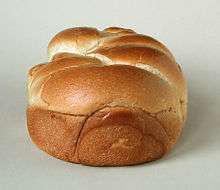
nature (plural natures)
- plain, unseasoned
- Une brioche nature ou sucrée ?
- File-moi un yaourt nature s’il te plait.
- bareback, raw dog
- Une fellation nature.
Further reading
- “nature” in le Trésor de la langue française informatisé (The Digitized Treasury of the French Language).
Italian
Noun
nature f
- plural of natura
Adjective
nature (invariable)
Anagrams
Latin
Participle
nātūre
- vocative masculine singular of naturus
Middle Dutch
Etymology
Borrowed from Old French nature, from Latin nātūra.
Noun
nature f
- nature, force of nature
- laws of nature, natural order
- nature, innate characteristics
- kind, sort
- origin
- sexual fertility, sex drive
Inflection
This noun needs an inflection-table template.
Descendants
- Dutch: natuur
- Limburgish: netuur, netuuer
Further reading
- “nature”, in Vroegmiddelnederlands Woordenboek, 2000
- “nature”, in Middelnederlandsch Woordenboek, 1929
Middle English
Alternative forms
Etymology
From Old French nature, from Latin nātūra.
Pronunciation
- IPA(key): /naːˈtiu̯r/
Noun
nature (plural natures)
- The Universe, existence, creation
- nature, the natural world
- natural abilities
- natural inevitability, nature (as opposed to nurture)
- natural morals, natural law
- natural needs or requirements
- nature, state, condition
- species, kind, type
- Nature (allegory)
Related terms
Descendants
References
- “nātūr(e (n.)” in MED Online, Ann Arbor, Mich.: University of Michigan, 2007, retrieved 2018-04-02.
Middle French
Etymology
Noun
nature f (plural natures)
Descendants
- French: nature
Novial
Etymology
Noun
nature c (plural natures)
Old French
Etymology
Noun
nature f (oblique plural natures, nominative singular nature, nominative plural natures)
- nature (natural world; nonhuman world)
- circa 1170, Chrétien de Troyes, Érec et Énide:
- De cesti tesmoingne Nature,
Qu'onques si bele creature
Ne fu veüe an tot le monde.- Nature can testify
That never such a beautiful creature
Was seen in the whole world
- Nature can testify
- De cesti tesmoingne Nature,
-
- nature (character; qualities)