炭
See also: 灰
| ||||||||
Translingual
Han character
炭 (radical 86 火+5, 9 strokes, cangjie input 山大火 (UKF) or 山一火 (UMF), four-corner 22289, composition ⿱山灰)
References
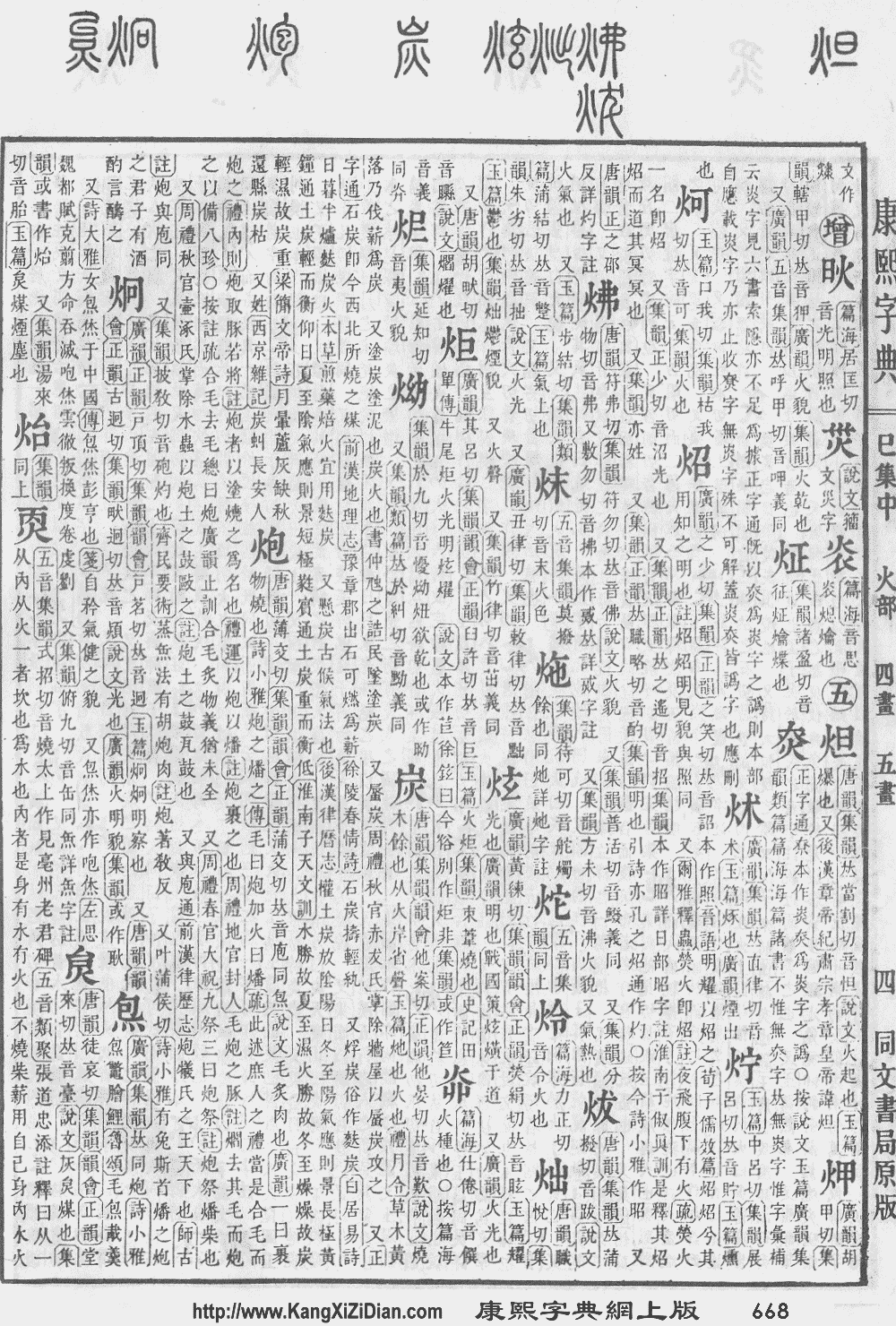
- KangXi: page 668, character 24
- Dai Kanwa Jiten: character 18953
- Dae Jaweon: page 1077, character 24
- Hanyu Da Zidian: volume 3, page 2195, character 15
- Unihan data for U+70AD
Chinese
| simp. and trad. |
炭 | |
|---|---|---|
Glyph origin
| Characters in the same phonetic series (炭) (Zhengzhang, 2003) | |
|---|---|
| Old Chinese | |
| 炭 | *tŋ̊ʰaːns |
| 湠 | *tʰaːns |
Phono-semantic compound (形聲, OC *tŋ̊ʰaːns) : semantic 火 + phonetic 岸 (OC *ŋɡaːns).
Etymology
From Proto-Sino-Tibetan *tal (“charcoal; dust; ashes”). Cognate with Tibetan ཐལ་བ (thal ba, “ashes; dust; dirt”).
Derivative: 碳 (tàn, “carbon”).
Pronunciation
Definitions
炭
Compounds
Descendants
Others:
- Khmer: ធ្យូង (thyuung)
- Proto-Hmong-Mien: *thanᴴ (“charcoal”)
- White Hmong: thee
- Lao: ຖ່ານ (thān)
- Thai: ถ่าน (tàan)
- Vietnamese: than
Japanese
Kanji
炭
Readings
Compounds
Noun
Korean
Hanja
炭 • (tan) (hangeul 탄, revised tan, McCune–Reischauer t'an, Yale than)
Vietnamese
Han character
- This term needs a translation to English. Please help out and add a translation, then remove the text
{{rfdef}}.
This article is issued from
Wiktionary.
The text is licensed under Creative Commons - Attribution - Sharealike.
Additional terms may apply for the media files.