箸
See also: 筷
| ||||||||
Translingual
Han character
箸 (radical 118, 竹+9, 15 strokes, cangjie input 竹十大日 (HJKA), four-corner 88604, composition ⿱⺮者)
Derived characters
- 𢷷, 櫡, 𥗁, 𦇃, 𨮿, 𣃑
Related characters
- 筷 (Synonym in modern Chinese)
References
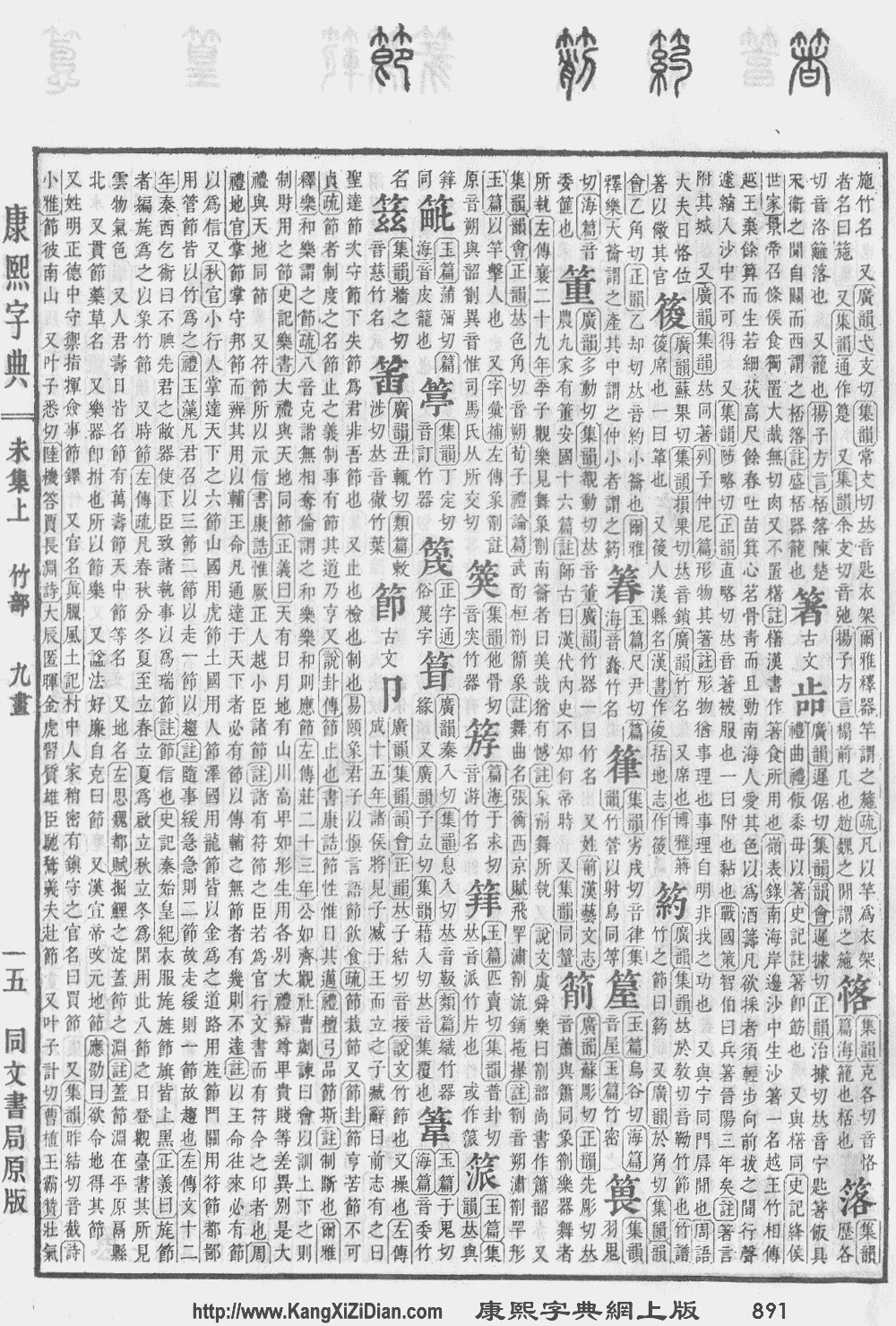
- KangXi: page 891, character 3
- Dai Kanwa Jiten: character 26224
- Dae Jaweon: page 1318, character 15
- Hanyu Da Zidian: volume 5, page 2979, character 1
- Unihan data for U+7BB8
Chinese
Glyph origin
| Historical forms of the character 箸 | |
|---|---|
| Warring States | Shuowen Jiezi (compiled in Han) |
| Chu Slip and silk script | Small seal script |
 |
 |
| Characters in the same phonetic series (者) (Zhengzhang, 2003) | |
|---|---|
| Old Chinese | |
| 觰 | *rtaːʔ, *rtaː |
| 諸 | *tjaː, *tja |
| 者 | *tjaːʔ |
| 堵 | *tjaːʔ, *taːʔ |
| 赭 | *tjaːʔ |
| 撦 | *l̥ʰjaːʔ |
| 扯 | *tʰjaːʔ |
| 闍 | *djaː, *taː |
| 奢 | *hljaː |
| 鍺 | *toːlʔ |
| 都 | *taː |
| 醏 | *taː |
| 覩 | *taːʔ |
| 睹 | *taːʔ |
| 暏 | *taːʔ |
| 賭 | *taːʔ |
| 帾 | *taːʔ |
| 楮 | *taːʔ, *tʰaʔ |
| 屠 | *daː, *da |
| 瘏 | *daː |
| 廜 | *daː |
| 鷵 | *daː |
| 緒 | *ljaʔ |
| 豬 | *ta |
| 猪 | *ta |
| 瀦 | *ta |
| 藸 | *ta, *da |
| 櫫 | *ta |
| 褚 | *taʔ, *tʰaʔ |
| 著 | *taʔ, *tas, *da, *taɡ, *daɡ |
| 箸 | *tas, *das |
| 儲 | *da |
| 躇 | *da |
| 櫧 | *tja |
| 藷 | *tja, *djas |
| 蠩 | *tja |
| 煮 | *tjaʔ |
| 渚 | *tjaʔ |
| 煑 | *tjaʔ |
| 陼 | *tjaʔ |
| 翥 | *tjas |
| 署 | *djas |
| 薯 | *djas |
| 曙 | *djas |
| 書 | *hlja |
| 暑 | *hjaʔ |
| 鐯 | *taɡ |
| 擆 | *taɡ |
| 櫡 | *taɡ |
Phono-semantic compound (形聲, OC *tas, *das) : semantic 竹 (“bamboo”) + phonetic 者 (OC *tjaːʔ).
Etymology 1
| simp. and trad. |
箸 | |
|---|---|---|
| alt. forms | 櫡 筯 | |
The Classical Chinese word for "chopsticks". It has been replaced by 筷子 (kuàizi) in many dialects for taboo reasons, avoiding homophony with 住 (zhù, “stopping”) in boatmen's language. Still used in almost all Min dialects and in sporadically in other topolects, especially in dialects that have some contact with Min.
Pronunciation
Definitions
箸
- (literary or regional) chopsticks (Classifier: 雙/双; 奇 md mn)
- 紂王有一日得著一雙象牙ê箸,伊ê人臣箕子看了不止憂悶驚惶。 [Min Nan, trad.]
- From: 1916: anon., Tùi小可會知大項
- Tiū-ông ū chi̍t ji̍t tit-tio̍h chi̍t siang chhiūⁿ-gê ê tī, i ê jîn-sîn Kî Chú khòaⁿ-liáu put-chí iu-būn kiaⁿ-hiâⁿ. [Pe̍h-ōe-jī]
- One day, King Zhou got a pair of ivory chopsticks. His official Jizi saw that and became incessantly worried and frightened.
纣王有一日得着一双象牙ê箸,伊ê人臣箕子看了不止忧闷惊惶。 [Min Nan, simp.]
- (Min) chopstick-shaped object
- (literary or Southwestern Mandarin, Cantonese) Classifier for an amount of food held with a pair of chopsticks.
Synonyms
Compounds
Descendants
Etymology 2
| For pronunciation and definitions of 箸 – see 著 (“to attach; to touch; to contact; etc.”). (This character, 箸, is a variant form of 著.) |
Japanese
Kanji
箸
Readings
Compounds
- 菜箸 (saibashi)
- 割り箸 (waribashi)
- 箸置き (hashioki, “chopstick rest”)
Etymology
| Kanji in this term |
|---|
| 箸 |
| はし Grade: S |
| kun’yomi |
Pronunciation
Noun
See also
- おてもと (otemoto)
References
Korean
Hanja
箸 • (jeo) (hangeul 저, revised jeo, McCune–Reischauer chŏ, Yale ce)
- This term needs a translation to English. Please help out and add a translation, then remove the text
{{rfdef}}.
Vietnamese
Han character
- This term needs a translation to English. Please help out and add a translation, then remove the text
{{rfdef}}.
References
- Thiều Chửu : Hán Việt Tự Điển Hà Nội 1942
- Trần Văn Chánh: Từ Điển Hán Việt NXB Trẻ, Ho Chi Minh Ville, 1999
- Vũ Văn Kính: Đại Tự Điển Chữ Nôm, NXB Văn Nghệ, Ho Chi Minh Ville, 1999
This article is issued from
Wiktionary.
The text is licensed under Creative Commons - Attribution - Sharealike.
Additional terms may apply for the media files.