夾
| ||||||||
Translingual
Han character
夾 (radical 37 大+4, 7 strokes, cangjie input 大人人 (KOO), four-corner 40038, composition ⿻大从)
Derived glyphs
References
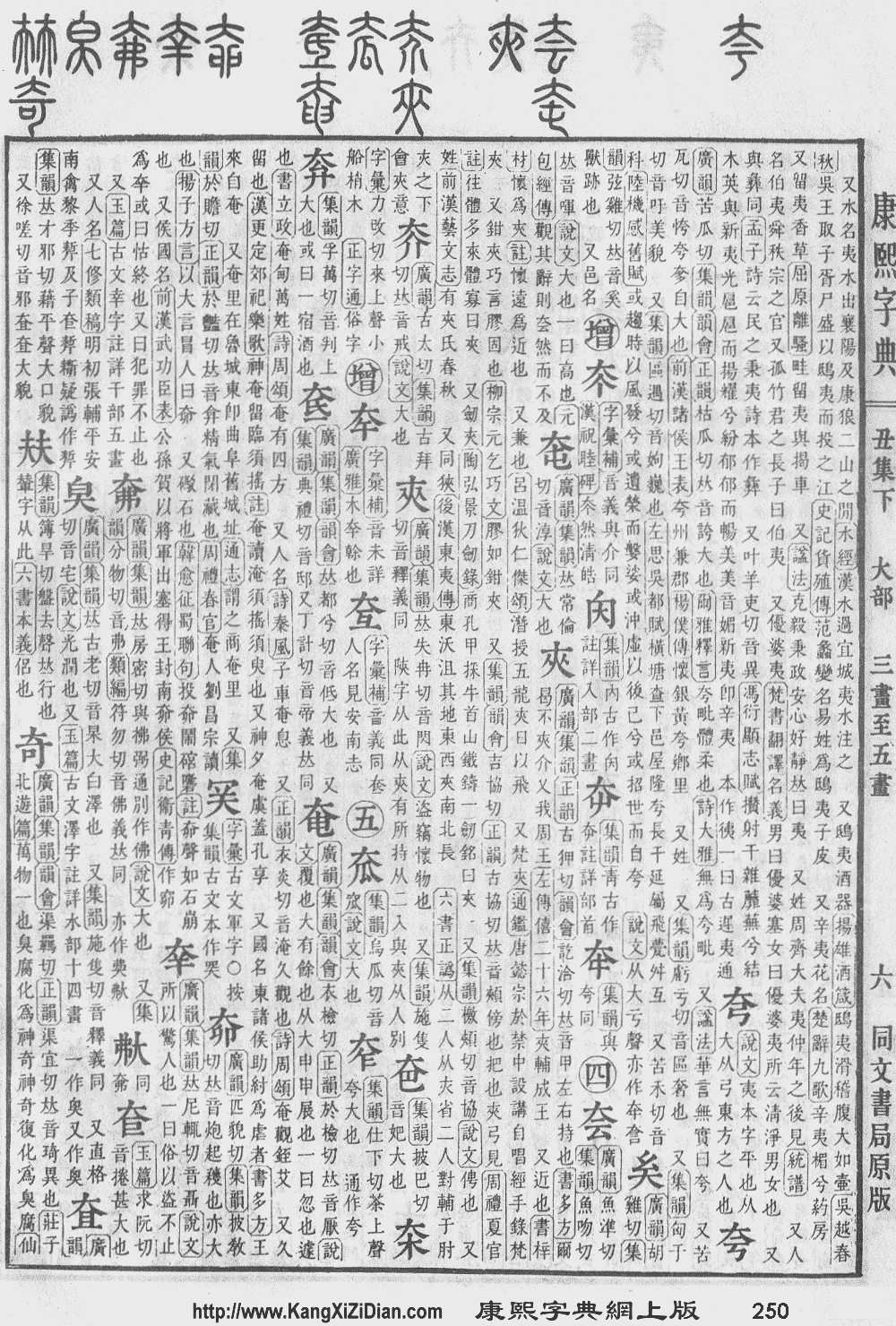
- KangXi: page 250, character 10
- Dai Kanwa Jiten: character 5867
- Dae Jaweon: page 509, character 20
- Hanyu Da Zidian: volume 1, page 529, character 18
- Unihan data for U+593E
Chinese
| trad. | 夾 | |
|---|---|---|
| simp. | 夹 | |
Glyph origin
| Historical forms of the character 夾 | |||||
|---|---|---|---|---|---|
| Shang | Western Zhou | Warring States | Shuowen Jiezi (compiled in Han) | Liushutong (compiled in Ming) | |
| Oracle bone script | Bronze inscriptions | Chu Slip and silk script | Qin slip script | Small seal script | Transcribed ancient scripts |
 |
 |
 |
 |
 |
 |
| Characters in the same phonetic series (夾) (Zhengzhang, 2003) | |
|---|---|
| Old Chinese | |
| 瘞 | *qrebs |
| 瘱 | *qeːbs |
| 脥 | *kʰemʔ |
| 浹 | *skaːb, *skeːb |
| 挾 | *skaːb, *ɡeːb |
| 夾 | *kreːb |
| 郟 | *kreːb |
| 筴 | *sʰreːɡ, *kreːb, *keːb |
| 裌 | *kreːb |
| 鵊 | *kreːb |
| 狹 | *ɡreːb |
| 峽 | *ɡreːb |
| 硤 | *ɡreːb |
| 陜 | *ɡreːb |
| 陿 | *ɡreːb |
| 翜 | *sraːb, *srɯːb |
| 梜 | *kraːb, *keːb |
| 頰 | *keːb |
| 莢 | *keːb |
| 鋏 | *keːb |
| 蛺 | *keːb |
| 唊 | *keːb |
| 悏 | *kʰeːb |
| 匧 | *kʰeːb |
| 愜 | *kʰeːb |
| 篋 | *kʰeːb |
| 俠 | *ɡeːb |
| 綊 | *ɡeːb |
Ideogrammic compound (會意) : 大 + 人 + 人.
To hold. (one man holding two men)
Pronunciation
Definitions
夾
Compounds
Derived terms from 夾
References
- “Entry #3039”, in 臺灣閩南語常用詞辭典 [Dictionary of Frequently-Used Taiwan Minnan] (in Chinese and Min Nan), Ministry of Education, R.O.C., 2011.
Japanese
Kanji
夾
- insert between
Readings
Usage notes
Only used as a component form of 挾/狹/峽 which has been simplified to 挟/狭/峡.
Korean
Hanja
夾 • (hyeop) (hangeul 협, revised hyeop, McCune–Reischauer hyŏp)
- This term needs a translation to English. Please help out and add a translation, then remove the text
{{rfdef}}.
Vietnamese
Han character
- This term needs a translation to English. Please help out and add a translation, then remove the text
{{rfdef}}.
This article is issued from
Wiktionary.
The text is licensed under Creative Commons - Attribution - Sharealike.
Additional terms may apply for the media files.