鍬
See also: 锹
| ||||||||
Translingual
Han character
鍬 (radical 167 金+9, 17 strokes, cangjie input 金竹木火 (CHDF), four-corner 89180, composition ⿰釒秋)
References
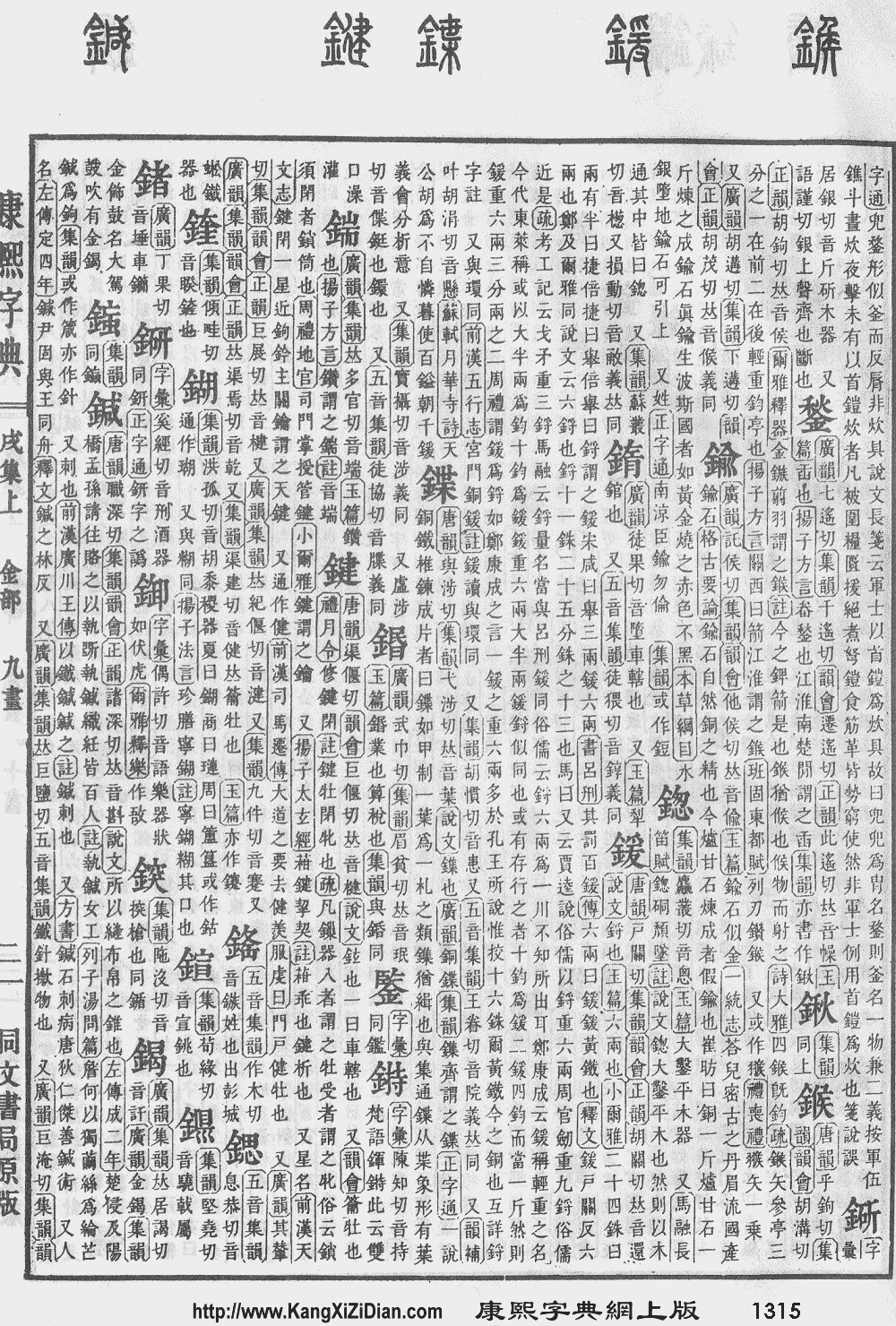
- KangXi: page 1315, character 3
- Dai Kanwa Jiten: character 40643
- Dae Jaweon: page 1815, character 13
- Hanyu Da Zidian: volume 6, page 4231, character 16
- Unihan data for U+936C
Chinese
| trad. | 鍬 | |
|---|---|---|
| simp. | 锹 | |
Glyph origin
Phono-semantic compound (形聲) : semantic 金 (“metal”) + phonetic 秋 (OC *sʰɯw) – a metal shovel.
Pronunciation
Definitions
鍬
- This term needs a translation to English. Please help out and add a translation, then remove the text
{{rfdef}}.
Japanese
Kanji
鍬
(“Jinmeiyō” kanji used for names)
Readings
- Goon: しょう (shō)←せう (seu, historical)
- Kan’on: しょう (shō)←せう (seu, historical)
- Kan’yōon: しゅう (shū)←しう (siu, historical)
- Kun: くわ (kuwa, 鍬)←くは (kufa, historical); すき (suki, 鍬)
Etymology
| Kanji in this term |
|---|
| 鍬 |
| くわ Jinmeiyō |
| kun’yomi |
/*kupa/ → /kufa/ → /kuwa/
Found from at least the late 900s, in the Utsubo Monogatari of the Heian period.[1]
Ultimate derivation unknown. Possibly derived from 食う (kuu, “to eat up; to bite into”), which has a 未然形 (mizenkei, “incomplete form”) of kuwa.
Pronunciation
Noun
鍬 (hiragana くわ, rōmaji kuwa, historical hiragana くは)
- a hoe
Usage notes
In compounds, this term may refer more broadly to similarly shaped tools for working the earth, such as a plough or a harrow.
Derived terms
References
Korean
鍬
Hanja
鍬 • (cho) (hangeul 초, revised cho, McCune–Reischauer ch'o, Yale cho)
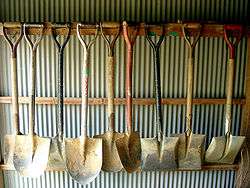
- (가래 초): a spade, shovel, ploughshare
Synonyms
See also
- (spade, shovel, ploughshare): 鋤 (호미 서), 鉏 (호미 서), 錤 (호미 기), 鎡 (호미 자), 鎒 (호미 호), 钁 (괭이 곽), 钃 (괭이/호미 촉)
Vietnamese
Han character
鍬 (thâu)
- This term needs a translation to English. Please help out and add a translation, then remove the text
{{rfdef}}.
This article is issued from
Wiktionary.
The text is licensed under Creative Commons - Attribution - Sharealike.
Additional terms may apply for the media files.