猿
| ||||||||
Translingual
Han character
猿 (radical 94, 犬+10, 13 strokes, cangjie input 大竹土口女 (KHGRV), four-corner 44232, composition ⿰犭袁)
References
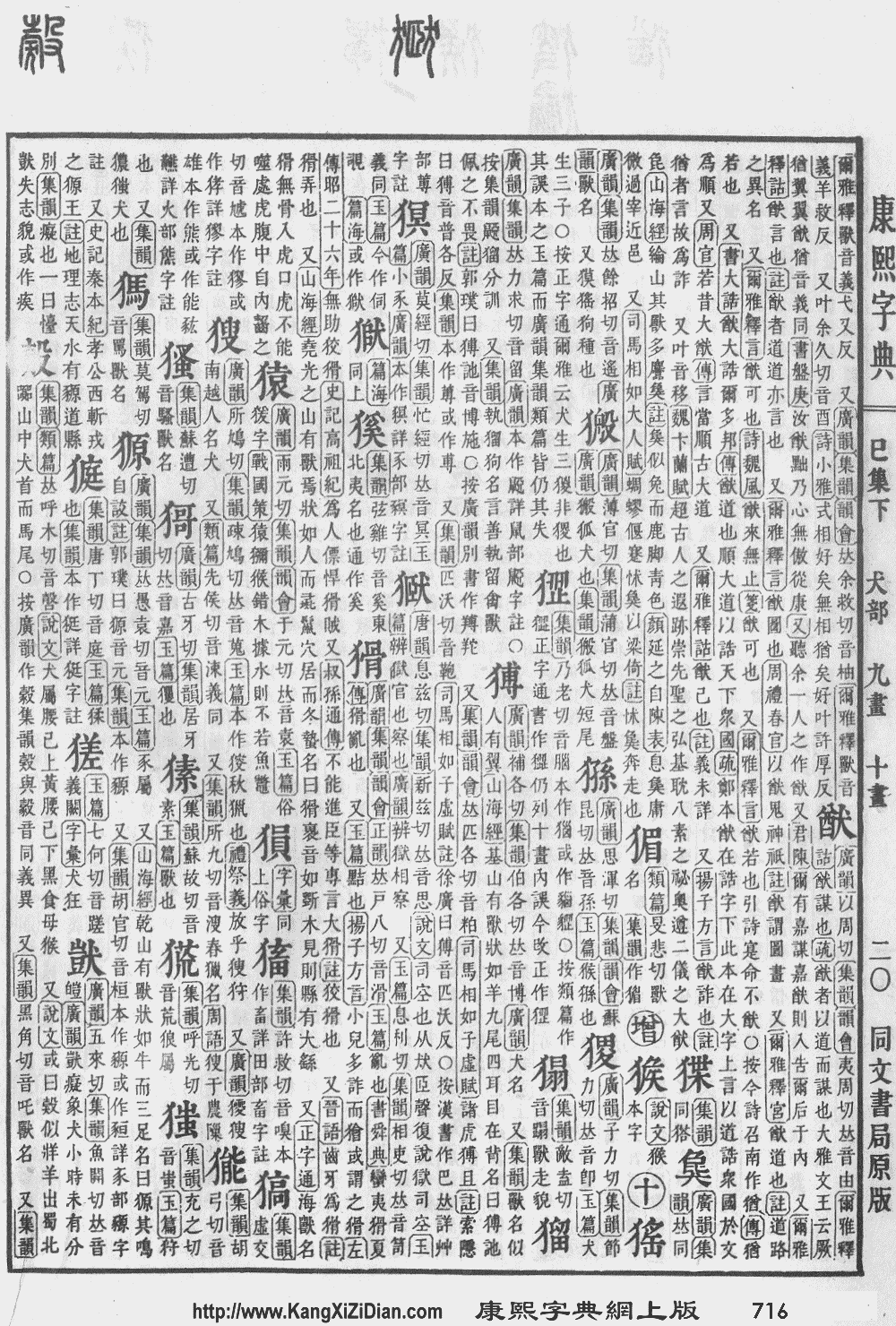
- KangXi: page 716, character 19
- Dai Kanwa Jiten: character 20584
- Dae Jaweon: page 1128, character 9
- Hanyu Da Zidian: volume 2, page 1361, character 15
- Unihan data for U+733F
Chinese
| simp. and trad. |
猿 | |
|---|---|---|
| alt. forms | 猨 | |
Glyph origin
| Characters in the same phonetic series (袁) (Zhengzhang, 2003) | |
|---|---|
| Old Chinese | |
| 薳 | *ɢʷalʔ |
| 袁 | *ɢʷan |
| 園 | *ɢʷan |
| 轅 | *ɢʷan |
| 猿 | *ɢʷan |
| 榬 | *ɢʷan |
| 溒 | *ɢʷan |
| 遠 | *ɢʷanʔ, *ɢʷans |
Phono-semantic compound (形聲, OC *ɢʷan) : semantic 犭 + phonetic 袁 (OC *ɢʷan).
Etymology
From Proto-Sino-Tibetan *b/g-woj-n (“monkey”).
Alternatively, the root may be Austroasiatic; compare Proto-Mon-Khmer *swaaʔ (“monkey”) (Schuessler, 2007).
Pronunciation
Definitions
猿
Compounds
|
See also
- 猴 (hóu)
Japanese
Kanji
Readings
Compounds
Etymology 1
| Kanji in this term |
|---|
| 猿 |
| さる Grade: S |
| kun’yomi |
From Old Japanese. Appears in the Man'yōshū, completed some time after 759 CE.
Ultimate derivation possibly borrowed from Ainu サロ (saro, “monkey”, from サㇻ (sar, “a tail”) + オ (o, “to bear, to wear, to carry”)).[1]
The kanji is from Chinese 猿 (“ape”). Compare Japanese 猪 (inoshishi, “boar”) from Chinese 猪 (“pig”) and Japanese 豚 (buta, “pig”) from Chinese 豚 (“suckling pig”).
Pronunciation
Noun
猿 (hiragana さる, katakana サル, rōmaji saru)
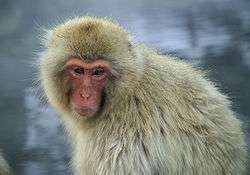
- a monkey (primate)
- 1079, Konkōmyō Saishōōkyō Ongi (page 10 (back))
- 猕猴 二字合訓佐流
- 1079, Konkōmyō Saishōōkyō Ongi (page 10 (back))
- Short for 日本猿 (Nihonzaru, “Japanese macaque”).
- (loosely) an ape (animal)
- 猿の惑星 創世記
- Saru no Wakusei Jeneshisu
- Planet of the Apes: Genesis
- 猿の惑星 新世紀
- Saru no Wakusei Raijingu
- Planet of the Apes: Rising
- 猿の惑星 聖戦記
- Saru no Wakusei Gurēto Wō
- Planet of the Apes: Great War
- 1988 July 30 [Jul 25 1984], Fujiko F. Fujio, “世界名作童話第3巻 うらしま太郎 [World’s Renowned Fairy Tales Book 3: Urashima Tarō]”, in ポストの中の明日 [Post-Mid-Tomorrow] (藤子不二雄少年SF短編集; 2), volume 2 (fiction, in Japanese), 10th edition, Tokyo: Shogakukan, →ISBN, page 117:
- 地球は、サルのわく星になっていましたとさ。
- Chikyū wa, saru no wakusei ni natte imashita to sa.
- Meanwhile, Earth became the planet of the apes.
- 地球は、サルのわく星になっていましたとさ。
- 猿の惑星 創世記
Usage notes
As with many terms that name organisms, this term is often spelled in katakana, especially in biological contexts, as サル.
Derived terms
Etymology 2
| Kanji in this term |
|---|
| 猿 |
| まし Grade: S |
| kun’yomi |
From Old Japanese [Term?]. Appears in the Man'yōshū, completed some time after 759 CE, used phonetically to spell the sound /masi/.
Ultimate derivation unknown.
Pronunciation
Noun
- (archaic, possibly obsolete) a monkey
Usage notes
This form seems to be used less often than mashira below.
Etymology 3
| Kanji in this term |
|---|
| 猿 |
| ましら Grade: S |
| kun’yomi |
Derived from earlier mashi form above. Found in texts from the early 1900s, possibly earlier. Appears to be mashi + the pluralizing and genericizing suffix ら (ra).
Pronunciation
Noun
猿 (hiragana ましら, rōmaji mashira)
- (archaic) a monkey
References
- ↑ John Batchelor, (1905), An Ainu-English-Japanese dictionary (including a grammar of the Ainu language), Tokyo: Methodist Publishing House, London: Kegan Paul, Trench, Trubner Co.
- 1 2 3 2006, 大辞林 (Daijirin), Third Edition (in Japanese), Tōkyō: Sanseidō, →ISBN
- 1 2 3 1997, 新明解国語辞典 (Shin Meikai Kokugo Jiten), Fifth Edition (in Japanese), Tōkyō: Sanseidō, →ISBN
- Tsukishima, Hiroshi (1079) Kojisho Ongi Shūsei 12: Konkōmyō Saishōōkyō Ongi (in Japanese), Tōkyō: Kyūko Shoin, published 1979, →ISBN.
Korean
Hanja
猿 • (won) (hangeul 원, revised won, McCune–Reischauer wŏn, Yale wen)
- This term needs a translation to English. Please help out and add a translation, then remove the text
{{rfdef}}.
Vietnamese
Han character
- This term needs a translation to English. Please help out and add a translation, then remove the text
{{rfdef}}.
Readings
- Nôm: viên, vượn
References
- Thiều Chửu : Hán Việt Tự Điển Hà Nội 1942
- Trần Văn Chánh: Từ Điển Hán Việt NXB Trẻ, Ho Chi Minh Ville, 1999
- Vũ Văn Kính: Đại Tự Điển Chữ Nôm, NXB Văn Nghệ, Ho Chi Minh Ville