豚
| ||||||||
Translingual
Han character
豚 (radical 152, 豕+4, 11 strokes, cangjie input 月一尸人 (BMSO), four-corner 71232, composition ⿰月豕)
- small pig, suckling pig
- used in names for dolphins and porpoises in combination with other characters, such as in 海豚 (dolphin, or sea-pig).
References
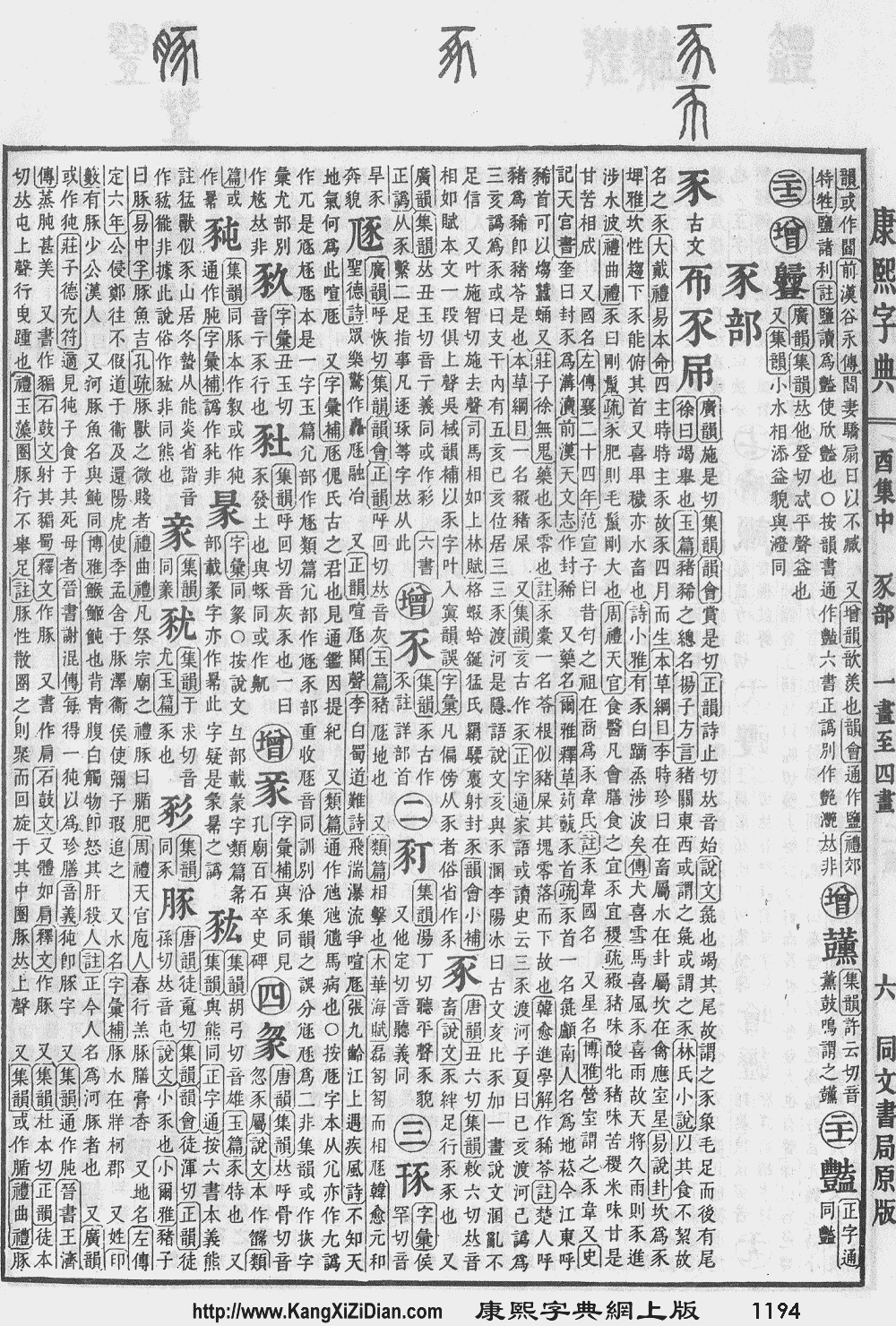
- KangXi: page 1194, character 23
- Dai Kanwa Jiten: character 36352
- Dae Jaweon: page 1657, character 13
- Hanyu Da Zidian: volume 6, page 3611, character 8
- Unihan data for U+8C5A
Chinese
Etymology 1
| simp. and trad. |
豚 | |
|---|---|---|
Pronunciation
Definitions
豚
Compounds
Etymology 2
| For pronunciation and definitions of 豚 – see 䐁 (“the buttocks, rump; fat, plump; etc.”). (This character, 豚, is a variant form of 䐁.) |
Japanese
Kanji
豚
Readings
Compounds
Compounds
- 猪豚 (inobuta, “wild boar-pig hybrid”)
- 海豚 (iruka, “dolphin”)
- 黒豚 (kurobuta, “Berkshire pig”)
- 酢豚 (subuta, “sweet-and-sour pork”)
- 土豚 (tsuchibuta, “aardvark”)
- 豚カツ (tonkatsu, “tonkatsu”)
- 豚血下地 (tonketsushitaji)
- 豚犬 (tonken, “pig and dog; fool; my child”)
- 豚骨 (tonkotsu, “tonkotsu”)
- 豚コレラ (tonkorera): hog cholera
- 豚脂 (tonshi, “lard”)
- 豚児 (tonji, “piglet; my child”)
- 豚舎 (tonsha, “pigsty (enclosure where pigs are kept)”)
- 豚汁 (tonjiru), 豚汁 (butajiru, “pork miso soup”)
- 豚足 (tonsoku, “pig's trotters”)
- 河豚 (fugu), 河豚 (katon): blowfish
- 豚尾猿 (butaozaru, “southern pig-tailed macaque”)
- 豚草 (butakusa, “common ragweed”)
- 豚小屋 (butagoya, “pigsty (enclosure where pigs are kept); pigsty (dirty or very untidy place)”)
- 豚しゃぶ (butashabu)
- 豚肉 (butaniku), 豚肉 (tonniku, “pork”)
- 豚に真珠 (buta ni shinju, “pearls before swine”)
- 豚の饅頭 (buta no manjū, “cyclamen”)
- 豚箱 (butabako, “police cell”)
- 豚鼻蝙蝠 (butabanakōmori, “Kitti's hog-nosed bat”)
- 豚饅 (butaman, “nikuman”)
- 豚もおだてりゃ木に登る (buta mo odaterya ki ni boru)
- ミニ豚 (minibuta, “minipig”)
- 焼き豚 (yakibuta, “char siu, a style of barbecue pork wherein the meat is trussed, marinated, skewered, and then roasted”)
- 養豚 (yōton, “porciculture”)
Etymology
From ブー (bū, “oink”) + 太 (futo, “fat person”), by its resemblance.
The kanji is from Chinese 豚 (“suckling pig”). Compare Japanese 猪 (inoshishi, “boar”) from Chinese 猪 (“pig”) and Japanese 猿 (saru, “monkey”) from Chinese 猿 (“ape”).
Alternative forms
| Kanji in this term |
|---|
| 豚 |
| ぶた Grade: S |
| kun’yomi |
Pronunciation
Noun
豚 (hiragana ぶた, katakana ブタ, rōmaji buta)
- pig; swine
- (colloquial, poker) Synonym of ハイカード (hai kādo, “high card”); a no pair
- 2000 July 7 [May 17 2000], Amagi, Seimaru; Sato, Fumiya, “FILE 1 殺人ポーカー Unlucky Men in the Rain 〈問題編〉 [FILE 1: Murderous Poker: Unlucky Men in the Rain ‹Problem›]”, in 明智警視の優雅なる事件簿 [Superintendent Akechi Elegant Case Files] (fiction, in Japanese), 3rd edition, Tokyo: Kodansha, →ISBN:
- 赤菱さんのカードは8とJのツーペア‥‥三矢さんはAのスリーカード 雲間さんはQのワンペア 緑川さんは役なし‥‥
- Akabishi-san no kādo wa hachi to jakku no tsū pea‥‥ Mitsuya-san wa ēsu no surī kādo Kumoma-san wa kuīn no wan pea Midorikawa-san wa buta‥‥
- Akabishi-san’s hand would have a two pair, eights and jacks‥‥ Mitsuya-san’s a three of a kind, aces. Kumoma-san’s a one pair, queens. Midorikawa-san’s a high card‥‥
- 赤菱さんのカードは8とJのツーペア‥‥三矢さんはAのスリーカード 雲間さんはQのワンペア 緑川さんは役なし‥‥
-
See also
- アグー (agū)
References
Korean
Hanja
豚 • (don) (hangeul 돈, revised don, McCune–Reischauer ton, Yale ton)
- This term needs a translation to English. Please help out and add a translation, then remove the text
{{rfdef}}.
Vietnamese
Han character
豚 (đồn)
- This term needs a translation to English. Please help out and add a translation, then remove the text
{{rfdef}}.
This article is issued from
Wiktionary.
The text is licensed under Creative Commons - Attribution - Sharealike.
Additional terms may apply for the media files.