air
English
Etymology
From Middle English air, eir (“gas, atmosphere”), from Anglo-Norman aeir, eyer, Old French aire, eir, from Latin āēr, from Ancient Greek ἀήρ (aḗr, “wind, atmosphere”). Displaced native Middle English luft, lift (“air”) (from Old English lyft (“air, atmosphere”)), Middle English loft (“air, upper region”) (from Old Norse lopt (“air, sky, loft”)). More at lift, loft.
Pronunciation
- (Received Pronunciation) IPA(key): /ˈɛə/, /ˈɛː/
Audio (UK) (file)
- (General American) enPR: âr, IPA(key): /ˈɛəɹ/, /ˈɛɹ/
Audio (US) (file)
- Rhymes: -ɛə(ɹ)
- Homophones: Ayr, ere, heir, are (unit of measurement); err (one pronunciation)
Noun
air (countable and uncountable, plural airs)
- (uncountable, meteorology) The substance constituting earth's atmosphere, particularly:
- I'm going outside to get some air.
- (historical, philosophy, alchemy) understood as one of the four elements of the ancient Greeks and Romans.
- (historical, medicine) understood as a particular local substance with supposed effects on human health.
- 1991 May 12, "Kidnapped!" Jeeves and Wooster, Series 2, Episode 5:
- Jeeves: Foreign travel often liberates emotions best kept in check, sir. The air of North America is notoriously stimulating in this regard, as witness the regrettable behavior of its inhabitants in 1776.
B. Wooster: Hm? What happened in 1776, Jeeves?
Jeeves: I prefer not to dwell on it, if it's convenient to you, sir.
- Jeeves: Foreign travel often liberates emotions best kept in check, sir. The air of North America is notoriously stimulating in this regard, as witness the regrettable behavior of its inhabitants in 1776.
- There was a tension in the air which made me suspect an approaching storm.
- 1991 May 12, "Kidnapped!" Jeeves and Wooster, Series 2, Episode 5:
- (physics) understood as a gaseous mixture of nitrogen, oxygen, and various trace gases.
- (usually with the) The apparently open space above the ground which this substance fills, (historical) formerly thought to be limited by the firmament but (meteorology) now considered surrounded by the near vacuum of outer space.
- The flock of birds took to the air.
- A breeze; a gentle wind.
- A feeling or sense.
- to give it an air of artistry and sophistication
- November 2 2014, Daniel Taylor, "Sergio Agüero strike wins derby for Manchester City against 10-man United," guardian.co.uk
- Smalling’s quick one-two of yellow cards towards the end of the first half had left an air of inevitability about what would follow and, if anything, it was probably a surprise that City restricted themselves to Sergio Agüero’s goal bearing in mind another of United’s defenders, Marcos Rojo, was taken off on a stretcher early in the second half with a dislocated shoulder.
- 1900, Charles W. Chesnutt, The House Behind the Cedars, Chapter I,
- The girl stooped to pluck a rose, and as she bent over it, her profile was clearly outlined. She held the flower to her face with a long-drawn inhalation, then went up the steps, crossed the piazza, opened the door without knocking, and entered the house with the air of one thoroughly at home.
- A sense of poise, graciousness, or quality.
- 1815, Jane Austen, Emma, Volume I, Chapter 4:
- "He is very plain, undoubtedly--remarkably plain:--but that is nothing compared with his entire want of gentility. I had no right to expect much, and I did not expect much; but I had no idea that he could be so very clownish, so totally without air. I had imagined him, I confess, a degree or two nearer gentility."
- 1815, Jane Austen, Emma, Volume I, Chapter 4:
- (usually in the plural) Pretension; snobbishness; pretence that one is better than others.
- putting on airs
- 1922, Ben Travers, chapter 1, in A Cuckoo in the Nest:
- He read the letter aloud. Sophia listened with the studied air of one for whom, even in these days, a title possessed some surreptitious allurement.
- (music) A song, especially a solo; an aria.
- 1813, Jane Austen, Pride and Prejudice, Chapter 18:
- "If I," said Mr. Collins, "were so fortunate as to be able to sing, I should have great pleasure, I am sure, in obliging the company with an air; for I consider music as a very innocent diversion, and perfectly compatible with the profession of a clergyman […] "
- 1813, Jane Austen, Pride and Prejudice, Chapter 18:
- (informal) Nothing; absence of anything.
- An air conditioner or the processed air it produces. Can be a mass noun or a count noun depending on context; similar to hair.
- Could you turn on the air?
- Hey, did you mean to leave the airs on all week while you were on vacation?
- (obsolete, chemistry) Any specific gas.
- (snowboarding, skateboarding, motor sports) A jump in which one becomes airborne.
- A television or radio signal.
- 1996, Thomas Streeter, Selling the Air, →ISBN:
- Ernst gave a list of political activists who had been denied access to the air by private broadcasters, and pointed out that "Secretary Hoover's signature in New York sells for $150,000 to $200,000," thus limiting access to the air on the part of labor unions and other underrepresented groups.
- 2001, Dana Stabenow, The Singing of the Dead, →ISBN, page 17:
- Coming to you live once a month, or whenever I feel like broadcasting a little pirate air.
-
Synonyms
Derived terms
Related terms
Translations
|
|
|
|


|
|
|
|
|
Verb
air (third-person singular simple present airs, present participle airing, simple past and past participle aired)
- To bring (something) into contact with the air, so as to freshen or dry it.
- To let fresh air into a room or a building, to ventilate.
- It's getting quite stuffy in this room: let's open the windows and air it.
- To discuss varying viewpoints on a given topic.
- 1917, National Geographic, v.31, March 1917:
- Thus, in spite of all opposition, the rural and urban assemblies retained the germ of local government, and in spite of the dual control, as the result of which much of their influence was nullified, they did have a certain value in airing abuses and suggesting improvements.
- 1917, National Geographic, v.31, March 1917:
- To broadcast, as with a television show.
Derived terms
Translations
|
|
|
Anagrams
Cornish
Alternative forms
Pronunciation
- IPA(key): [eːɹ]
Noun
air m
Dutch
Pronunciation
- IPA(key): /ɛːr/
audio (file)
Noun
air m (plural airs, diminutive airtje n)
French
Etymology
Pronunciation
Noun
air m (plural airs)
- air (gases of the atmosphere)
- tune, aria
- appearance
- air (pretension)
Related terms
- avoir l'air (“to seem”)
Further reading
- “air” in le Trésor de la langue française informatisé (The Digitized Treasury of the French Language).
Anagrams
Gothic
Romanization
air
- Romanization of 𐌰𐌹𐍂
Indonesian
Etymology
From Malay air, from Proto-Malayic *air, from Proto-Malayo-Chamic *air, from Proto-Malayo-Sumbawan *wair, from Proto-Sunda-Sulawesi *wair, from Proto-Malayo-Polynesian *wahiʀ.
Pronunciation
- IPA(key): /a.ʔɪr/
Noun
air
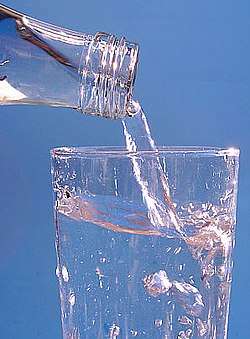
- water (clear liquid H₂O)
- water (mineral water)
- water (one of the four elements in alchemy)
- water (one of the five basic elements in some other theories)
Derived terms
Irish
Etymology 1
From Old Irish airid (“ploughs, tills”).
Pronunciation
- IPA(key): /aɾʲ/
Verb
air (present analytic aireann, future analytic airfidh, verbal noun ar, past participle airthe)
Conjugation
| singular | plural | relative | autonomous | ||||||
|---|---|---|---|---|---|---|---|---|---|
| first | second | third | first | second | third | ||||
| indicative | present | airim | aireann tú; airir† |
aireann sé, sí | airimid | aireann sibh | aireann siad; airid† |
a aireann; a aireas / a n-aireann*; a n-aireas* |
airtear |
| past | d'air mé; d'aireas / air mé‡; aireas‡ |
d'air tú; d'airis / air tú; airis‡ |
d'air sé, sí / air sé, sí‡ |
d'aireamar; d'air muid / aireamar; air muid‡ |
d'air sibh; d'aireabhair / air sibh; aireabhair‡ |
d'air siad; d'aireadar / air siad; aireadar‡ |
a d'air / ar air* |
aireadh; haireadh† | |
| past habitual | d'airinn / airinn‡ |
d'airteá / airteᇠ|
d'aireadh sé, sí / aireadh sé, sí‡ |
d'airimis; d'aireadh muid / airimis; aireadh muid‡ |
d'aireadh sibh / aireadh sibh‡ |
d'airidís; d'aireadh siad / airidís; aireadh siad‡ |
a d'aireadh / ar aireadh* |
d'airtí / airtí‡ | |
| future | airfidh mé; airfead |
airfidh tú; airfir† |
airfidh sé, sí | airfimid; airfidh muid |
airfidh sibh | airfidh siad; airfid† |
a airfidh; a airfeas / a n-airfidh*; a n-airfeas* |
airfear | |
| conditional | d'airfinn / airfinn‡ |
d'airfeá / airfeᇠ|
d'airfeadh sé, sí / airfeadh sé, sí‡ |
d'airfimis; d'airfeadh muid / airfimis; airfeadh muid‡ |
d'airfeadh sibh / airfeadh sibh‡ |
d'airfidís; d'airfeadh siad / airfidís; airfeadh siad‡ |
a d'airfeadh / ar airfeadh* |
d'airfí / airfí‡ | |
| subjunctive | present | go n-aire mé; go n-airead† |
go n-aire tú; go n-airir† |
go n-aire sé, sí | go n-airimid; go n-aire muid |
go n-aire sibh | go n-aire siad; go n-airid† |
— | go n-airtear |
| past | dá n-airinn | dá n-airteá | dá n-aireadh sé, sí | dá n-airimis; dá n-aireadh muid |
dá n-aireadh sibh | dá n-airidís; dá n-aireadh siad |
— | dá n-airtí | |
| imperative | airim | air | aireadh sé, sí | airimis | airigí; airidh† |
airidís | — | airtear | |
| verbal noun | ar | ||||||||
| past participle | airthe | ||||||||
* Indirect relative
† Archaic or dialect form
‡Dependent form
Noun
air m
- genitive singular of ar
Etymology 2
Pronunciation
- IPA(key): (stressed) /ɛɾʲ/, (unstressed) /əɾʲ/
Pronoun
air (emphatic airsean)
- third-person singular masculine of ar (on him, on it m)
Mutation
| Irish mutation | |||
|---|---|---|---|
| Radical | Eclipsis | with h-prothesis | with t-prothesis |
| air | n-air | hair | not applicable |
| Note: Some of these forms may be hypothetical. Not every possible mutated form of every word actually occurs. | |||
References
- "air" in Foclóir Gaeilge-Béarla, An Gúm, 1977, by Niall Ó Dónaill.
- “3 airid” in Dictionary of the Irish Language, Royal Irish Academy, 1913–76.
Kein
Pronunciation
- IPA(key): /ɑiɾ/
Noun
air
Further reading
Ludian
Etymology
From Proto-Finnic *airo.
Noun
air
Malay
Alternative forms
- اءير
Etymology
From Proto-Malayic *air, from Proto-Malayo-Chamic *air, from Proto-Malayo-Sumbawan *wair, from Proto-Sunda-Sulawesi *wair, from Proto-Malayo-Polynesian *wahiʀ.
Pronunciation
- (Johor-Selangor) IPA(key): /ae(r)/
- (Riau-Lingga) IPA(key): /aɪ(r)/
- Rhymes: -ae(r), -e(r)
Noun
air (Jawi spelling اءير)
- water (liquid H2O)
Derived terms
Descendants
- Indonesian: air
References
- Blust's Austronesian Comparative Dictionary
Norman
Etymology
Noun
air m (plural airs)
- air (mixture of gases that make up the earth's atmosphere)
Related terms
Old French
Alternative forms
Etymology
Noun
air m (oblique plural airs, nominative singular airs, nominative plural air)
- air (mixture of gases that make up the earth's atmosphere)
Pohnpeian
Pronunciation
- IPA(key): /ɐjir/
Verb
air
- (transitive) to strip off, as when stripping insulation off a wire
- (transitive) to wipe off a ropelike object by drawing it through one's hand or fingers
- Air mahs keleuen.
- Please wipe the sap off the hibiscus bast.
Scottish Gaelic
Etymology
From Old Irish for (compare Irish ar), from Proto-Celtic *uɸor (compare Welsh ar), from Proto-Indo-European *upér (compare Latin super, Ancient Greek ὑπέρ (hupér), Old English ofer).
Pronunciation
- IPA(key): /ɛrʲ/
Preposition
air
- on, upon
- air bàrr a' bhalla ― on top of the wall
- of, concerning
- iomradh air do ghliocas ― a report of thy wisdom
- for, on account of
- air an aobhar sin ― for that reason
- by
- air ainm ― by name
- for the sake of - air son - see below, and more under son.
Usage notes
- Air combines with personal pronouns to form prepositional pronouns. See Derived forms below. Specifically for air the third-person singular masculine pronoun is identical to the uninflected preposition, hence air = on or on him.
- The word air and its derivates are also used in many idioms:
- Dè an t-ainm a tha ort? ― What's your name? (What the name that is on you?)
- Tha an t-acras orm. ― I'm hungry. (The hunger is on me.)
Derived terms
|
|
|
- The following prepositional pronouns:
| Person | Number | Prepositional pronoun | Prepositional pronoun (emphatic) |
|---|---|---|---|
| Singular | 1st | orm | ormsa |
| 2nd | ort | ortsa | |
| 3rd m | air | airsan | |
| 3rd f | oirre | oirrese | |
| Plural | 1st | oirnn | oirnne |
| 2nd | oirbh | oirbhse | |
| 3rd | orra | orrasan |
Pronoun
air m
See also
- prepositional pronoun; also sometimes termed ‘conjugated prepositions’.
References
- Faclair Gàidhlig Dwelly Air Loidhne, Dwelly, Edward (1911), Faclair Gàidhlig gu Beurla le Dealbhan/The Illustrated [Scottish] Gaelic-English Dictionary (10th ed.), Edinburgh: Birlinn Limited, →ISBN
- A Pronouncing and Etymological Dictionary of the Gaelic Language (John Grant, Edinburgh, 1925, Complied by Malcolm MacLennan)
Veps
Etymology
From Proto-Finnic *airo.
Noun
air
Welsh
Pronunciation
- IPA(key): /ai̯r/
Noun
air
- Soft mutation of gair.
Mutation
| Welsh mutation | |||
|---|---|---|---|
| radical | soft | nasal | aspirate |
| gair | air | ngair | unchanged |
| Note: Some of these forms may be hypothetical. Not every possible mutated form of every word actually occurs. | |||