倉
See also: 仓
| ||||||||
Translingual
Han character
倉 (radical 9, 人+8, 10 strokes, cangjie input 人戈日口 (OIAR), four-corner 80607, composition ⿱亽⿸⿴尸一口(G) or ⿱亼⿸⿴尸一口(HTJKV))
Derived characters
Descendants
References
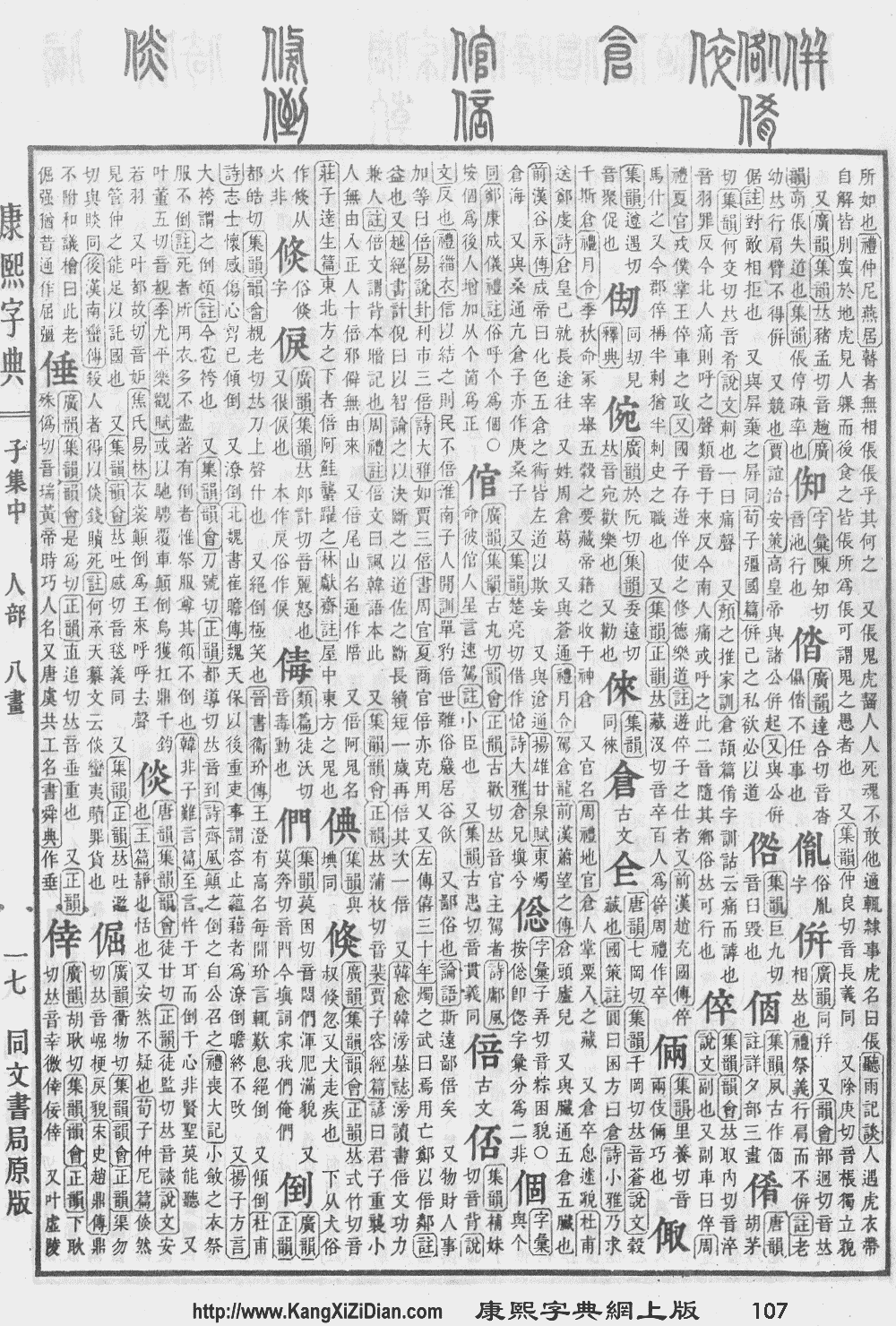
- KangXi: page 107, character 14
- Dai Kanwa Jiten: character 756
- Dae Jaweon: page 227, character 22
- Hanyu Da Zidian: volume 1, page 169, character 15
- Unihan data for U+5009
Chinese
| trad. | 倉 | |
|---|---|---|
| simp. | 仓* | |
| alt. forms | 仺 | |
Glyph origin
| Historical forms of the character 倉 | |||||||||||||||||||||||||||||
|---|---|---|---|---|---|---|---|---|---|---|---|---|---|---|---|---|---|---|---|---|---|---|---|---|---|---|---|---|---|
| Shang | Western Zhou | Warring States | Shuowen Jiezi (compiled in Han) | Liushutong (compiled in Ming) | |||||||||||||||||||||||||
| Oracle bone script | Bronze inscriptions | Bronze inscriptions | Chu Slip and silk script | Qin slip script | Odd character | Small seal script | Transcribed ancient scripts | ||||||||||||||||||||||
 |
 |
 |
 |
 |
 |
 |
 | ||||||||||||||||||||||
|||||||
|
References: Mostly from Richard Sears' Chinese Etymology site (authorisation),
| |||||||||||||||||||||||||||||


| Characters in the same phonetic series (倉) (Zhengzhang, 2003) | |
|---|---|
| Old Chinese | |
| 艙 | *sʰaːŋ |
| 倉 | *sʰaːŋ |
| 蒼 | *sʰaːŋ, *sʰaːŋʔ |
| 滄 | *sʰaːŋ, *sʰraŋs |
| 傖 | *sʰaːŋ, *zraːŋ |
| 鶬 | *sʰaːŋ |
| 凔 | *sʰaːŋ |
| 槍 | *sʰaŋ, *sʰraːŋ |
| 搶 | *sʰaŋ, *sʰaŋʔ, *sʰraŋʔ |
| 蹌 | *sʰaŋ |
| 瑲 | *sʰaŋ |
| 牄 | *sʰaŋ |
| 嗆 | *sʰaŋs |
| 創 | *sʰraŋ, *sʰraŋs |
| 瘡 | *sʰraŋ |
| 愴 | *sʰraŋʔ, *sʰraŋs |
| 鎗 | *sʰraːŋ |
Pronunciation
Definitions
倉
Compounds
References
- “Entry #5711”, in 臺灣閩南語常用詞辭典 [Dictionary of Frequently-Used Taiwan Minnan] (in Chinese and Min Nan), Ministry of Education, R.O.C., 2011.
Japanese
Kanji
倉
Readings
Compounds
Noun
| Kanji in this term |
|---|
| 倉 |
| くら Grade: 4 |
| kun’yomi |
Derived terms
- 倉出し
- 倉入れ
Korean
Hanja
倉 • (chang) (hangeul 창, revised chang, McCune–Reischauer ch'ang, Yale chang)
- This term needs a translation to English. Please help out and add a translation, then remove the text
{{rfdef}}.
Vietnamese
Han character
倉 (thương)
- This term needs a translation to English. Please help out and add a translation, then remove the text
{{rfdef}}.
This article is issued from
Wiktionary.
The text is licensed under Creative Commons - Attribution - Sharealike.
Additional terms may apply for the media files.