鉄
| ||||||||
Translingual
| Traditional | 鐵 |
|---|---|
| Shinjitai | 鉄 |
| Simplified | 铁 |
Han character
鉄 (radical 167, 金+5, 13 strokes, cangjie input 金竹手人 (CHQO), composition ⿰金失)
References
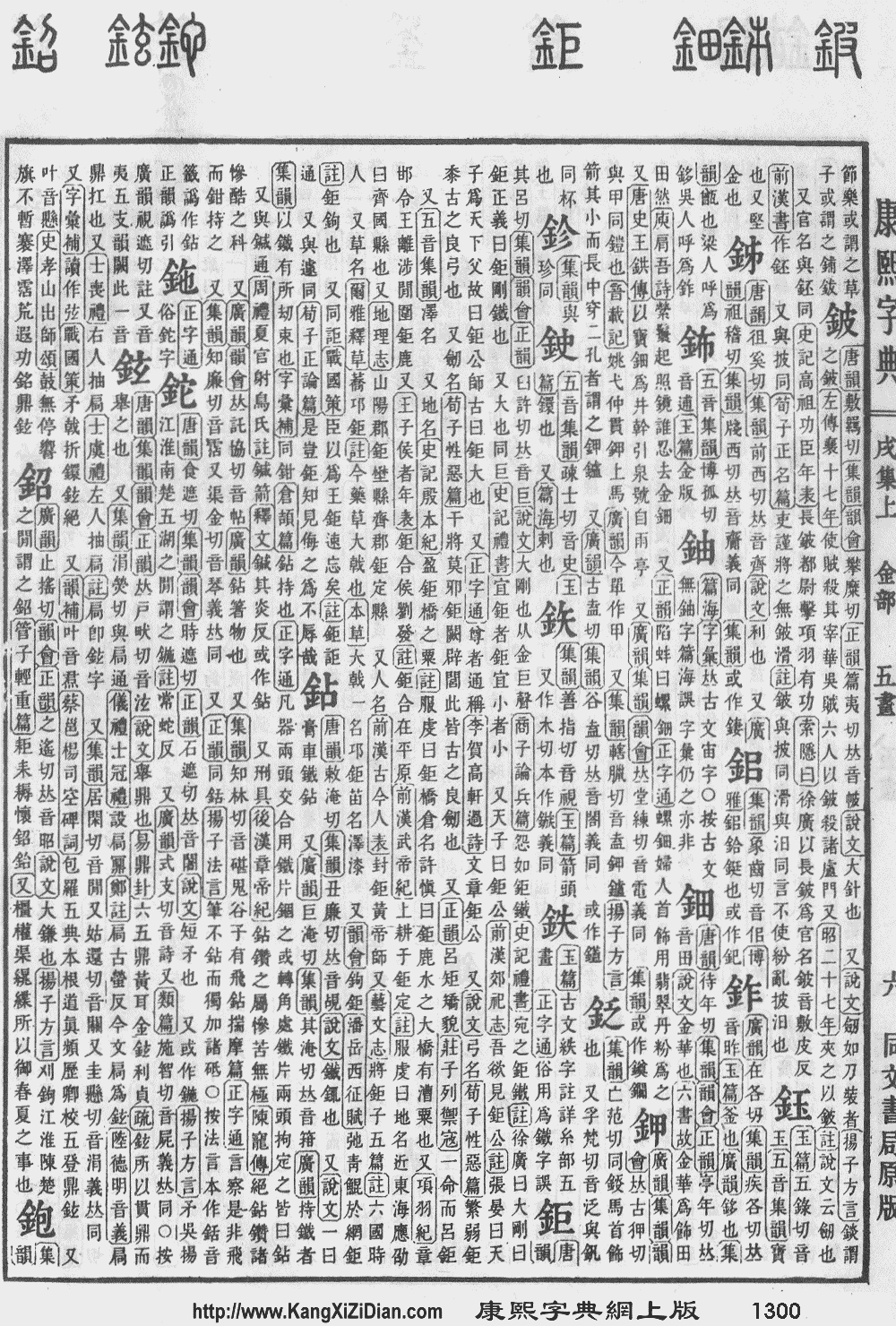
- KangXi: page 1300, character 14
- Dai Kanwa Jiten: character 40285
- Dae Jaweon: page 1802, character 26
- Hanyu Da Zidian: volume 6, page 4186, character 14
- Unihan data for U+9244
Chinese
Glyph origin
Phono-semantic compound (形聲) : semantic 釒 + phonetic 失 (OC *hliɡ).
Etymology 1
| For pronunciation and definitions of 鉄 – see 鐵 (“iron; railway; etc.”). (This character, 鉄, is the former (1969–1976) Singaporean simplified and variant form of 鐵.) |
Notes:
|
Etymology 2
| For pronunciation and definitions of 鉄 – see 紩 (“to sew; to sew”). (This character, 鉄, is a variant form of 紩.) |
Japanese
| 鉄 | |
| 鐵 |
Kanji
(grade 3 “Kyōiku” kanji, shinjitai kanji, kyūjitai form 鐵)
Readings
Compounds
- 鉄扇 (tessen): A Japanese war fan
- 地下鉄 (chikatetsu): subway, underground railway
Etymology 1
| Chemical element | |
|---|---|
| Fe | Previous: マンガン (mangan) (Mn) |
| Next: コバルト (kobaruto) (Co) | |
| Kanji in this term |
|---|
| 鉄 |
| てつ Grade: 3 |
| on’yomi |
Borrowed from Middle Chinese 鐵 (MC tʰet̚, “iron”). Compare modern Mandarin reading tiě, Hakka thiet.
Pronunciation
Noun
鉄 (shinjitai kanji, kyūjitai kanji 鐵, hiragana てつ, rōmaji tetsu)
- iron, the metal and the metallic chemical element
- (more generally) steel
- (figuratively) a blade, a knife, a sword, a weapon
- (figuratively) something extremely strong
- short for 鉄色 (tetsu iro, “steely black”)
- short for 鉄砲 (teppō, literally “cannon”, but in this case, refers to the poisonous fugu blowfish or dishes made from it)
Idioms
- 鉄は熱いうちに打て (tetsu wa atsui uchi ni ute): “strike while the iron is hot”
Etymology 2
| Kanji in this term |
|---|
| 鉄 |
| くろがね Grade: 3 |
| kun’yomi |
Compound of 黒 (kuro, “black”) + 金 (kane, “metal”).[2][1] The kane changes to gane as an instance of rendaku (連濁). Compare the black in English blacksmith.
Pronunciation
Alternative forms
Noun
鉄 (shinjitai kanji, kyūjitai kanji 鐵, hiragana くろがね, rōmaji kurogane)
Etymology 3
| Kanji in this term |
|---|
| 鉄 |
| かね Grade: 3 |
| kun’yomi |
From Old Japanese.[2]
The four kanji spellings of this term, 金 (“gold”), 銀 (“silver”), 銅 (“copper”), and 鉄 (“iron”), hint at the importance of each of these four metals in ancient Japan.[2]
Pronunciation
Alternative forms
Noun
鉄 (shinjitai kanji, kyūjitai kanji 鐵, hiragana かね, rōmaji kane)
Usage notes
The 金 spelling is the most common for this term.