辰
| ||||||||
| ||||||||
Translingual
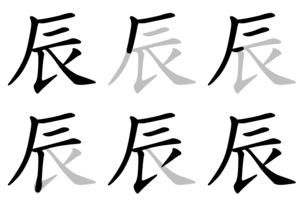
| Stroke order | |||
|---|---|---|---|
 | |||
Han character
辰 (radical 161, 辰+0, 7 strokes, cangjie input 一一一女 (MMMV), four-corner 71232)
- Kangxi radical #161, ⾠.
Derived characters
References
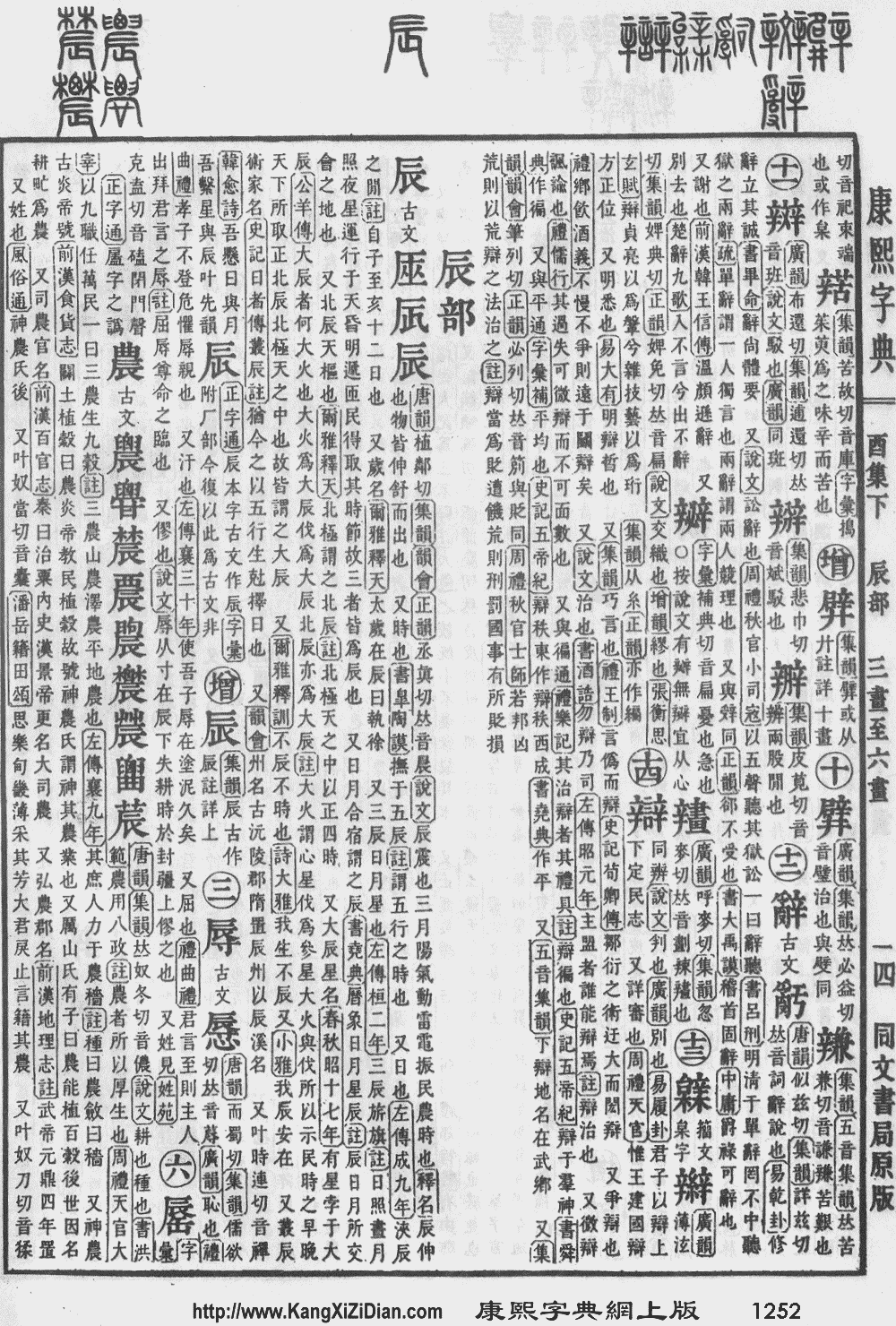
- KangXi: page 1252, character 15
- Dai Kanwa Jiten: character 38682
- Dae Jaweon: page 1733, character 4
- Hanyu Da Zidian: volume 6, page 3606, character 1
- Unihan data for U+8FB0
Chinese
| simp. and trad. |
辰 | |
|---|---|---|
| alt. forms | 𫝕 𨑃 (ancient form) 𨑄 (ancient form) 𠨷 (ancient form) 𠩟 (ancient form) | |
Glyph origin
| Historical forms of the character 辰 | |||
|---|---|---|---|
| Shang | Western Zhou | Shuowen Jiezi (compiled in Han) | Liushutong (compiled in Ming) |
| Oracle bone script | Bronze inscriptions | Small seal script | Transcribed ancient scripts |
 |
 |
 |
 |
| Characters in the same phonetic series (辰) (Zhengzhang, 2003) | |
|---|---|
| Old Chinese | |
| 辴 | *tʰɯl, *tʰɯnʔ, *tʰɯn |
| 屒 | *tɯnʔ, *djɯn |
| 振 | *tjɯn, *tjɯns |
| 侲 | *tjɯn, *tjɯn |
| 桭 | *tjɯn, *djɯn |
| 唇 | *tjɯn, *ɦljun |
| 帪 | *tjɯn |
| 賑 | *tjɯnʔ, *tjɯns |
| 裖 | *tjɯnʔ |
| 敐 | *tjɯnʔ, *djɯn |
| 震 | *tjɯn |
| 娠 | *tjɯns, *hljɯn |
| 蜃 | *djɯns, *djɯnʔ, *djins |
| 辰 | *djɯn |
| 晨 | *djɯn, *ɦljɯn |
| 宸 | *djɯn |
| 鷐 | *djɯn |
| 麎 | *djɯn |
| 祳 | *djɯnʔ |
| 脤 | *djɯnʔ |
| 鋠 | *djɯnʔ |
| 磭 | *ŋrɯnʔ, *ŋ̊ʰjaɡ, *ŋaɡ |
| 陙 | *djun |
| 脣 | *ɦljun |
| 漘 | *ɦljun |
Pictogram (象形) – a man with a hoe.
Pronunciation
Definitions
辰
- fifth of twelve earthly branches (地支), a division of the orbit of Jupiter variously equated with
- time
- † Alternative form of 晨 (chén, “early morning”).
- † to vibrate
- A surname.
Coordinate terms
Compounds
References
- (Min Nan) “Entry #3410”, in 臺灣閩南語常用詞辭典 [Dictionary of Frequently-Used Taiwan Minnan] (in Chinese and Min Nan), Ministry of Education, R.O.C., 2011.
Japanese
Kanji
辰
(“Jinmeiyō” kanji used for names)
Readings
Compounds
Compounds containing 辰
- 辰韓 (shinkan): the Jinhan confederacy: a twelve-member confederation, located on the southeast of the Korean peninsula during the proto-Three Kingdoms period, later absorbed into the growing Silla kingdom
- 辰刻 (shinkoku): the hour of the dragon: 7:00 AM to 9:00 AM
- 辰刻法 (shinkokuhō): a timekeeping method used during the Edo period, using six hours for the day and six for the night
- 辰沙 (shinsha), 辰砂 (shinsha), 辰砂 (shinsa): cinnabar, mercury sulfide: a common ore of mercury
- 辰砂油 (shinshayu): cinnabar oil, vermilion oil: cinnabar mixed with oil, used to treat dermatitis
- 辰宿 (shinshuku): a constellation
- 辰祭り (tatsu matsuri): "dragon festival": a ceremony in Edo-period Japan, held at the houses of the wealthy in the hour of the dragon on the first day of the dragon after New Years
- 辰松 (Tatsumatsu): the name of a family of traditional Japanese puppeteers
- 辰松風 (Tatsumatsu-fū): a men's hairstyle popular in the middle of the Edo period, popularized by a noted puppeteer of the Takamatsu family
- 辰星 (Shinsei), 辰星 (Tachimiboshi): alternate name for the planet Mercury; alternate name for the star Antares
- 辰年 (tatsudoshi): the year of the dragon under the Chinese zodiac
- 辰巳 (tatsumi): between the dragon and the snake: around 9:00 AM on the clock, or southeast on the compass
- 辰巳下り (tatsumi sagari), 辰巳下 (tatsumi sagari): gentle and refined of speech and manner
- 辰巳上り (tatsumi agari), 辰巳上 (tatsumi agari): shrill and loud of speech, crude and course of manner; a woman from the Fukugawa red-light district in Edo
- 辰巳言葉 (tatsumi kotoba): a slang or argot used by the prostitutes and geisha of the Fukugawa red-light district in Edo
- 辰巳調子 (tatsumi chōshi): shrill and loud of speech, crude and course of manner
- 忌辰 (kishin): deathday; anniversary of a person's death
- 時辰 (jishin): time
- 星辰 (seishin): star
- 誕辰 (tanshin): birthday
- 北辰 (hokushin): North Star; polestar
Etymology 1
| Kanji in this term |
|---|
| 辰 |
| たつ Jinmeiyō |
| kun’yomi |
From the verb たつ (tatsu, “to get up, to take off”) (whence also 竜 (tatsu, “dragon”)), from the notion of a dragon flying.
Pronunciation
Proper noun
辰 (hiragana たつ, rōmaji Tatsu)
- the Dragon, the fifth of the twelve Earthly Branches
Noun
- by extension from the zodiac:
- the name of the year or day corresponding to the fifth in a cycle of twelve
- roughly east-southeast, specifically 30° south of due east (i.e. a bearing of 120°)
- the hour of the dragon, specifically 7:00 AM to 9:00 AM; sometimes treated as 8:00 AM to 10:00 AM instead
- alternate name for 三月 (sangatsu, “the month of March”)
Derived terms
Derived terms
- 辰の市 (tatsu no ichi): in the Yamato kingdom of ancient Japan, markets held every day of the dragon
- 辰の一点 (tatsu no itten): the first 30 minutes of the hour of the dragon
- 辰の刻 (tatsu no koku): the hour of the dragon
- 辰の時 (tatsu no toki): the hour of the dragon
- 辰に巻いて巳にこぼす (tatsu ni maite mi ni kobosu): sunny one day, rainy the next
Etymology 2
| Kanji in this term |
|---|
| 辰 |
| しん Jinmeiyō |
| on’yomi |
From Middle Chinese 辰 (dzyin)
Proper noun
- the Dragon, the fifth of the twelve Earthly Branches
Korean
Hanja
辰 • (jin, sin)
- This term needs a translation to English. Please help out and add a translation, then remove the text
{{rfdef}}.
Vietnamese
Han character
- This term needs a translation to English. Please help out and add a translation, then remove the text
{{rfdef}}.
This article is issued from
Wiktionary.
The text is licensed under Creative Commons - Attribution - Sharealike.
Additional terms may apply for the media files.