沈
| ||||||||
Translingual
Han character
沈 (radical 85 水+4, 7 strokes, cangjie input 水中月山 (ELBU), four-corner 34112, composition ⿰氵冘)
References
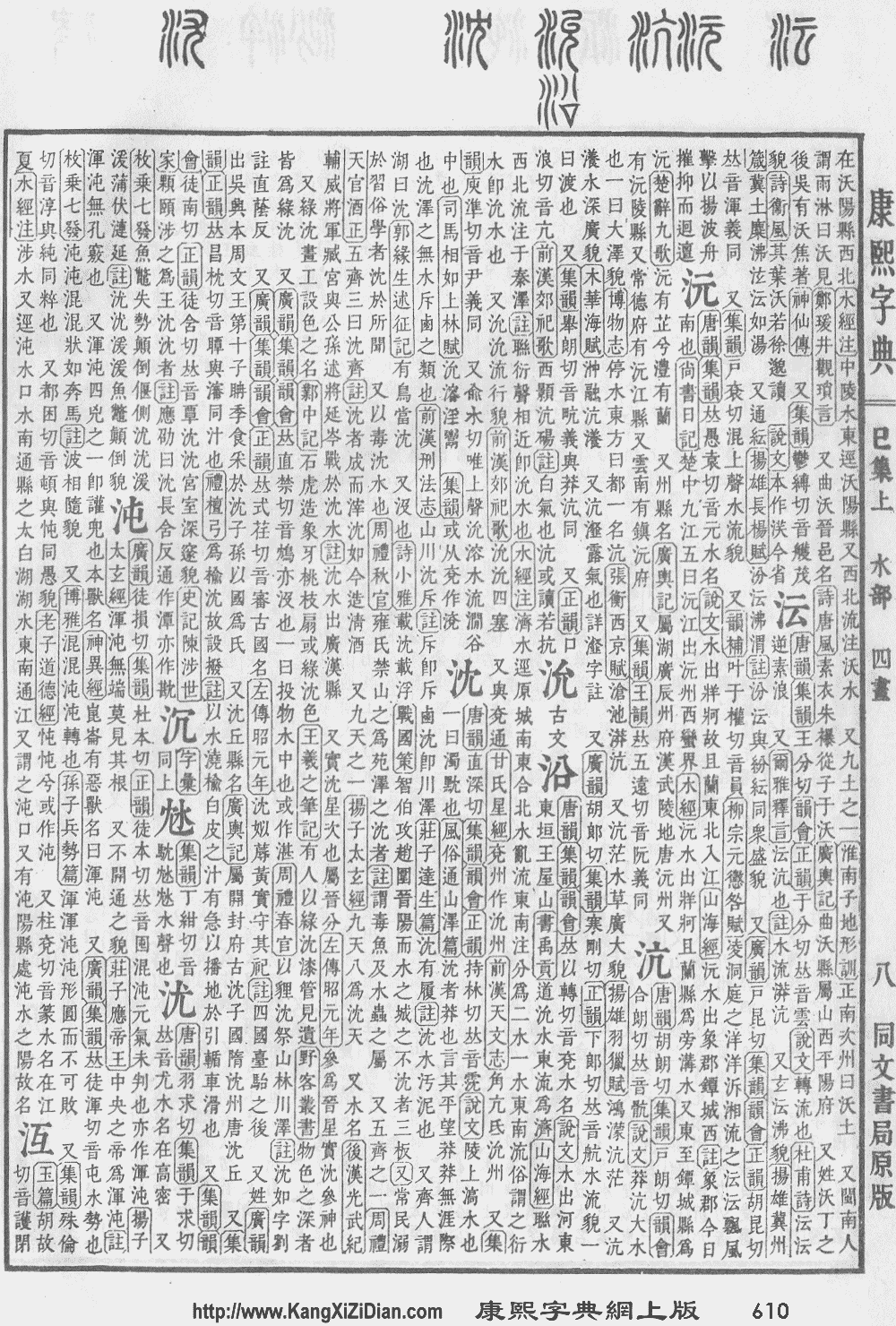
- KangXi: page 610, character 6
- Dai Kanwa Jiten: character 17189
- Dae Jaweon: page 1002, character 15
- Hanyu Da Zidian: volume 3, page 1572, character 7
- Unihan data for U+6C88
Chinese
Glyph origin
| Historical forms of the character 沈 | ||||
|---|---|---|---|---|
| Shang | Western Zhou | Warring States | Shuowen Jiezi (compiled in Han) | Liushutong (compiled in Ming) |
| Oracle bone script | Bronze inscriptions | Chu Slip and silk script | Small seal script | Transcribed ancient scripts |
 |
 |
 |
 |
 |
| Characters in the same phonetic series (冘) (Zhengzhang, 2003) | |
|---|---|
| Old Chinese | |
| 冘 | *lu, *lum |
| 抌 | *lu, *ʔl'uːmʔ, *loʔ |
| 狖 | *lus |
| 貁 | *lus |
| 耽 | *ʔl'uːm |
| 眈 | *ʔl'uːm, *ʔl'uːmʔ, *l'uːm |
| 酖 | *ʔl'uːm |
| 妉 | *ʔl'uːm |
| 黕 | *ʔl'uːmʔ |
| 衴 | *ʔl'uːmʔ |
| 瓭 | *ʔl'uːmʔ |
| 馾 | *ʔl'uːms |
| 髧 | *l'uːmʔ |
| 紞 | *ʔl'oːmʔ |
| 鈂 | *zlum, *l'um |
| 沈 | *l'um, *l'ums, *hljumʔ |
| 沉 | *l'um |
| 枕 | *l'um, *ʔljumʔ, *ʔljums |
| 莐 | *l'um |
| 霃 | *l'um |
| 鴆 | *l'ums |
| 訦 | *ɦljum, *ɦljumʔ |
| 忱 | *ɦljum |
| 邥 | *hljumʔ |
| 魫 | *hljumʔ |
In the oracle bone script, it was an ideogrammic compound (會意) : 水 (“water”) + 羊 (“sheep”) — to submerge a sheep into the water (as a form of sacrifice to the river god). Other forms included 牛 (“ox”) or 玉 (“jade”) instead of 羊.
Starting from the bronze inscriptions, it became a phono-semantic compound (形聲, OC *l'um, *l'ums, *hljumʔ) : semantic 水 (“water”) + phonetic 冘 (OC *lu, *lum).
This character was later borrowed to signify the surname, and the variant 沉 (OC *l'um) was adopted for the original meaning.
Etymology 1
| For pronunciation and definitions of 沈 – see 瀋 (“liquid; juice”). (This character, 沈, is the simplified form of 瀋.) |
Notes:
|
Etymology 2
| For pronunciation and definitions of 沈 – see 沉 (“to sink; to submerge; to fall; to sink; to subside; etc.”). (This character, 沈, is a variant form of 沉.) |
Usage notes
This variant form is the name of the sixty-fourth tetragram of the Taixuanjing, as listed in the ancient text.
Etymology 3
| simp. and trad. |
沈 | |
|---|---|---|
Pronunciation
Definitions
沈
Compounds
|
|
|
Etymology 4
| simp. and trad. |
沈 | |
|---|---|---|
Pronunciation
Definitions
沈
- Only used in 沈沈.
Japanese
Kanji
Readings
- Goon: しん (shin)←しん (sin, historical)←しむ (simu, ancient); じん (jin)←ぢん (din, historical)←ぢむ (dimu, ancient)
- Kan’on: しん (shin)←しん (sin, historical)←しむ (simu, ancient); ちん (chin, Jōyō)←ちん (tin, historical)←ちむ (timu, ancient)
- Kun: しずむ (shizumu, 沈む, Jōyō); しずめる (shizumeru, 沈める, Jōyō)
Korean
Hanja
沈 • (chim, sim) (hangeul 침, 심, revised chim, im, McCune–Reischauer ch'im, sim, Yale chim, sim)
- This term needs a translation to English. Please help out and add a translation, then remove the text
{{rfdef}}.
Vietnamese
Han character
沈 (đắm)
- This term needs a translation to English. Please help out and add a translation, then remove the text
{{rfdef}}.