酉
| ||||||||
Translingual
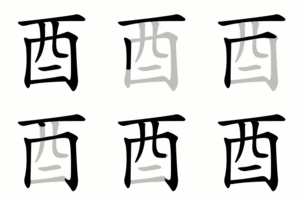
| Stroke order | |||
|---|---|---|---|
 | |||
Han character
酉 (radical 164 酉+0, 7 strokes, cangjie input 一金田一 (MCWM), four-corner 10600)
- Kangxi radical #164, ⾣.
Derived characters
- Index:Chinese radical/酉
References
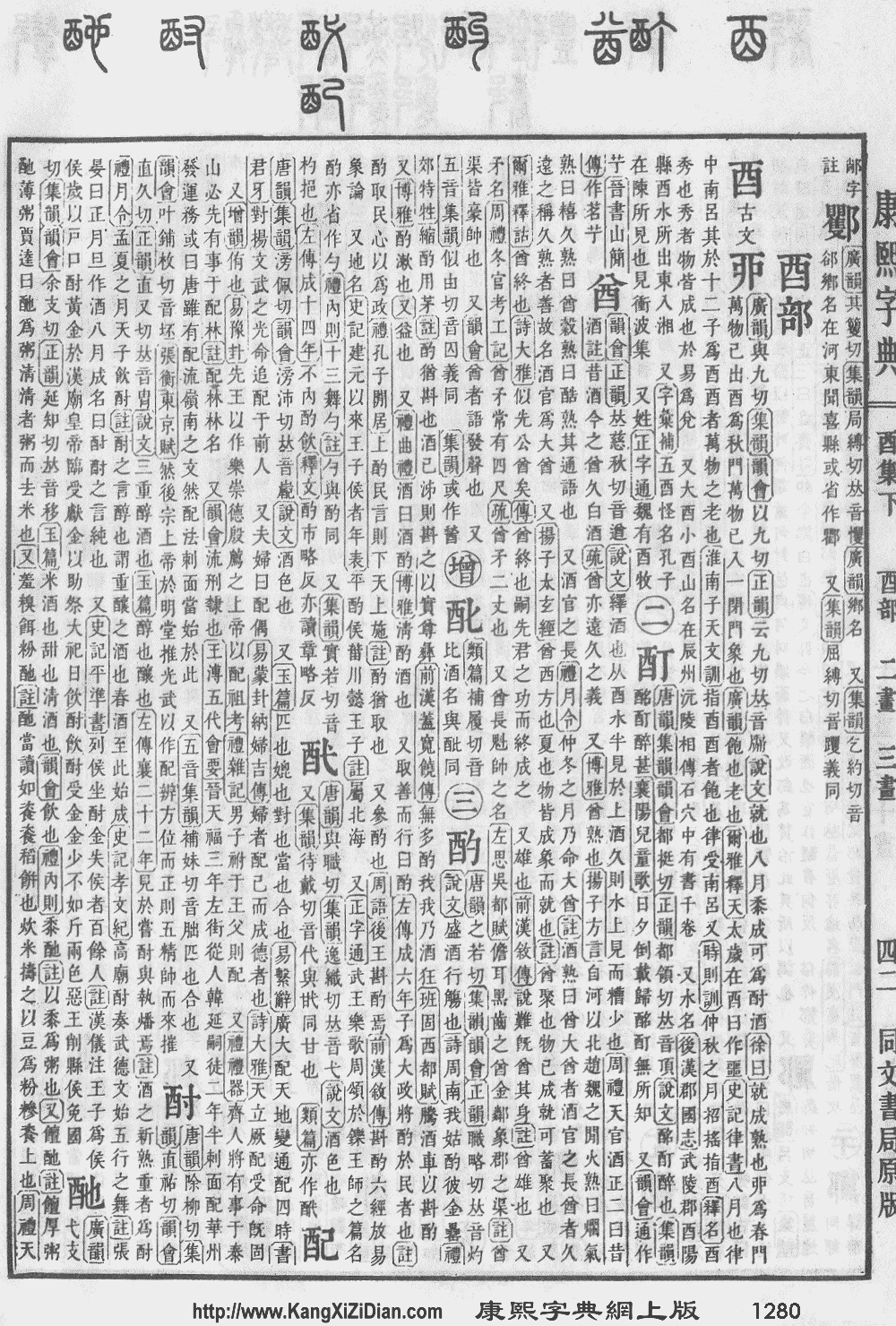
- KangXi: page 1280, character 2
- Dai Kanwa Jiten: character 39763
- Dae Jaweon: page 1778, character 36
- Hanyu Da Zidian: volume 6, page 3572, character 1
- Unihan data for U+9149
Chinese
| simp. and trad. |
酉 | |
|---|---|---|
| alt. forms | 丣 | |
Glyph origin
| Historical forms of the character 酉 | |||||||||
|---|---|---|---|---|---|---|---|---|---|
| Shang | Western Zhou | Spring and Autumn | Warring States | Shuowen Jiezi (compiled in Han) | Liushutong (compiled in Ming) | ||||
| Bronze inscriptions | Oracle bone script | Bronze inscriptions | Bronze inscriptions | Bronze inscriptions | Chu Slip and silk script | Qin slip script | Ancient script | Small seal script | Transcribed ancient scripts |
 |
 |
 |
 |
 |
 |
 |
 |
 |
 |
| Characters in the same phonetic series (酉) (Zhengzhang, 2003) | |
|---|---|
| Old Chinese | |
| 楢 | *kʰjuʔ, *lu |
| 逎 | *ʔslu |
| 遒 | *sklu, *sɡlu |
| 蝤 | *sklu, *sɡlu |
| 揂 | *sklu |
| 酒 | *ʔsluʔ |
| 媨 | *sklus |
| 鞧 | *skʰlu |
| 緧 | *skʰlu |
| 趥 | *skʰlu, *skʰluŋs |
| 酋 | *sɡlu |
| 崷 | *sɡlu |
| 鰌 | *sɡlu |
| 煪 | *sɡlu |
| 醜 | *l̥ʰjuʔ |
| 猶 | *klus, *lu, *lus |
| 猷 | *lu |
| 輶 | *lu, *luʔ, *lus |
| 偤 | *lu |
| 莤 | *lu, *sruɡ |
| 蕕 | *lu |
| 庮 | *lu, *luʔ |
| 槱 | *luʔ, *lus |
| 梄 | *luʔ |
| 丣 | *luʔ |
| 酉 | *luʔ |
Pictogram (象形) : an ancient vase used in making and storing fermented millet alcoholic drink. See 酒.
Etymology
Pronunciation
Definitions
酉
- an alcoholic drink vessel
- tenth of twelve earthly branches (十二支)
- rooster (鷄) of Chinese zodiac
- the period from 5-7 p.m.
- (mathematics) unitary
Coordinate terms
Usage notes
Although it remains associated with alcoholic drink, the character alone is mostly used as the tenth earthly branch in the Chinese cyclical calendar.
Compounds
|
|
Japanese
Kanji
酉
(“Jinmeiyō” kanji used for names)
- "sake" radical (さけづぐり)
- "bird of the zodiac" radical (ひよみのとり, とりへん)
- rooster (tenth sign of the Chinese zodiac)
Readings
Compounds
- 卯酉線 (bōyūsen)
- 酉年 (toridoshi)
Etymology 1
| Kanji in this term |
|---|
| 酉 |
| とり Jinmeiyō |
| kun’yomi |
From 鶏 (niwatori, tori, “chicken”), from 庭 (niwa, “garden”) + 鳥 (tori, “bird”)
Pronunciation
Proper noun
- the Rooster, the tenth of the twelve Earthly Branches
Etymology 2
| Kanji in this term |
|---|
| 酉 |
| ゆう Jinmeiyō |
| on’yomi |
From Middle Chinese 酉 (yuwX)
Proper noun
酉 (hiragana ゆう, rōmaji Yū, historical hiragana いう)
- the Rooster, the tenth of the twelve Earthly Branches
References
|
- Source: EDICT and KANJIDIC files licensed by the Electronic Dictionaries Research Group.
Korean
Hanja
酉 • (yu) (hangeul 유, revised yu, McCune–Reischauer yu, Yale yu)
- This term needs a translation to English. Please help out and add a translation, then remove the text
{{rfdef}}.
Vietnamese
Han character
- This term needs a translation to English. Please help out and add a translation, then remove the text
{{rfdef}}.
This article is issued from
Wiktionary.
The text is licensed under Creative Commons - Attribution - Sharealike.
Additional terms may apply for the media files.