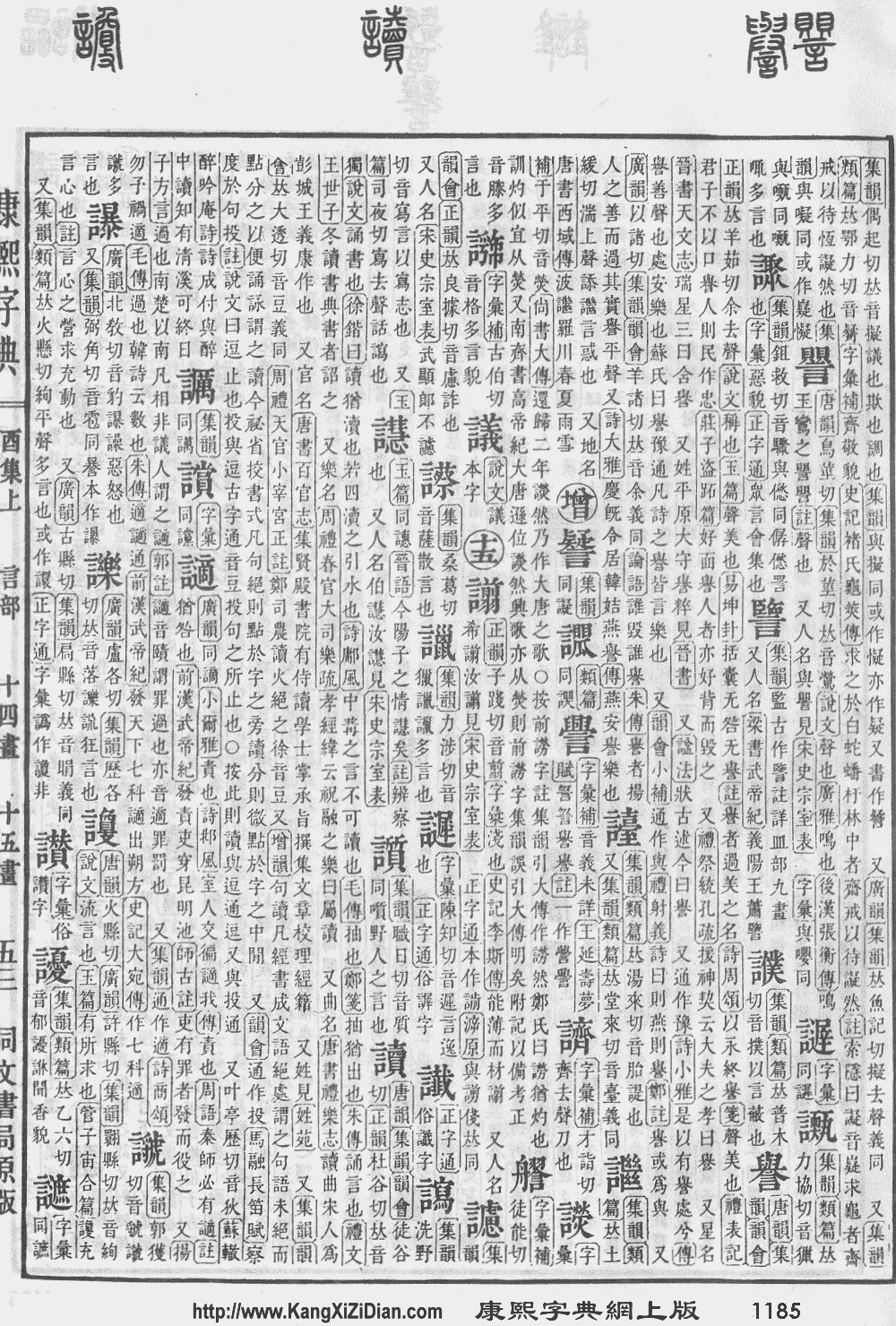
Etymology 1
“To say aloud, to tell” (Shijing) > “to recite” > “to read”.
Cognate with Tibetan ཀློག (klog, “to read; to recite”). Starostin sets up Proto-Sino-Tibetan *k-lok (“to recite; to give notice”) for this, and also includes Burmese လျှောက် (hlyauk, “to tell; to ask; to petition; word-for-word translation; indiscriminately”) and Mizo thlûk (“accent, tone, intonation”). Related to 讟 (OC *l'oːɡ, “resentment, slander < to grumble; complaint”).
Sagart (1999) argues that “read” cannot be the primary meaning, since existence of the concept “to read” before the invention of writing is questionable. There is likely no writing at the time of the split between Chinese and other Sino-Tibetan languages, therefore the Tibetan word may represent a borrowing from Chinese.
Pronunciation
Note:
- tha̍k - vernacular;
- tho̍k - literary.
| Rime |
| Character |
讀 |
| Reading # |
1/1 |
| Initial (聲) |
定 (7) |
| Final (韻) |
屋 (3) |
| Tone (調) |
Checked (Ø) |
| Openness (開合) |
Open |
| Division (等) |
I |
| Fanqie |
徒谷切 |
| Reconstructions |
Zhengzhang
Shangfang |
/duk̚/ |
Pan
Wuyun |
/duk̚/ |
Shao
Rongfen |
/duk̚/ |
Edwin
Pulleyblank |
/dəwk̚/ |
Li
Rong |
/duk̚/ |
Wang
Li |
/duk̚/ |
Bernard
Karlgren |
/dʱuk̚/ |
Expected
Mandarin
Reflex |
dú |
| Zhengzhang system (2003) |
| Character |
讀 |
| Reading # |
1/1 |
| No. |
16039 |
Phonetic
component |
𧶠 |
Rime
group |
屋 |
Rime
subdivision |
0 |
Corresponding
MC rime |
獨 |
Old
Chinese |
/*l'oːɡ/ |
Definitions
讀
- † to say aloud; to tell
- to read (silently); to peruse
- Synonyms: 看 (kàn)
讀書 /
读书 ―
dúshū ―
to
read;
reading 閱讀 /
阅读 ―
yuèdú ―
to
read
- to read aloud; to read out
朗讀 /
朗读 ―
lǎngdú ―
to
read aloud
- to study
讀大學 /
读大学 ―
dú dàxué ―
to
study at a university
- to pronounce (a character, a word, etc.)
- Synonyms: 唸/念
這個字怎麼讀? /
这个字怎么读? ―
Zhège zì zěnme dú? ―
How do you
pronounce this character?
- pronunciation
讀音 /
读音 ―
dúyīn ―
pronunciation (of characters)
異讀 /
异读 ―
yìdú ―
variant
pronunciation 文讀 /
文读 ―
wéndú ―
literary
reading