賣
| ||||||||
Translingual
| Traditional | 賣 |
|---|---|
| Shinjitai | 売 |
| Simplified | 卖 |
Han character
賣 (radical 154, 貝+8, 15 strokes, cangjie input 土田中金 (GWLC), four-corner 40806, composition ⿱士買)
Descendants
References
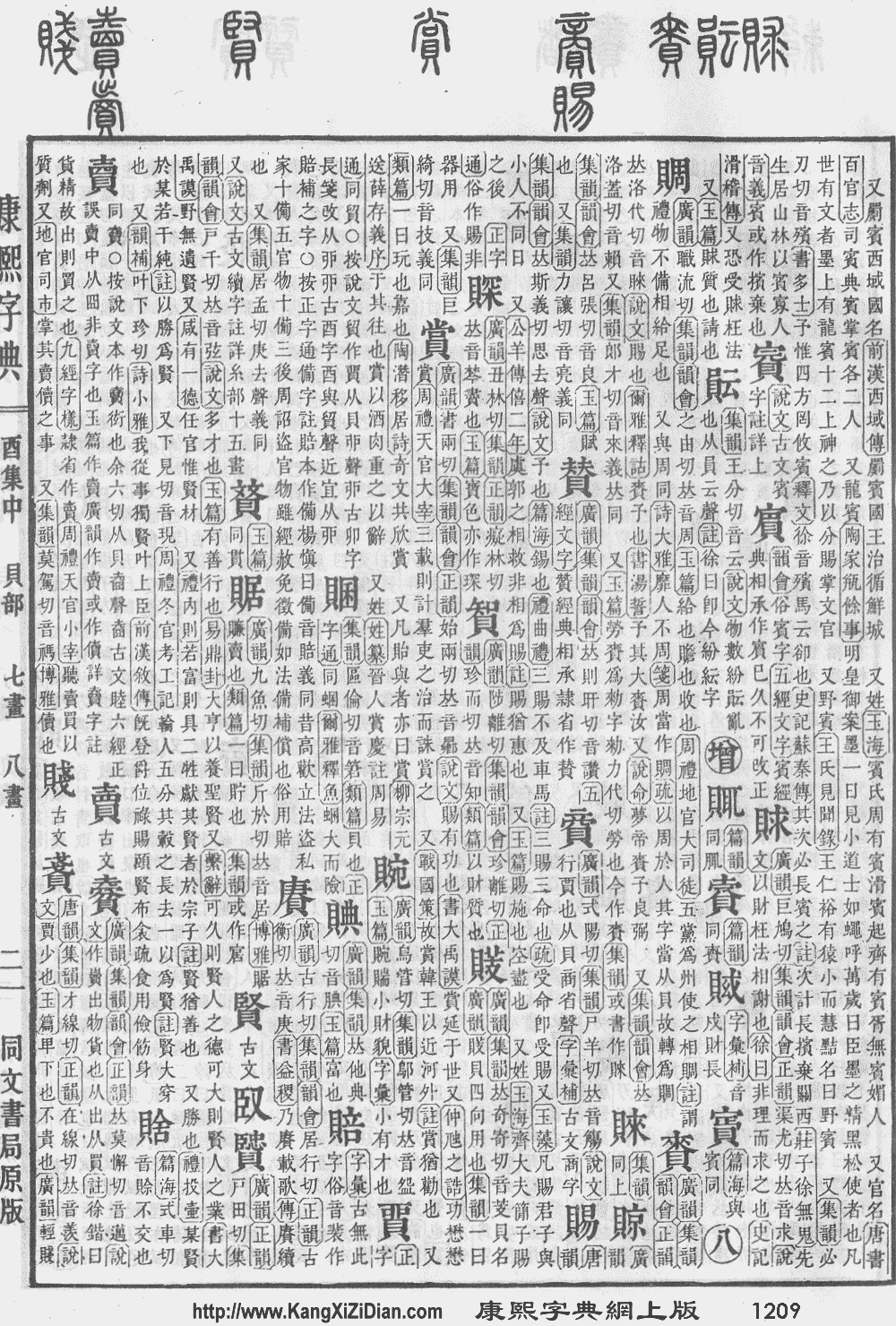
- KangXi: page 1209, character 33
- Dai Kanwa Jiten: character 36825
- Dae Jaweon: page 1675, character 2
- Hanyu Da Zidian: volume 6, page 3645, character 7
- Unihan data for U+8CE3
Chinese
| trad. | 賣 | |
|---|---|---|
| simp. | 卖 | |
| alt. forms | 𧷓 historical 𧷵 ‡ 𧷨 ‡ | |
Glyph origin
| Historical forms of the character 賣 | |
|---|---|
| Shuowen Jiezi (compiled in Han) | Liushutong (compiled in Ming) |
| Small seal script | Transcribed ancient scripts |
 |
 |
| Characters in the same phonetic series (買) (Zhengzhang, 2003) | |
|---|---|
| Old Chinese | |
| 買 | *mreːʔ |
| 蕒 | *mreːʔ |
| 嘪 | *mreːʔ |
| 鷶 | *mreːʔ |
| 賣 | *mreːs |
Phono-semantic compound (形聲, OC *mreːs) : semantic 出 (“go out”) + phonetic 買 (OC *mreːʔ). Also ideogrammic compound (會意) .
出 indicates the exporting side of the selling/buying deal. It was reduced to 士.
Etymology
Pronunciation
Definitions
賣
Compounds
Derived terms from 賣
|
|
|
Japanese
| 売 | |
| 賣 |
Kanji
賣
(“Jinmeiyō” kanji used for names, kyūjitai kanji, shinjitai form 売)
- This term needs a translation to English. Please help out and add a translation, then remove the text
{{rfdef}}.
Readings
Korean
Hanja
賣 • (mae) (hangeul 매, McCune–Reischauer mae, Yale may)
- This term needs a translation to English. Please help out and add a translation, then remove the text
{{rfdef}}.
Vietnamese
Han character
賣 (mại, mải, mợi)
- This term needs a translation to English. Please help out and add a translation, then remove the text
{{rfdef}}.
This article is issued from
Wiktionary.
The text is licensed under Creative Commons - Attribution - Sharealike.
Additional terms may apply for the media files.