唸
See also: 念
| ||||||||
Translingual
Han character
唸 (radical 30 口+8, 11 strokes, cangjie input 口人戈心 (ROIP), four-corner 68032, composition ⿰口念)
References
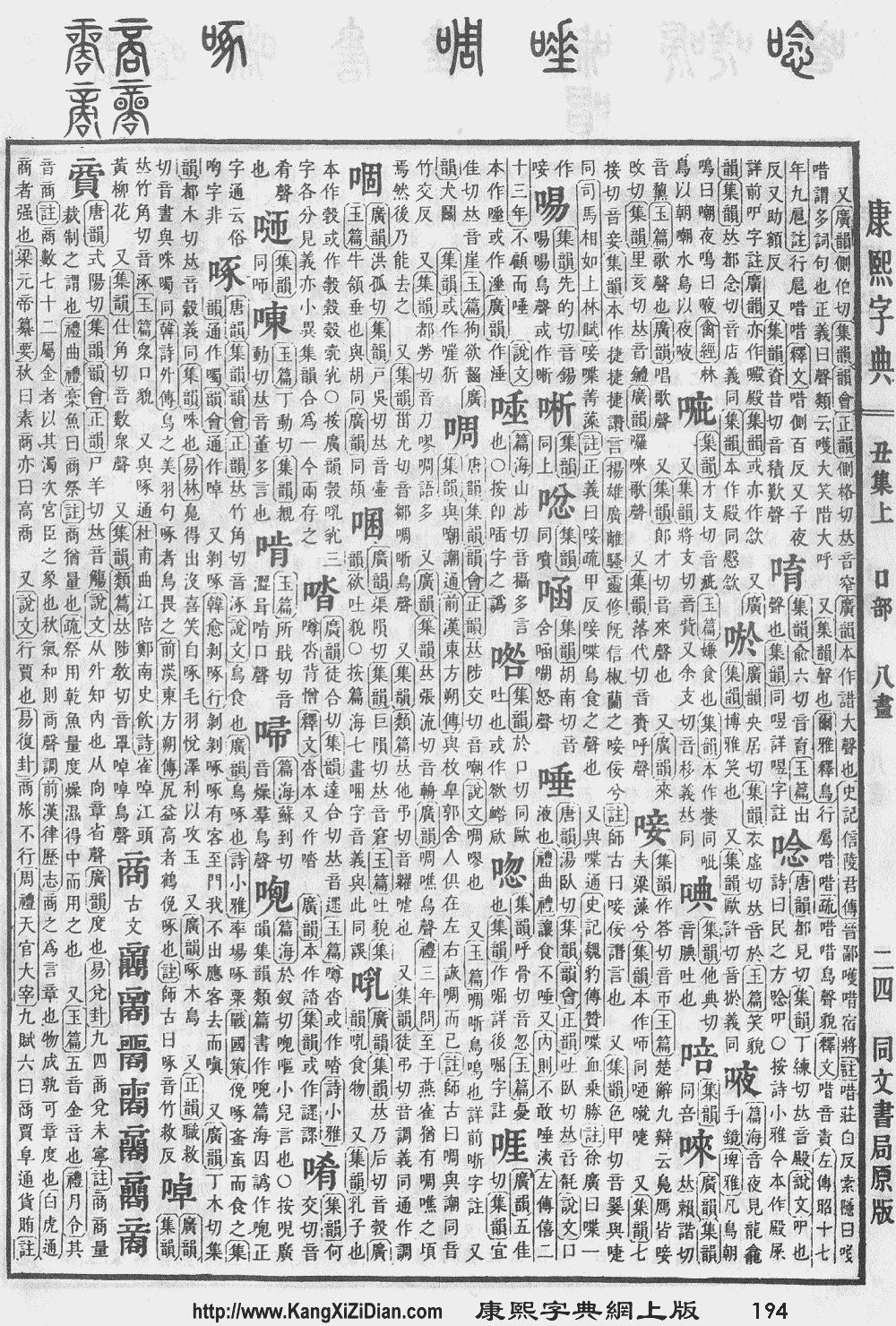
- KangXi: page 194, character 2
- Dai Kanwa Jiten: character 3773
- Dae Jaweon: page 414, character 9
- Hanyu Da Zidian: volume 1, page 644, character 1
- Unihan data for U+5538
Chinese
Glyph origin
| Characters in the same phonetic series (念) (Zhengzhang, 2003) | |
|---|---|
| Old Chinese | |
| 淰 | *rnɯːmʔ, *nɯːmʔ, *hnjɯmʔ |
| 唸 | *tɯːms, *tɯːns |
| 埝 | *tɯːms, *nɯːb |
| 趝 | *klɯːms, *n̥ʰɯːms |
| 諗 | *hnjɯmʔ |
| 稔 | *njɯːm |
| 棯 | *njɯmʔ |
| 腍 | *njɯmʔ |
| 捻 | *nɯːb |
| 錜 | *nɯːb |
| 敜 | *nɯːb |
| 惗 | *nɯːb, *sens |
| 菍 | *nɯːb, *nɯːd |
Phono-semantic compound (形聲, OC *tɯːms, *tɯːns) : semantic 口 (“mouth”) + phonetic 念 (OC *nɯːms, “to read”).
Definitions
| For pronunciation and definitions of 唸 – see 念 (“to read aloud; to chant”). (This character, 唸, is a variant form of 念.) |
Japanese
Kanji
唸
- This term needs a translation to English. Please help out and add a translation, then remove the text
{{rfdef}}.
Readings
- Goon: てん (ten)←てむ (temu, historical)
- Kan’on: てん (ten)←てむ (temu, historical)
- Kan’yōon: ねん (nen)
- Kun: うなる (unaru, 唸る)
Korean
Hanja
唸 • (jeom, jeon) (hangeul 점, 전, revised jeom, jeon, McCune–Reischauer chŏm, chŏn)
- This term needs a translation to English. Please help out and add a translation, then remove the text
{{rfdef}}.
Vietnamese
Han character
- This term needs a translation to English. Please help out and add a translation, then remove the text
{{rfdef}}.
This article is issued from
Wiktionary.
The text is licensed under Creative Commons - Attribution - Sharealike.
Additional terms may apply for the media files.