苧
| ||||||||
Translingual
Glyph origin
| Characters in the same phonetic series (宁) (Zhengzhang, 2003) | |
|---|---|
| Old Chinese | |
| 貯 | *taʔ |
| 詝 | *taʔ |
| 柠 | *tʰaʔ |
| 宁 | *da, *daʔ |
| 佇 | *daʔ |
| 竚 | *daʔ |
| 苧 | *daʔ |
| 紵 | *daʔ |
| 羜 | *daʔ |
| 眝 | *daʔ |
Phono-semantic compound (形聲, OC *daʔ) : semantic 艸 (“grass”) + phonetic 宁 (OC *da, *daʔ).
Han character
苧 (radical 140 艸+5, 11 strokes, cangjie input 廿十一弓 (TJMN) or X廿十一弓 (XTJMN), four-corner 44201, composition ⿱艹宁)
References
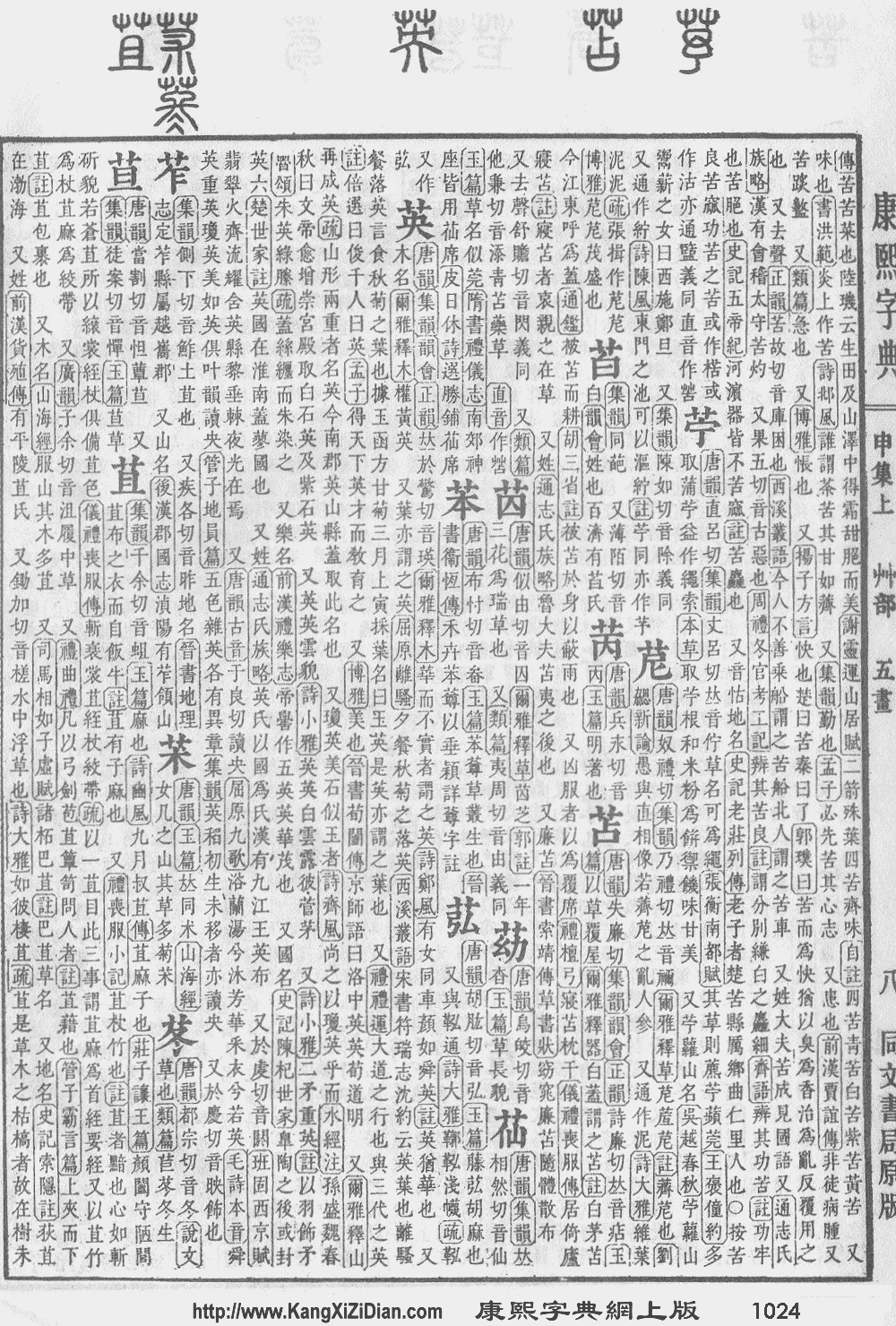
- KangXi: page 1024, character 1
- Dai Kanwa Jiten: character 30798
- Dae Jaweon: page 1483, character 1
- Hanyu Da Zidian: volume 5, page 3196, character 4
- Unihan data for U+82E7
Chinese
Etymology 1
| For pronunciation and definitions of 苧 – see 薴. (This character, 苧, is the simplified form of 薴.) |
Notes:
|
Etymology 2
| For pronunciation and definitions of 苧 – see 芧 (“chestnut oak”). (This character, 苧, is a variant form of 芧.) |
Etymology 3
| trad. | 苧 | |
|---|---|---|
| simp. | 苎 | |
Pronunciation
Definitions
苧
Japanese
Kanji
(uncommon “Hyōgai” kanji, shinjitai kanji, kyūjitai form 薴)
Readings
Etymology 1
| Kanji in this term |
|---|
| 苧 |
| お Hyōgaiji |
| kun’yomi |
/wo/ → /o/
From Old Japanese. Found in the Man'yōshū, completed some time after 759 CE.[1]
Pronunciation
Alternative forms
Noun
苧 (hiragana お, rōmaji o, historical hiragana を)
- hemp or ramie
- thread made from the outer husk of the stems of hemp or ramie
- a textile made from this thread
Derived terms
Synonyms
Etymology 2
| Kanji in this term |
|---|
| 苧 |
| むし Hyōgaiji |
| kun’yomi |
From Old Japanese. Possibly the original name for the plant, or for the fiber from this plant. Possibly also cognate with Ainu モセ (mose), ムセ (muse, “nettle plant; bast fiber in general”)
Pronunciation
Alternative forms
Noun
- (obsolete) old name for karamushi: the ramie plant, Boehmeria nivea var. nipononivea
- short for 帔, 枲の垂れ衣 (mushi no tareginu), a kind of veil made of ramie and worn from the brim of a hat by women from the Heian period through the Kamakura period
Etymology 3
| Kanji in this term |
|---|
| 苧 |
| からむし Hyōgaiji |
| kun’yomi |
Appears to be a compound of 殻 (kara, “husk”) + 苧 (mushi, “ramie fiber”).
Some sources suggest that the mushi component derives from 蒸し (mushi, “steaming”), from verb 蒸す (musu, “to steam something; to be steamy or muggy”). However, ramie is not processed using steam, so these are more likely to be folk etymologies.
Pronunciation
Alternative forms
Noun
苧 (hiragana からむし, rōmaji karamushi)
- the ramie plant, Boehmeria nivea or Boehmeria nipononivea
- a thread made from the fibers of this plant
- a textile made from this thread
- circa 800, Shibunritsu Ongi (page 47)[4]
- 蒭麻衣 加良牟斯衣
Derived terms
Etymology 4
| Kanji in this term |
|---|
| 苧 |
| からんし Hyōgaiji |
| kun’yomi |
/karamuɕi/ → /karanɕi/
Alteration from karamushi. Rare and obsolete reading.
Pronunciation
Noun
Etymology 5
| Kanji in this term |
|---|
| 苧 |
| こるむし Hyōgaiji |
| kun’yomi |
/karamuɕi/ → /korumuɕi/
Alteration from karamushi. Rare and obsolete reading.
Pronunciation
Noun
Etymology 6
| Kanji in this term |
|---|
| 苧 |
| ま Hyōgaiji |
| kan’yōon |
From Middle Chinese 薴 (MC ɳˠɛŋ), but read with the on'yomi from 麻 (ma, “hemp”). Compare modern Mandarin 苧 (zhù), 麻 (má).
Pronunciation
- Kan’yōyomi
- IPA(key): [ma̠]
Alternative forms
Affix
Derived terms
Etymology 7
| Kanji in this term |
|---|
| 苧 |
| ちょ Hyōgaiji |
| on’yomi |
From Middle Chinese 薴 (MC ɳˠɛŋ). Compare modern Mandarin 苧 (zhù).
Pronunciation
Affix
Derived terms
References
- ↑ c. 759, Man'yōshū (book 14, poem 3484), text here
- 1 2 2006, 大辞林 (Daijirin), Third Edition (in Japanese), Tōkyō: Sanseidō, →ISBN
- 1 2 1998, NHK日本語発音アクセント辞典 (NHK Japanese Pronunciation Accent Dictionary) (in Japanese), Tōkyō: NHK, →ISBN
- 1 2 Tsukishima, Hiroshi (circa 800) Kojisho Ongi Shūsei 2: Shibunritsu Ongi (in Japanese), Tōkyō: Kyūko Shoin, published 1979, →ISBN, page 47
Korean
Hanja
苧 • (jeo) (hangeul 저, revised jeo, McCune–Reischauer chŏ, Yale ce)
- This term needs a translation to English. Please help out and add a translation, then remove the text
{{rfdef}}.
Vietnamese
Han character
苧 (trữ)
- This term needs a translation to English. Please help out and add a translation, then remove the text
{{rfdef}}.