桶
| ||||||||
Translingual
Han character
桶 (radical 75, 木+7, 11 strokes, cangjie input 木弓戈月 (DNIB), four-corner 47927, composition ⿰木甬)
Derived characters
- 𮅸
References
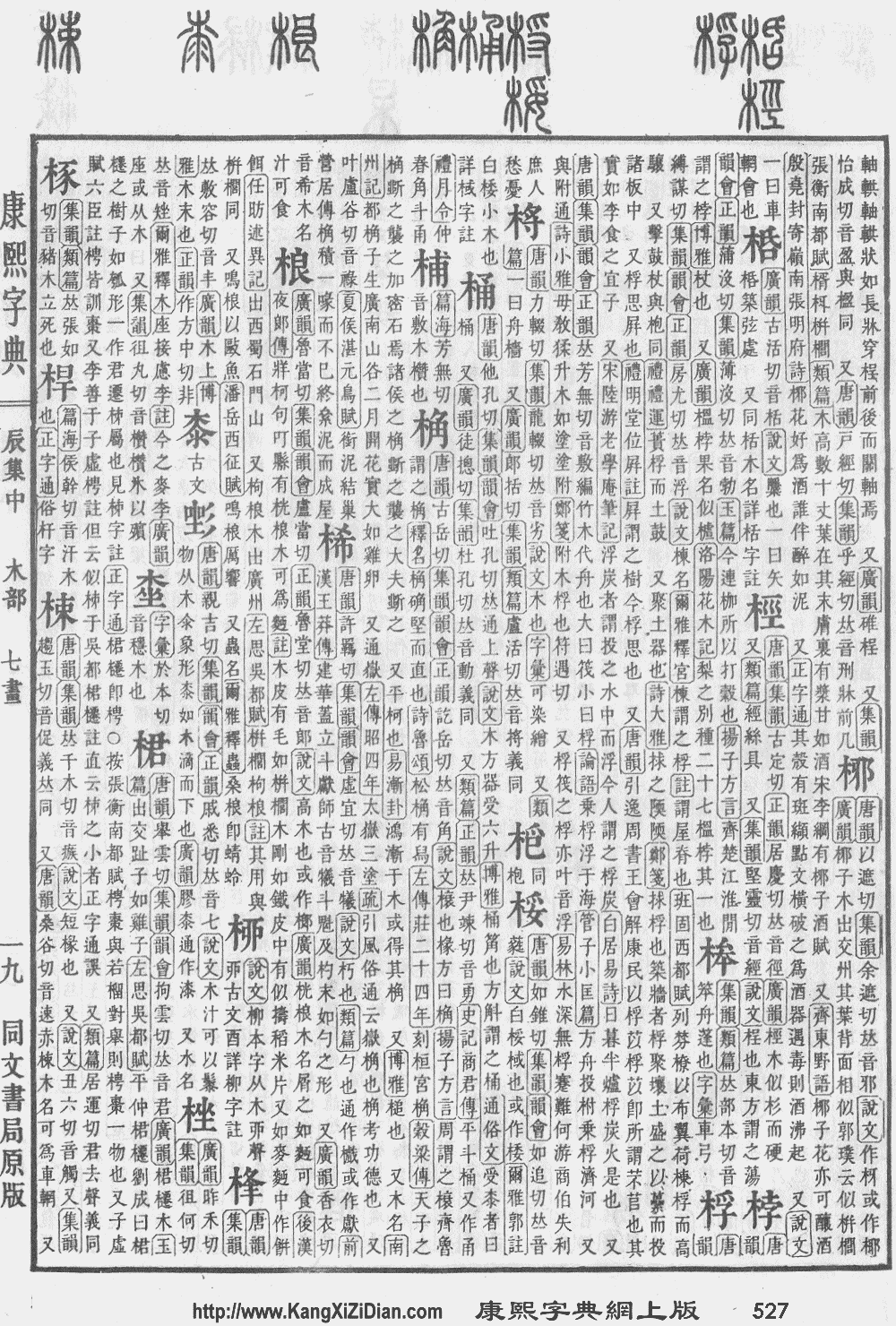
- KangXi: page 527, character 10
- Dai Kanwa Jiten: character 14811
- Dae Jaweon: page 916, character 4
- Hanyu Da Zidian: volume 2, page 1222, character 6
- Unihan data for U+6876
Chinese
| simp. and trad. |
桶 | |
|---|---|---|
Glyph origin
| Characters in the same phonetic series (用) (Zhengzhang, 2003) | |
|---|---|
| Old Chinese | |
| 通 | *l̥ʰoːŋ |
| 俑 | *l̥ʰoːŋ, *loŋʔ |
| 蓪 | *l̥ʰoːŋ |
| 桶 | *l̥ʰoːŋʔ, *l'oːŋʔ |
| 捅 | *l̥ʰoːŋʔ |
| 痛 | *l̥ʰoːŋs |
| 筩 | *l'oːŋ |
| 誦 | *ljoŋs |
| 傭 | *l̥ʰoŋ, *loŋ |
| 慵 | *ɦljoŋ |
| 鱅 | *ɦljoŋ, *loŋ |
| 滽 | *loŋ |
| 墉 | *loŋ |
| 鏞 | *loŋ |
| 鄘 | *loŋ |
| 槦 | *loŋ |
| 銿 | *loŋ |
| 甬 | *loŋʔ |
| 勇 | *loŋʔ |
| 涌 | *loŋʔ |
| 踊 | *loŋʔ |
| 蛹 | *loŋʔ |
| 恿 | *loŋʔ |
| 慂 | *loŋʔ |
| 悀 | *loŋʔ |
| 埇 | *loŋʔ |
| 踴 | *loŋʔ |
| 庸 | *loŋ |
| 用 | *loŋs |
| 佣 | *loŋs |
Phono-semantic compound (形聲, OC *l̥ʰoːŋʔ, *l'oːŋʔ) : semantic 木 (“wood”) + phonetic 甬 (OC *loŋʔ).
Etymology
Pronunciation
Definitions
桶
Synonyms
- (Min Nan) 桶仔
Compounds
Japanese
Kanji
桶
(“Jinmeiyō” kanji used for names)
Readings
Etymology 1
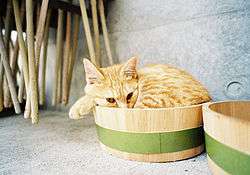
桶 (oke): A small oke holding a cat.

桶 (oke): A workman building a large oke.
| Kanji in this term |
|---|
| 桶 |
| おけ Jinmeiyō |
| kun’yomi |
From Old Japanese. Originally a compound of 麻 (o, “flax, ramie”) + 笥 (ke, “a container, especially for foodstuffs or tableware”).[1]
Pronunciation
Alternative forms
Noun
桶 (hiragana おけ, rōmaji oke, historical hiragana をけ)
- a tube-shaped container for holding split flax or hemp, usually made of thin cypress wood bent to shape
- by extension, a pail, bucket, tub, or basin similar to a barrel in construction, made of long thin pieces of cedar or cypress extending up from a base and held in place with hoops; can be small enough to carry in one hand, or large enough to bathe in
- (Noh theater) a stool on stage, on which an actor sits
Synonyms
Idioms
Idioms
- 桶な物打ち明ける (おけなものうちあける, oke na mono uchiakeru), 桶の物打ち明ける (おけのものうちあける, oke no mono uchiakeru): "open up what's in your bucket" → to come clean to someone, with no hard feelings and no subterfuge
- 桶が腐れば菜が腐る (おけがくさればながくさる, oke ga kusareba na ga kusaru): "if the bucket rots, the greens rot" → if the surrounding is bad, it affects the inside
Derived terms
Derived terms
- 桶越し (okegoshi): using an oke to cross a river
- 桶屋 (okeya): a person or store that makes, fixes, and/or sells oke and well walls
- 桶火 (okebi): the fire in a hioke
- 火桶 (hioke): a type of wooden hibachi
- 桶狭間 (Okehazama): a place in the south of Midori-ku, Nagoya
- 桶狭間焼き (Okehazama-yaki): a style of pottery originating near Okehazama
- 桶結い (okeyui): tying cord bands around an oke; an oke maker, an okeya
- 桶絞り (okeshibori): a cloth dying process whereby the sections to leave undyed are put into oke and closed in with lids
- 桶酸い (okesui): alternate name for 酢の木, 酢木 (sunoki): Vaccinium smallii, var. glabrum, a bush with edible (though sour) berries
- 桶取り (oketori): a scene in a kyōgen farce presented between Noh plays; a woman working as a water carrier
- 桶尻 (okejiri): the aft edge of the hull of a ship in traditional Japanese shipbuilding
- 桶据え (okesue): the hipbone
- 桶川 (Okegawa): a river in southeast Saitama Prefecture
- 桶側 (okegawa): the sides of an oke, the staves; a bowl-shaped container for holding trawling lines on a fishing boat
- 桶側胴 (okegawa dō): a type of breastplate made of steel strips bound together, somewhat similar to how okegawa are bound together to make an oke
- 桶大工 (okedaiku): a cooper, a woodworker who specializes in making barrels, oke, and well walls
- 桶胴 (oke dō): alternate name for 桶側胴 (okegawa dō); a type of taiko drum
- 桶風呂 (okeburo): an oke fitted with a firebox for heating bathwater: a traditional Japanese wooden ofuro hottub
- 桶伏せ (okebuse): wearing an oke on one's head: a mob punishment in the pleasure districts of early Edo-period Japan, where non-paying customers would be forced to wear an oke on their heads, were sat down on the side of the street, and forced to pay up
Etymology 2
| Kanji in this term |
|---|
| 桶 |
| こが Jinmeiyō |
| kun’yomi |
Unknown.
Pronunciation
Alternative forms
- 榼 (rare)
Noun
桶 (hiragana こが, rōmaji koga)
References
Korean
Hanja
桶 • (tong, yong) (hangeul 통, 용, revised tong, yong, McCune–Reischauer t'ong, yong, Yale thong, yong)
Vietnamese
Han character
桶 (thùng)
- This term needs a translation to English. Please help out and add a translation, then remove the text
{{rfdef}}.
This article is issued from
Wiktionary.
The text is licensed under Creative Commons - Attribution - Sharealike.
Additional terms may apply for the media files.