臥
See also: 卧
| ||||||||
Translingual
Han character
臥 (radical 131, 臣+2, 8 strokes, cangjie input 尸中人 (SLO), four-corner 78700, composition ⿰臣人)
Derived characters
- 䖙, 䭆, 𠥸 (Only for Taiwan standardized character forms. Mainland China characters contain 卧 instead of 臥)
- 𭈌, 𦱽, 𧗄, 𧨭, 𧇬, 𫇉
References
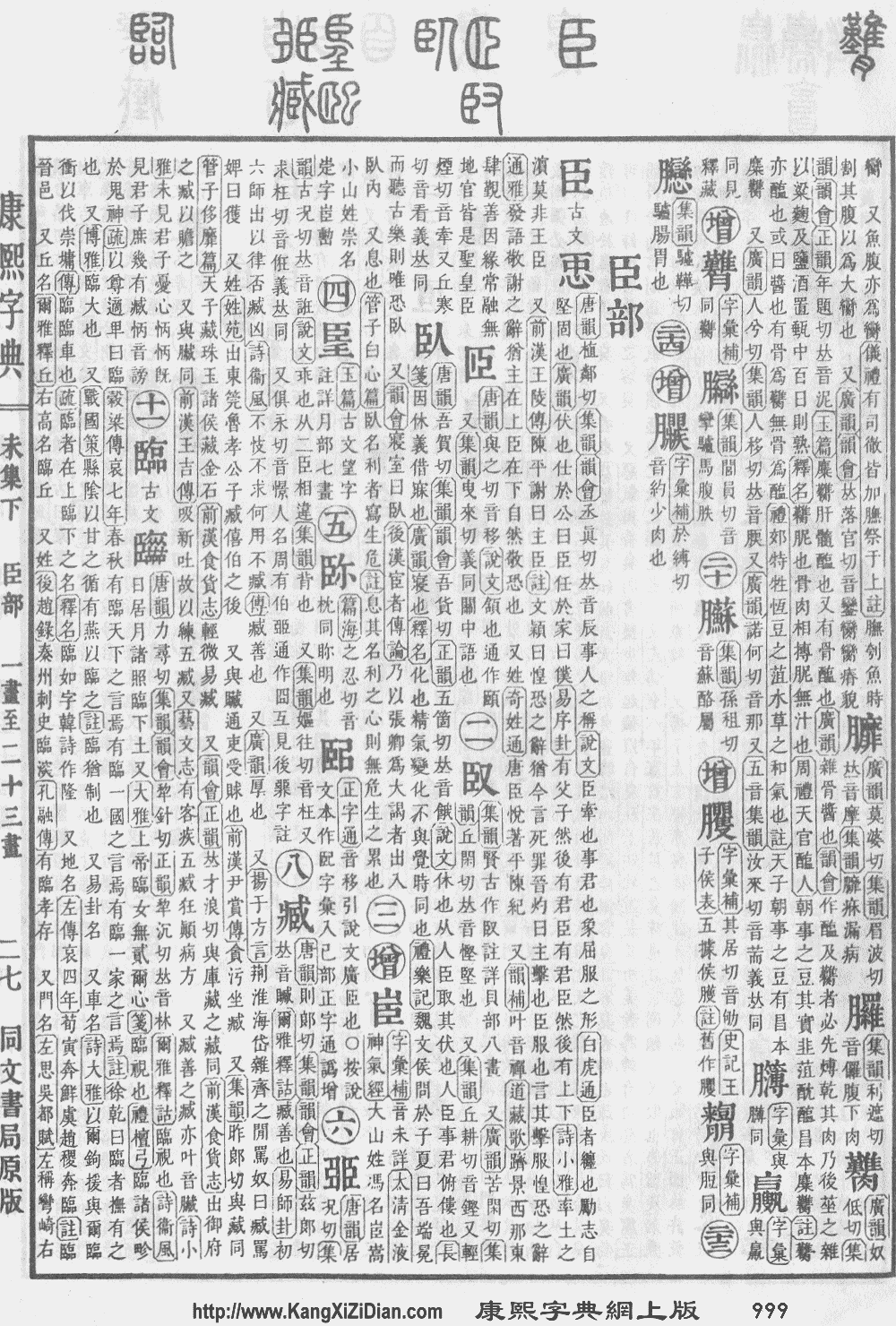
- KangXi: page 999, character 17
- Dai Kanwa Jiten: character 30071
- Dae Jaweon: page 1450, character 7
- Hanyu Da Zidian: volume 4, page 2801, character 3
- Unihan data for U+81E5
Chinese
| trad. | 臥 | |
|---|---|---|
| simp. | 卧 | |
Glyph origin
Pronunciation
Definitions
臥
Compounds
Derived terms from 臥
|
Japanese
Kanji
臥
(“Jinmeiyō” kanji used for names)
Readings
- Goon: が (ga)←ぐわ (gwa, historical)
- Kan’on: が (ga)←ぐわ (gwa, historical)
- Kun: がす (gasu, 臥す); こゆ (koyu, 臥ゆ); こやす (koyasu, 臥す); こやる (koyaru, 臥る); ふす (fusu, 臥す); ふさる (fusaru, 臥さる); ふせる (fuseru, 臥せる)
Korean
Hanja
臥 • (wa) (hangeul 와, revised wa, McCune–Reischauer wa, Yale wa)
- This term needs a translation to English. Please help out and add a translation, then remove the text
{{rfdef}}.
Vietnamese
Han character
臥 (ngọa, ngoạ)
- This term needs a translation to English. Please help out and add a translation, then remove the text
{{rfdef}}.
This article is issued from
Wiktionary.
The text is licensed under Creative Commons - Attribution - Sharealike.
Additional terms may apply for the media files.