臨
See also: 临
| ||||||||
Translingual
Han character
臨 (radical 131, 臣+11, 17 strokes in Chinese, 18 strokes in Japanese, cangjie input 尸中人口口 (SLORR), four-corner 78766, composition ⿰臣⿱𠂉品)
Derived characters
- 瀶, 𠐼, 𡄦, 𤄈, 𮟤
References
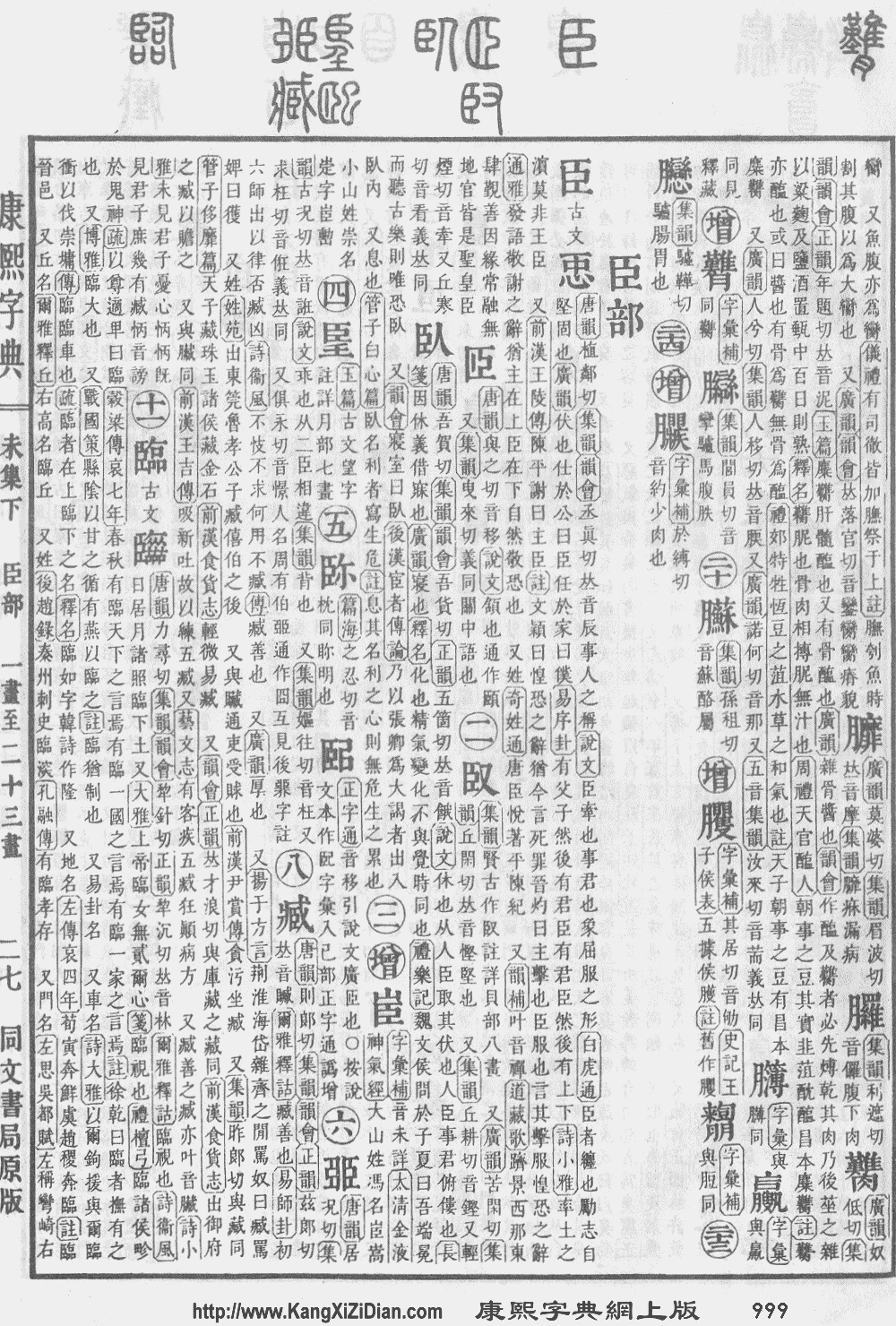
- KangXi: page 999, character 24
- Dai Kanwa Jiten: character 30087
- Dae Jaweon: page 1451, character 6
- Hanyu Da Zidian: volume 4, page 2802, character 19
- Unihan data for U+81E8
Chinese
Glyph origin
| Characters in the same phonetic series (品) (Zhengzhang, 2003) | |
|---|---|
| Old Chinese | |
| 臨 | *b·rɯm, *b·rɯms |
| 瀶 | *b·rɯm |
| 品 | *pʰrɯmʔ |
Phono-semantic compound (形聲, OC *b·rɯm, *b·rɯms) : semantic 臥 + phonetic 品 (OC *pʰrɯmʔ).
Etymology 1
| trad. | 臨 | |
|---|---|---|
| simp. | 临 | |
Pronunciation 1
Definitions
臨
Compounds
Derived terms from 臨
|
|
|
Pronunciation 2
Definitions
臨
Etymology 2
| trad. | 臨 | |
|---|---|---|
| simp. | 临 | |
| alt. forms | 凜/凛 斂/敛 | |
Pronunciation
Definitions
臨
(Hokkien)
Compounds
|
|
|
Japanese
Kanji
臨
Readings
- Goon: りん (rin, Jōyō)←りん (rin, historical)←りむ (rimu, ancient)
- Kan’on: りん (rin, Jōyō)←りん (rin, historical)←りむ (rimu, ancient)
- Kun: のぞむ (nozomu, 臨む, Jōyō)
Korean
Hanja
臨 • (rim>im) (hangeul 림>임, revised rim>im, McCune–Reischauer rim>im, Yale lim>im)
- This term needs a translation to English. Please help out and add a translation, then remove the text
{{rfdef}}.
Vietnamese
Han character
- This term needs a translation to English. Please help out and add a translation, then remove the text
{{rfdef}}.
This article is issued from
Wiktionary.
The text is licensed under Creative Commons - Attribution - Sharealike.
Additional terms may apply for the media files.